
Lieferung heute & morgen

Qualitätsgarantie

Willkommens-Angebote freischalten: KOSTENLOSE Lieferung | Bis zu 80 % RABATT | Kostenlose 30-Tage-JoyPlus-Testphase
App herunterladen
A battery-powered outdoor LED string light can be attached to a balcony, terrace, garden fence or gazebo without needing a plug socket. It’s this flexibility that makes choosing one so appealing – but it also leads to typical buying mistakes. Not every string light labelled “waterproof” is suitable for every outdoor area, and a high number of LEDs alone tells you little about length, lighting effect or power consumption.
Our selection therefore focuses on clear, verifiable details such as total length, number of LEDs, light colour, battery type, lighting modes and ingress protection rating.
A waterproof string light IP44 is generally only protected against splashing water in everyday use. IP44 means the light, or certain parts of its housing, offers protection against solid foreign objects larger than 1 millimetre and against splashing water from any direction. It does not mean the string light can be submerged in water.
With battery-powered models, the battery compartment is especially important. It should stay dry and not be left directly in the rain. For permanent unprotected installation, standing water or severe weather exposure, you must rely on the manufacturer’s specifications.
100 LEDs over 8 metres creates a different visual density than 100 LEDs over 10 metres. A spacing of 8 centimetres usually looks denser, while wider gaps cover a longer distance with fewer points of light. So always check:
A string light with a total length of 10.3 metres, for example, may include a 0.3-metre lead cable. This distinction matters for the area you plan to cover.
Some products offer several fixed lighting modes, such as steady on, flashing, wave or chasing effects. That is not the same as stepless brightness control. If you are looking for a dimmable string light, check whether the product description explicitly mentions brightness adjustment or simply lists different programmes.
A timer is also not included with every battery-powered string light. If you want automatic shut-off, this feature must be clearly stated in the technical specifications.
A warm white LED string light at around 3000 Kelvin produces a yellowish, warm glow. It is often suitable for living spaces, balconies, wedding lighting, Christmas decorations and cosy seating areas.
Cool white at around 6500 Kelvin looks noticeably brighter and more like daylight. This light colour can be interesting for pathways, larger outdoor areas or more functional decorations. A multicolour LED string light with red, green, blue and yellow LEDs is better suited to parties, children’s birthdays, camping or seasonal celebrations.
With a battery-powered string light, the battery type and number are important. Many models use three AA batteries at 1.5 volts; these are often not included. Running costs depend on lighting duration, brightness, number of LEDs and the mode selected.
A solar string light, on the other hand, needs a suitable location with enough direct sunlight. Charging and lighting times can vary with the weather. For shady balconies or indoor use, battery power is usually more predictable.
For a balcony, terrace or garden, you should consider the ingress protection rating, the position of the battery compartment and the installation instructions together. IP44 is suitable for splashing water, but not for submersion. A version with IP65 offers, according to the product information, higher protection against dust and water jets; even then, the product must not be submerged unless the manufacturer states otherwise.
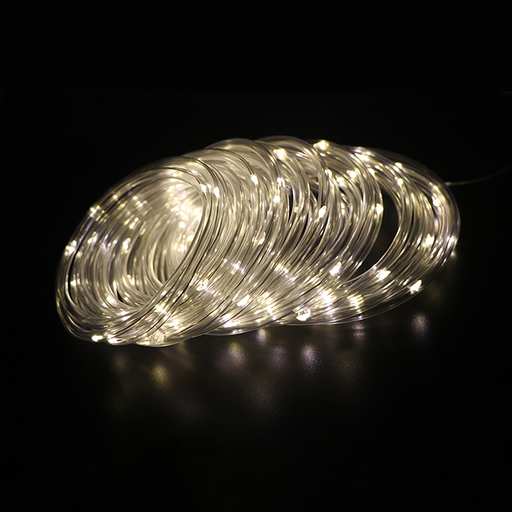
Why this product fits the profile: The warm white version with a total length of 10.3 metres is suitable for a balcony, room, terrace or smaller garden areas. Three AA batteries allow installation without a mains connection.
Length, number of LEDs, 10-centimetre spacing and IP44 rating are all clearly stated. The description also notes that AA batteries are not included.
100 LEDs, 8 lighting functions, memory function and stated brightness control.

Why this product fits the profile: The 20-metre string light with 23 G40 LED bulbs is designed for pergolas, terraces, gardens and events requiring larger coverage.
The product details state IP65, dimmability, timer, replaceable bulbs and the ability to connect additional strings.
20-metre length, 23 LED bulbs and expandable design for larger decorative areas.
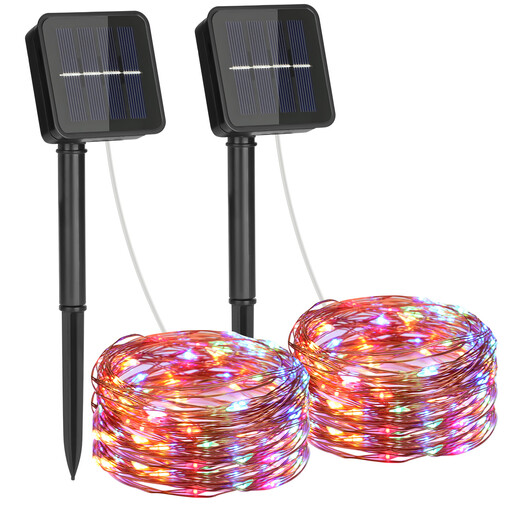
Why this product fits the profile: Two solar string lights, each 12 metres long, are ideal for the garden, terrace and seasonal outdoor lighting – provided the solar panel has a sunny location.
The details transparently state charging time, weather-dependent lighting duration and IP65 rating. The solar panel requires direct sunlight.
Two strings with 120 LEDs each, eight lighting modes and memory function.
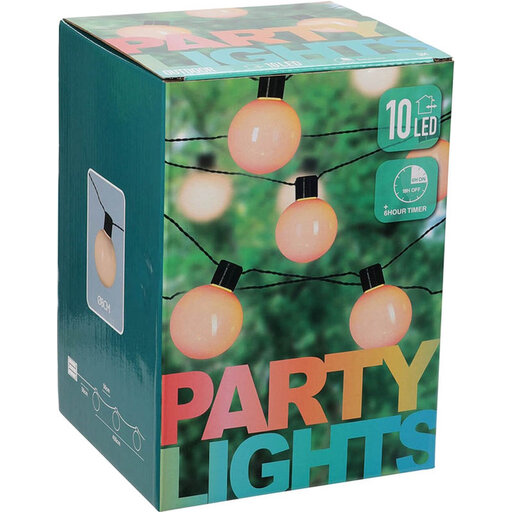
Why this product fits the profile: The ten spherical LEDs spaced 50 centimetres apart are ideal for garden tables, gazebos, balconies and one-off celebrations.
The description explicitly mentions a 6-hour timer, three AA batteries and a warning not to submerge the battery compartment in water.
Warm white light, 5-metre length, 10 spherical bulbs and automatic timer.
We have put together a complete, regularly updated list of products that fully meet these strict selection criteria and the safety regulations in force in the EU.
The operating time depends on battery quality, number of LEDs, brightness and lighting mode. A steady-on setting can use more energy than an intermittent mode. It is therefore not possible to give a reliable run time for all models. The manufacturer’s specifications and the batteries you use are what matter.
IP44 offers protection against splashing water, but it is not a licence to submerge the light. For longer outdoor use, the battery compartment should be kept sheltered. In heavy rain, snow or standing water, it is advisable to take the light down or store it in a dry place.
In addition to the purchase price, you will have the cost of replacement batteries. This is influenced by length, number of LEDs, brightness, timer and daily usage duration. A timer can limit the operating time. For frequent or permanent use, a solar string light or a mains-powered model may work out more economical, provided the installation location is suitable.