
Lieferung heute & morgen

Qualitätsgarantie

Willkommens-Angebote freischalten: KOSTENLOSE Lieferung | Bis zu 80 % RABATT | Kostenlose 30-Tage-JoyPlus-Testphase
App herunterladen
A well-maintained garden requires more than just a lawn mower, depending on the size and layout of your property. Hedges, high branches, dense grass and seasonal tasks such as watering or snow clearing call for different solutions. Battery-powered garden-care equipment and digital controls can reduce the workload when they are suited to the area and intended use.
However, exaggerated performance claims or unsuitable equipment can often lead to unnecessary costs. Before placing your order, check these three common pitfalls:
When choosing a robotic lawn mower, do not look only at the maximum area specification. The following factors are also important:
A wire-free robotic lawn mower can be easier to install on complex properties. However, systems with RTK navigation, vision sensors or LiDAR still require a suitable environment and careful mapping. Trees, high walls and densely overgrown areas can affect satellite or sensor signals. Check whether the device also has cameras, LiDAR, bumpers or other detection systems.
An app-controlled robotic lawn mower usually offers more options for schedules, exclusion zones and individual routes. The app should be compatible with your smartphone and support a stable connection via Wi-Fi, Bluetooth or mobile network.
With a cordless hedge trimmer, the cutting length and tooth spacing are particularly important. A 51-cm blade is suitable for larger hedge areas, while a 28 mm cutting capacity can also handle thicker branches. A smaller battery may be sufficient for short jobs; for long hedges, a spare battery or compatible battery system is more practical.
A brushless motor operates without traditional carbon brushes. This can reduce friction and maintenance requirements. However, the motor designation does not replace information about cutting speed, runtime or load capacity.
When choosing a mini cordless chainsaw, check the chain speed, bar length, chain tension and automatic or manual chain lubrication. Tool-free chain tensioning makes adjustment easier, but it does not replace regular checks and topping up the chain oil.
A cordless pole pruner or telescopic garden tool provides access to higher branches without the need to use a ladder. However, the maximum working height depends on your height, the pole length and your working position. Look out for:
A greater working height does not automatically mean better control. Balanced weight distribution and a firm grip are particularly important for longer jobs.
The following selection categorises specific garden-care products according to typical usage situations. Technical specifications are based on the respective product information.
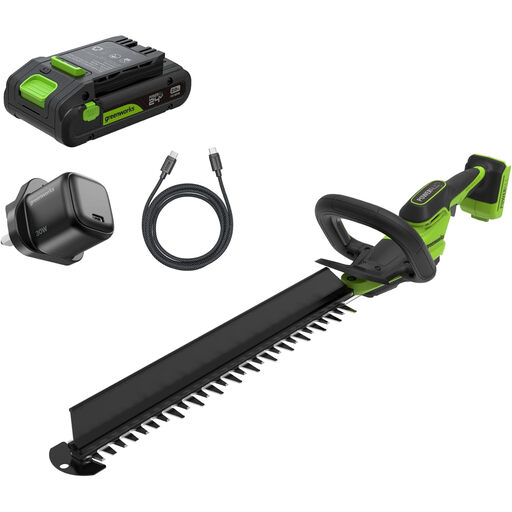
Why this product suits this profile: For small to medium-sized hedges and occasional maintenance work, this compact kit with a battery and USB-C charger includes everything you need without unnecessary extras.
The 51 cm cutting length and stated 28 mm cutting capacity make the intended area of use clear. For long hedges, you should allow for the runtime of up to 25 minutes.
24V battery, brushless motor, 4,000 strokes per minute and compatible Greenworks 24V system.
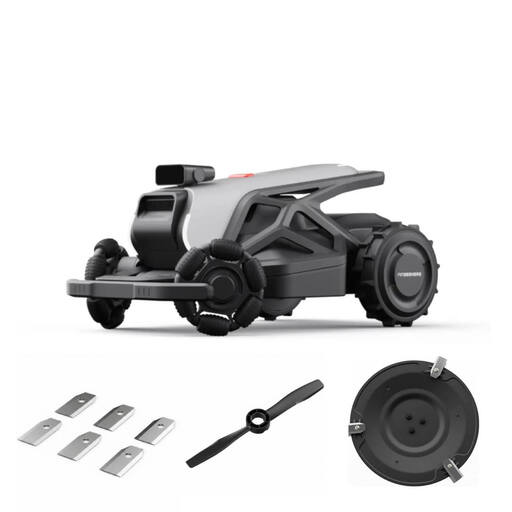
Why this product suits this profile: For larger areas with challenging terrain, this model combines RTK, VSLAM, a vision system and app control.
The product data specifies an optimal area of 1,800 m², a 200 mm cutting width, a cutting height of 30–90 mm and a driving gradient of up to 65%. These figures make it easier to compare the mower with the actual specifications of your property.
10 Ah lithium-ion battery, stated runtime of up to 120 minutes, IPX6 protection, plus 4G, Wi-Fi and Bluetooth connectivity.
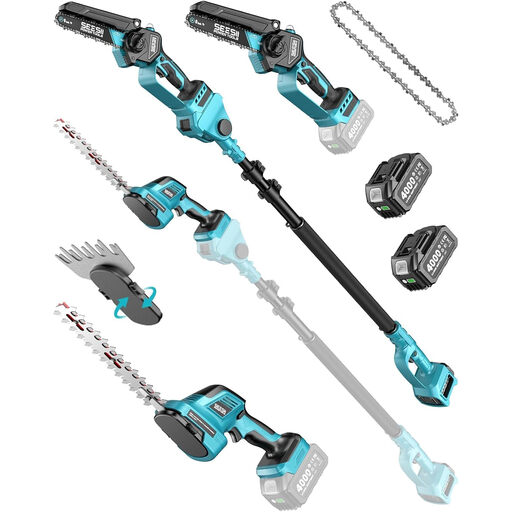
Why this product suits this profile: This 6-in-1 garden tool is designed for properties with hedges, shrubs and higher branches, where several separate tools would otherwise be needed.
The pole length of 1.5 to 2.74 m, tool-free attachment changes and stated runtime of 60–80 minutes show which jobs this set is designed for.
880 W brushless motor, two 4,000 mAh batteries, 180° adjustable cutting head and maximum working height of 4.57 m according to the product information.
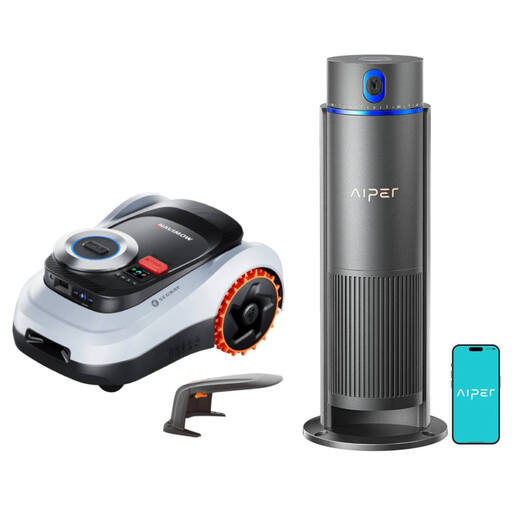
Why this product suits this profile: This bundle combines automatic mowing with app-controlled multi-zone watering, making it suitable for households that want to manage several maintenance tasks centrally.
The product description specifies automatic mapping without boundary wires, up to 20 mowing zones, LiDAR and vision detection, and a stated climbing ability of up to 45%.
100 W motor, six-blade cutting disc, app control and a watering system with up to ten individual watering maps according to the product information.
Another option for automated lawn care is the Sunseeker S4 & Aiper Smart Yard Care Bundle, which includes a wire-free robotic lawn mower, pool cleaning and a watering system. Before buying, check whether you will actually use all the components and whether the stated area capacity is suitable for your property.
We have put together a complete, regularly updated list of products that fully meet these strict selection criteria and the safety regulations applicable in the EU.
When choosing battery-powered garden tools, you should take the cost of replacement batteries, chargers and wear parts into account. Chains, blades and hedge-trimmer blades require cleaning, lubrication or replacement depending on how they are used. Store lithium-ion batteries in a dry, frost-free place and follow the manufacturer’s instructions.
A robotic lawn mower also requires a suitable charging station and regular cleaning of the cutting deck. For watering systems, the water connection, valve compatibility and number of zones are practical points to check. A snow-clearing robot, meanwhile, is a very specialist purchase: the operating area, type of snow, temperature range, obstacles and local availability should all be clarified in advance.
For small gardens, a cordless hedge trimmer, a compact mini cordless chainsaw and a suitable lawn mower are often sufficient. A robotic lawn mower is most worthwhile when the area needs to be mowed regularly and the charging station can remain permanently installed.
Runtime depends on battery capacity, motor, material thickness and work intensity. A 2.0 Ah battery may be sufficient for short hedge-trimming jobs; for pole pruners or multi-tools, two 4,000 mAh batteries and alternating between them is more practical. Manufacturer specifications should always be treated as guidelines.
Ongoing costs include the electricity used for charging, replacement blades, any boundary or networking equipment, and maintenance accessories. With wire-free systems, mobile-network services or additional navigation components may also be relevant. So do not just check the purchase price—look at replacement-part prices and warranty terms too.