
Lieferung heute & morgen

Qualitätsgarantie

Willkommens-Angebote freischalten: KOSTENLOSE Lieferung | Bis zu 80 % RABATT | Kostenlose 30-Tage-JoyPlus-Testphase
App herunterladen
Battery-powered LED fairy lights can be installed independently of mains sockets, making them ideal for shelves, weddings, Christmas decorations, balconies, patios and gardens. However, some product claims can quickly lead to disappointing purchases. For example, a high number of LEDs does not automatically mean the brightness will be suitable. Likewise, the term “waterproof” is often used inaccurately in product descriptions.
This guide explains which details matter before you buy and which model suits different usage scenarios.
The IP44 rating means protection against solid foreign objects from 1 millimetre in size, as well as water splashes from different directions. IP44 LED lighting is therefore intended for sheltered outdoor areas, splashes and light rain. However, it should not be placed in water or left permanently exposed to heavy rainfall.
For gardens, balconies and patios, the installation location and battery compartment are also important. The battery compartment should ideally be hung in a sheltered position, while solar lights should be positioned so that the solar panel receives sufficient daylight.
With fairy lights, the total length may include a connection or extension cable. Three details are therefore important when planning your installation:
For example, a 10.3-metre string with a 0.3-metre lead illuminates a shorter distance than the total length might suggest. With LED fairy lights for gardens and patios, you should also check whether the cable is long enough to reach your intended fixing point.
Flashing, wave effects and changing programmes can be useful for parties and Christmas decorations. For everyday use, however, constant warm white light is often preferred. It is therefore useful to check for details about the memory function, dimming function and controls. Fairy lights with 8 modes should also offer a clear choice between calm, continuous light and dynamic effects.
Depending on the design, battery-powered models require AA or AAA batteries. Before buying, it is worth checking:
Solar fairy lights reduce the need for regular battery changes. However, their lighting duration depends on sunlight, the time of year, battery capacity and shade. For a dark balcony or indoor areas, a mains-free battery model is generally more predictable.
Light colour is measured in Kelvin. 3000 K indicates warm white light, which is suitable for living spaces, decorations, celebrations and outdoor areas. If you are looking for warm white LED fairy lights, you should also check whether the LEDs are evenly spaced and whether the design provides decorative accent lighting or more functional illumination.
A flexible cable is suitable for curved shapes. A flexible LED strip or COB strip, on the other hand, can create a continuous line of light and is often better suited to under shelves, on cupboards or along edges.
An LED light strip with motion sensor switches on automatically when movement is detected. This is practical for hallways, staircases, wardrobes or dark passageways. A motion sensor is not essential for permanent decorative lighting in the garden. Pay attention to the detection range, switch-off time and sensor position. Direct sunlight or frequent movement from pets can affect activation.
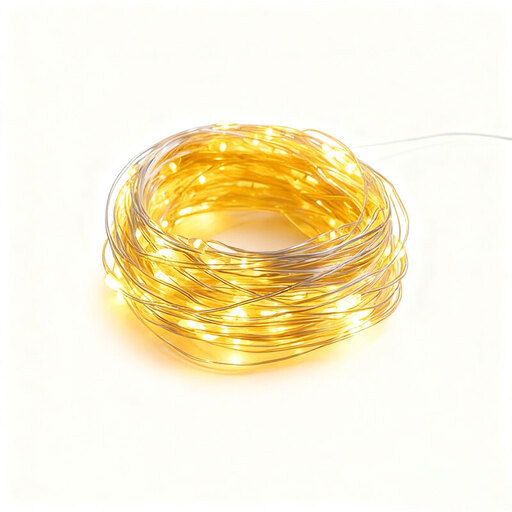
Why this product suits this profile: These solar-powered fairy lights are designed for decorative paths, flower beds, balconies and patios. According to the product details, they do not require batteries that need to be replaced regularly.
The specifications separately state an 8-metre total length and a 3-metre lead. They also specify three modes and an IP44 rating.
50 warm white LEDs, a polycrystalline solar panel, three lighting modes and IP44 splash protection.
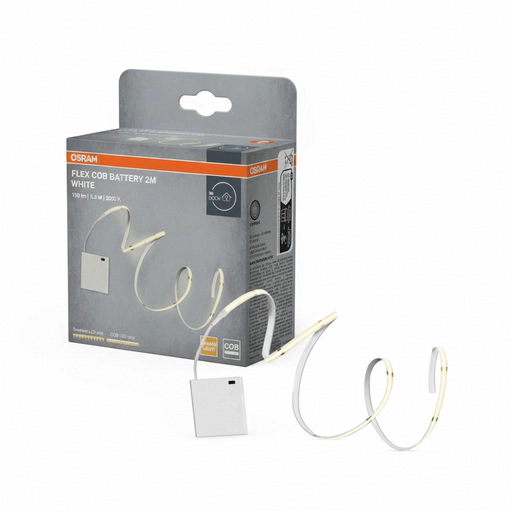
Why this product suits this profile: This flexible COB LED strip is designed for compact installation on furniture, shelves or edges. It is ideal for anyone who prefers a continuous line of light.
The stated 2-metre length makes planning easier. The product is described as a battery-powered, flexible LED strip.
COB design, flexible construction and a white finish for targeted indoor lighting.
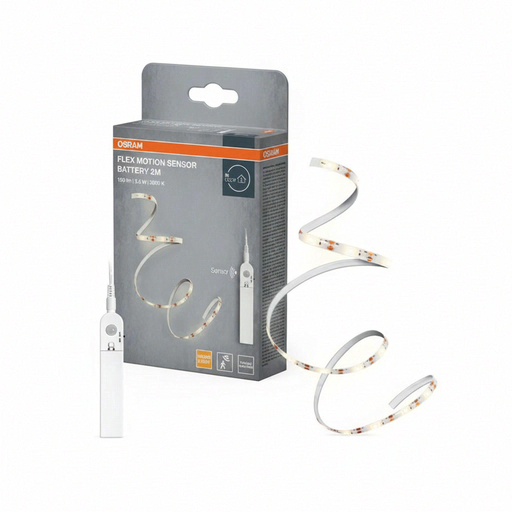
Why this product suits this profile: The integrated motion sensor is ideal for hallways, staircases, cupboards and other areas where light is only needed when movement is detected.
The sensor is listed as a specific feature, avoiding the vague promise of merely “smart” lighting.
2-metre LED strip and integrated motion sensor for automated lighting.
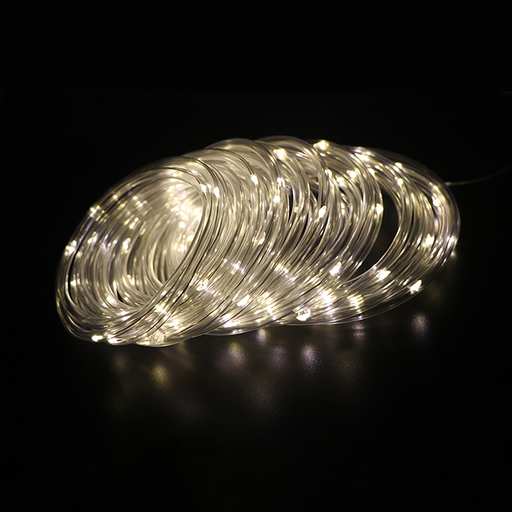
Why this product suits this profile: The long string is suitable for parties, weddings, Christmas decorations and decorative outdoor lighting on railings and sections of façades.
The product details specify 100 LEDs, a 10.3-metre total length, 8 functions, a memory function and IP44 protection. The three AA batteries need to be purchased separately.
3000 Kelvin light colour, 8 modes, dimming function, memory function and IP44 protection.
We have put together a complete, regularly updated list of products that fully meet these strict selection criteria and the safety regulations applicable in the EU.
Before installation, the surface should be clean, dry and as free from grease as possible. If you are using adhesive strips, carrying out an adhesion test beforehand can help with planning. Cables should not be kinked or pulled tightly over sharp edges. Outdoors, the connection between the battery compartment, lead and fairy lights must be protected particularly well from standing water.
For solar products, choose a location with as much direct sunlight as possible. The panel should be cleaned regularly with a dry cloth. Battery-powered models are more flexible to position, but they involve ongoing battery costs. Actual lighting duration depends on the battery type, temperature, brightness setting and selected mode.
There is no single answer that applies to every product. Lifespan depends on LED quality, battery type, operating time, moisture and mechanical stress. LEDs generally use less energy than conventional light sources. Nevertheless, batteries should be removed if the lights will not be used for an extended period, to prevent damage caused by leaking batteries.
This depends on the IP rating and the manufacturer’s specifications. IP44 protects against water splashes, but not immersion or prolonged heavy rain. IP44 fairy lights should therefore be used in a sheltered location, and the battery compartment should be kept dry. In freezing conditions, storms or during longer periods away from home, it is advisable to take the lights down.
This depends on where they are used and how much sunlight is available. Solar fairy lights generally do not require regular purchases of disposable batteries during operation. However, lighting duration may be shorter in shaded areas. For indoor spaces and covered balconies, a battery-powered model is often easier to plan around.