
Lieferung heute & morgen

Qualitätsgarantie

Willkommens-Angebote freischalten: KOSTENLOSE Lieferung | Bis zu 80 % RABATT | Kostenlose 30-Tage-JoyPlus-Testphase
App herunterladen
Construction toys for children bring together construction vehicles, tools and imaginative play scenarios. To make sure your purchase fits in with family life, parents, grandparents and other relatives should look beyond bright colours and lots of accessories. Age suitability, part size, materials, storage space and how the toy will actually be played with are what really matter.
A large set can look appealing at first glance. But if the individual pieces are very small, difficult to store or only serve one purpose, the toy may not get much use day to day. When choosing a tool set for children, check not only how many pieces it contains, but also how it can be stored, how easy it is to handle and whether the pieces can be used together in different ways.
Battery-powered construction vehicle toys offer extra features, but they need batteries and usually require more maintenance. For quiet indoor play, manual vehicles or construction sets are often more practical. If a toy has sound effects, check whether you can adjust the volume or switch them off.
A toy marked as suitable from age 3 isn’t automatically right for every three-year-old. Screws, nuts, connectors and accessories may be small enough to swallow. Always follow the manufacturer’s warnings. Younger children should be supervised, especially when assembling a toy for the first time or using loose accessories in role-play.
For construction toys for children aged 3 and over, choose larger parts that are easy to grip, with simple push-fit or screw-together connections. Depending on their development, children aged 5 to 8 may enjoy more complex models, several building steps or remote-controlled features. Don’t choose a toy with a higher level of difficulty just because your child likes the theme.
Look for:
Toy safety standards, including EN 71, provide useful guidance. However, they don’t replace checking the toy before every use. Remove damaged parts and replace them if needed.
A children’s workbench may need a permanent spot in the bedroom. For example, the Theo Klein Bosch model 8513 measures 61 × 44,5 × 101 cm. It provides a dedicated play area, but may not suit every home. Smaller tool cases and construction vehicles are easier to store and can also be used at the living-room table.
Also check whether the toy is designed for indoor or outdoor use, whether tools can be stored separately and whether spare batteries are needed. For remote-controlled models, charging times, battery care and range are also worth considering.
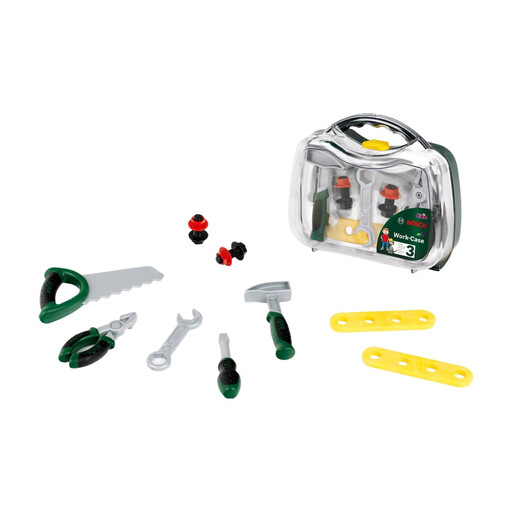
Why it suits this play style: The transparent case contains a saw, hammer, pliers, screwdriver, screws, nuts and strips. At 27 × 23 cm, it’s a handy option for families looking for a portable role-play toy for budding builders aged 3 and over.
The accessories can be kept in the case, making the set easier to carry and tidy away after play. No batteries are needed.
Eight-piece set, carry handle and manual play with no need for batteries.
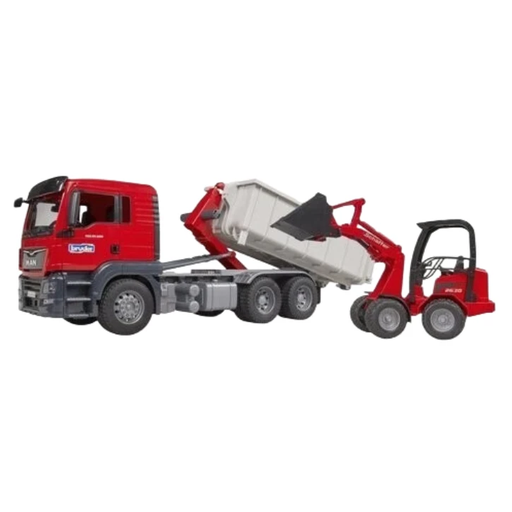
Why it suits this play style: This 1:16 scale set is designed for children aged 4 and over who enjoy construction vehicle toys with moving parts and realistic play features.
The accessories aren’t just decorative: the container, crane arm, rotating cab, shovel and bulldozer blade are all designed as features for play.
1:16 scale, several moving parts and sets that can be combined with other BRUDER play worlds.
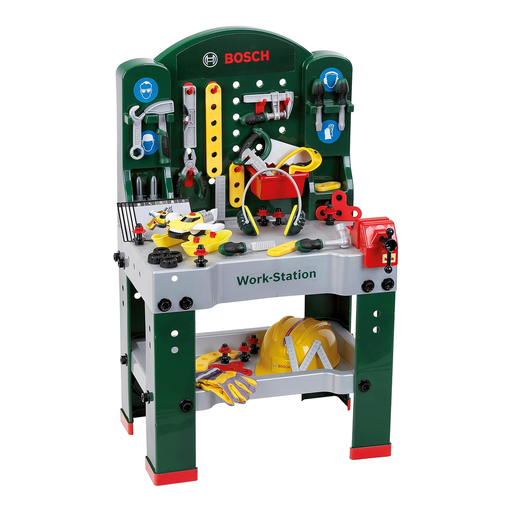
Why it suits this play style: This workbench provides a dedicated play station with a vice, shelf, hooks and a range of tools. It’s suitable for children aged 3 and over who want to build, screw things together and play at being a builder regularly.
The tools each have a designated storage place. Check the assembly before use, and put small screws and accessories back in a safe place after play.
Fixed working height of 101 cm, a vice and a generous range of manual accessories with no batteries required.
We’ve put together a comprehensive, regularly updated list of products that meet these strict selection criteria and fully comply with the safety regulations in force across the EU.
From age 3, larger manual vehicles, simple tool cases, puzzles with only a few pieces and manageable construction toy sets are all worth considering. Check the specific age recommendation from the manufacturer and look out for warnings about small parts. Supervise play at first.
Lifespan depends on the materials, mechanisms, storage and play environment. Sturdy plastic vehicles and simple manual tools usually need less maintenance than electronic models. Check moving parts, screws and battery compartments regularly for damage.
Manual construction vehicles usually have no ongoing energy costs. Toys with lights, sounds or remote control need batteries or charging. Before you buy, check whether batteries are included and which types are needed.