If you often take out individual, labelled portions of beans, an upright freezer with drawers is usually easier to organise. If you only need space for a few extra portions, your existing freezer compartment may be enough. For larger harvests, a chest freezer is worth considering if you can keep the portions well organised. As well as usable capacity, consider how quickly the appliance can freeze fresh batches, its annual energy consumption and whether it’s suitable for the space where you plan to put it. Blanching does not replace fully cooking the beans before eating.
Who this decision matters to
Those who plan meals by portion
You blanch beans in batches and want to take out a labelled portion for meals at different times. Easy access and clear organisation matter. The Federal Centre for Nutrition recommends labelling frozen food with its contents, quantity and date.
Those freezing a harvest
You process larger quantities seasonally and need to consider both the storage space available and the appliance’s capacity to freeze fresh produce.
Households short on space
You don’t want to make room for an unnecessarily large extra appliance, so first check whether your existing freezer has enough space for the portions of beans.
What to consider when buying
Existing freezer compartment
A good fit if: You only need to fit a few extra portions of beans alongside other frozen food.
Consider: You’ll be sharing the freezer space with your other supplies, so check how much room is actually free.
Upright freezer with drawers
A good fit if: You often take out individual portions with different dates on them and have enough vertical space.
Consider: A separate appliance takes up space and runs continuously.
Chest freezer
A good fit if: You store larger quantities at a time and have room for a lid that opens upwards.
Consider: If you often take out individual portions, it’s important to have a consistent system for sorting and labelling them. According to the Consumer Advice Centre, a chest freezer can be more energy-efficient than an upright freezer.
The Federal Centre for Nutrition recommends plunging blanched beans straight into iced water, draining them well and freezing them in portions. Label the containers with their contents, quantity and date so you can identify your supplies more easily.
| What you’re looking for |
What to check when buying |
Who it matters to most |
| Taking out individual portions |
Check the drawer layout and whether there’s room for your containers or bags; label the portions of beans. |
When I plan meals for different times, I want to be able to reach labelled portions individually without rearranging other supplies. Around 33% of consumers would make easy access to separate portions their top priority. |
| Freezing fresh batches |
Compare the expected quantity of beans with the specific model’s freezing capacity in kg/24 h; assess storage space and freezing capacity separately. |
For a larger harvest, I need both enough storage space and suitable freezing capacity for the fresh batch. Around 27% of consumers would prioritise capacity for freezing larger quantities. |
| Energy consumption |
For suitable appliances, compare the kWh/year figure on the EU energy label and consider it in relation to your electricity tariff. |
If an extra appliance runs all year round, I want to weigh up its energy use against the amount I store. Around 20% of consumers would put ongoing energy consumption first. |
| Space and location |
Check the external dimensions and whether the door or lid can open at the intended location; check the manufacturer’s stated permitted ambient temperature for the exact model. |
When space is limited, the appliance needs to fit and open at the intended location. Around 20% of consumers would prioritise checking whether it suits the space available. |
Common buying mistakes
-
Checking capacity but not freezing performance
Free storage space doesn’t tell you how much fresh food an appliance can freeze within 24 hours.
For larger harvests, compare the expected batch size in kilograms with the specific model’s freezing capacity in kg/24 h.
-
Buying an unnecessarily large second appliance for a few portions of beans
An appliance that’s much larger than you need could use more electricity than necessary. The Consumer Advice Centre recommends considering your needs before choosing an appliance.
First check how much space is free in your existing freezer and how much you usually store. Then compare the annual energy consumption of suitable models.
-
Assuming No Frost and static cooling are the same
The features differ: Bosch lists No Frost for the GSN29VWEP, while Beko describes the HSM10440 as using static cooling. Static cooling may mean you need to defrost the appliance more often.
Check the defrosting system for the exact model and weigh the convenience you want against usable space and annual energy consumption.
-
Assuming blanched beans are fully cooked
According to the Federal Centre for Nutrition, blanching green beans for three minutes prepares them for freezing. It is not the same as cooking them fully.
Allow for the cooking time you’ll need later when planning meals. In its 2024 statement, the Federal Institute for Risk Assessment recommends cooking fresh beans in boiling water for at least 30 minutes.
Relevant brands and example models
Bosch
The example models range from a separate upright freezer to a fridge-freezer with a smaller freezer compartment.
- Bosch lists 200 l of freezer space, No Frost and a freezing capacity of 16,0 kg/24 h for the GSN29VWEP. The KGN33NWEB is listed with 89 l of freezer space. These are manufacturer specifications for the respective models.
- The GSN29VWEP’s specifications don’t apply to other Bosch models. With the KGN33NWEB, you’ll need to share the freezer space with the supplies you already have.
Liebherr
The FNd 522i upright freezer is an example of a model with more dedicated storage space and manufacturer-stated suitability for cold environments.
- Liebherr lists a total capacity of 277 l, No Frost and operation at ambient temperatures down to −15 °C for the FNd 522i.
- Approval for installation and the other features apply to this model and cannot automatically be assumed for other appliances from the brand.
Beko
The HSM10440 shows how a compact chest freezer can be an alternative to an upright freezer.
- Beko lists a capacity of 104 l, static cooling and energy class E for the HSM10440. These are manufacturer specifications for this model.
- Static cooling is not the same as No Frost. Check the freezing capacity and defrosting requirements in the specifications for the exact appliance.
Freezers at Joybuy
This selection includes upright freezers with compartments for keeping portions of beans separate, as well as a chest freezer for extra supplies.
 No image available
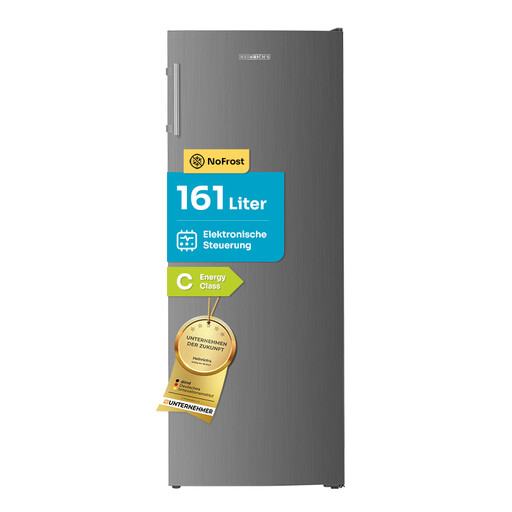
Heinrich´s upright freezer, 161 l, No Frost, stainless steel
The listed freezer drawers make it easy to store portions of beans separately.
161 l; 3 freezer drawers; No Frost; energy class C.
View at Joybuy
 No image available
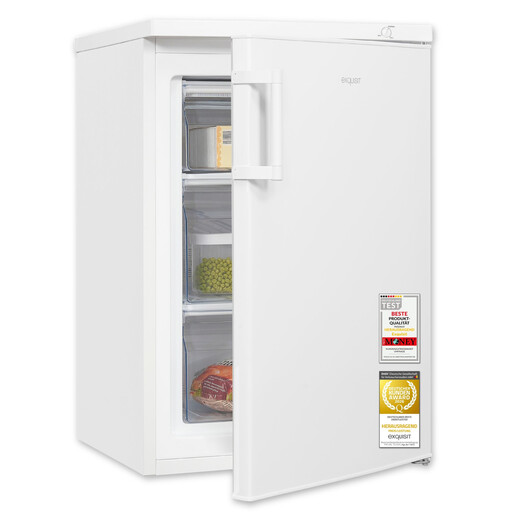
Exquisit GS581-H-010E upright freezer, 85 l
Three drawers provide separate compartments for portions of beans if you’re looking for a smaller appliance.
85 l; 3 drawers; 4-star freezer compartment; manual temperature control; reversible door hinge.
View at Joybuy
 No image available
COMFEE' RCU60WH2(E) upright freezer, 60 l
Three compartments provide space to store smaller portions separately.
60 l; 3 compartments; adjustable temperature control; reversible door.
View at Joybuy
 No image available
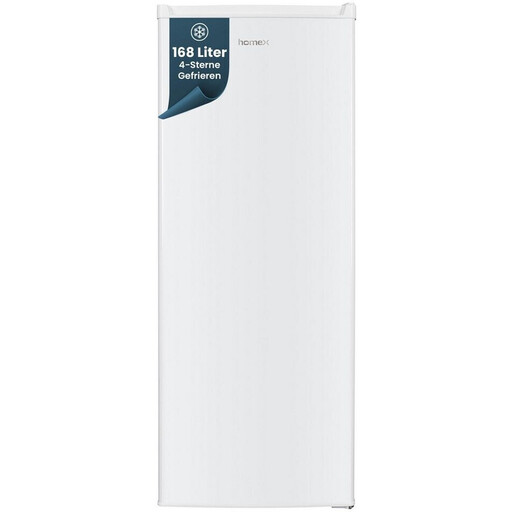
homeX FS1681E-W upright freezer, 168 l
Four drawers and a flap compartment provide several separate storage areas for supplies.
168 l; 4 drawers and 1 flap compartment; 40 dB; energy class E; reversible door hinge.
View at Joybuy
 No image available
Exquisit chest freezer, 142 l
A chest freezer is an alternative if you want to store extra supplies rather than keeping them in individual drawers.
142 l; 4-star freezer compartment; electronic temperature control with LED display; fast-freeze function; castors.
View at Joybuy
Frequently asked questions
Are blanched and frozen green beans ready to eat once defrosted?
No. The Federal Centre for Nutrition describes blanching for three minutes as preparation for freezing, not as fully cooking the beans. In its 2024 statement, the Federal Institute for Risk Assessment recommends cooking fresh beans in boiling water for at least 30 minutes. So allow enough time to cook them before eating.
How should I prepare portions of beans for meals at different times?
After blanching, plunge the beans straight into iced water and drain them well. Divide them into suitable quantities in freezer-safe containers, then label each one with its contents, quantity and date. Don’t put fresh produce directly on top of food that’s already frozen.
What temperature and specifications are useful when comparing freezers?
The Consumer Advice Centre gives −18 °C as the optimum freezer temperature. When buying an appliance, the kWh/year and freezer capacity figures on the EU energy label can help you compare suitable models. Actual energy consumption also depends on how and where you use the appliance.
Can an old freezer be put in household rubbish in Germany?
No. The German Environment Agency advises that old appliances should be collected separately, for example at your local recycling centre. It also outlines free take-back of large old appliances when you buy a suitable replacement, including for online purchases with delivery. Check the return arrangements when you place your order.


