
Lieferung heute & morgen

Qualitätsgarantie

Willkommens-Angebote freischalten: KOSTENLOSE Lieferung | Bis zu 80 % RABATT | Kostenlose 30-Tage-JoyPlus-Testphase
App herunterladen
Bean-to-cup coffee machines need different care products to tackle different types of residue. Cleaning tablets for bean-to-cup coffee machines are mainly designed to remove coffee fats and oil deposits from the brewing system. Descaling tablets, on the other hand, tackle mineral deposits caused by water. Milk systems usually need their own cleaner.
Focusing only on a low price per tablet or a large pack can still lead you to buy the wrong product. Three common pitfalls are worth watching out for:
So it’s not just the marketing claims that matter. The key is to match the machine model, cleaning programme, intended use and pack size.
When choosing cleaning tablets for a coffee machine, first work out what kind of care your machine needs:
Coffee fats can build up in the brewing unit, filter or internal pipes. A suitable coffee oil remover is usually used as part of the automatic cleaning programme. According to its product description, Saeco CA6704/99 Coffee Oil Remover Tablets are designed to remove coffee and fat residues from the brewing unit.
Limescale forms depending on the hardness of your water and can build up in the water circuit, thermoblock or valve area. For this, you’ll need descaling tablets for your bean-to-cup coffee machine. According to the product information, Siemens TZ80002A Descaling Tablets are designed for descaling compatible Siemens EQ and built-in machines.
Milk fats and proteins can build up in the hose, outlet or milk container. A milk system cleaner is not the same as a standard cleaning tablet. If you have a JURA machine, for example, check that the automatic milk system programme is compatible with the recommended cleaner.
Check your machine’s manual and product number. Search terms such as Siemens EQ cleaning tablets, Saeco cleaning tablets, JURA milk system cleaner or Bosch bean-to-cup machine care can help you narrow down your options, but you’ll still need to check the exact model.
In particular, look for:
The product information should make it clear whether the cleaner is designed to tackle coffee fats, limescale or milk deposits. Some products also state that they are chlorine-free, phosphate-free or fragrance-free. These claims describe the formula, but don’t automatically mean the product will make your machine work better.
Never mix cleaning products. If a product carries warnings about skin or eye irritation, follow the label, keep it out of children’s reach and take the recommended precautions.
A low price per pack doesn’t tell you much about the ongoing cost. Compare how many cleaning cycles you can get from each product. For example, a pack of ten tablets used one per cleaning cycle will work out differently from a dosing system with several smaller portions.
How often you need to clean your machine depends on the model, how often you use it and the manufacturer’s instructions. People who use a machine frequently at work will often need to stock up differently from a household that makes just a few cups a day.
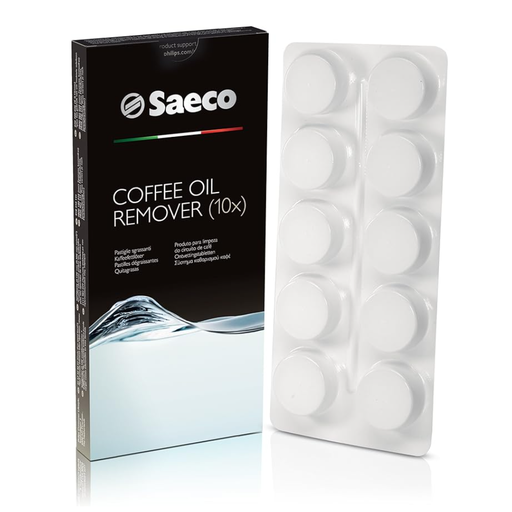
Why it suits this profile: The pack contains ten tablets and is designed for users who want to tackle coffee oil and fat residues in a compatible espresso machine.
The product description clearly states what it’s designed to tackle: coffee and fat residues in the brewing unit. Descaling and milk system cleaning need to be done separately.
Tablet format, ten tablets per pack and a clearly stated use for removing coffee oil.
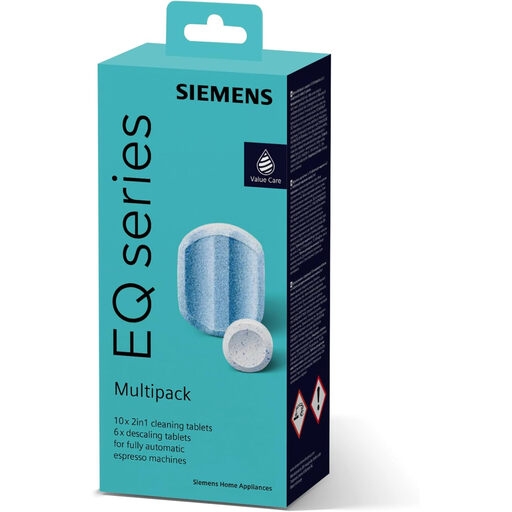
Why it suits this profile: The set combines ten cleaning tablets with six descaling tablets. According to the product information, it’s designed for selected Siemens EQ and built-in bean-to-cup machines.
The two types of care are clearly listed separately, making it easy to choose the right tablet for cleaning or descaling.
A set of 16 tablets, designed for the automatic care programmes of compatible machines.
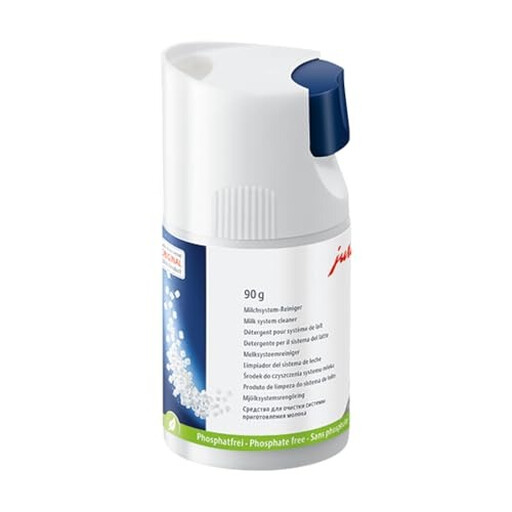
Why it suits this profile: This product is designed to clean the milk circuit. According to the product information, the 90-gram bottle provides around 30 cleans and features a dosing system.
It’s not presented as a general coffee oil or limescale tablet, but is clearly intended for milk system cleaning.
A dosing bottle, around 30 cleaning cycles and, according to the product information, a phosphate-free formula.
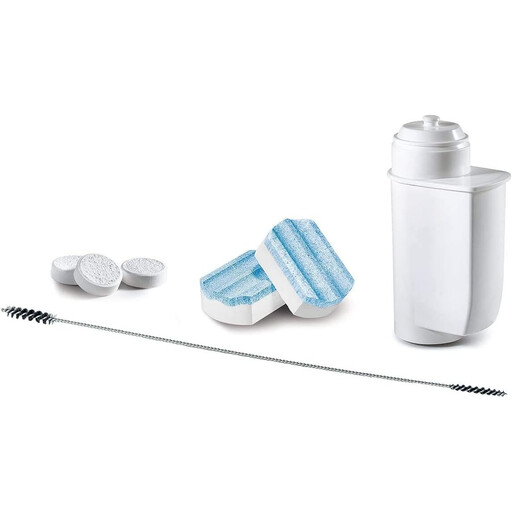
Why it suits this profile: The set includes cleaning tablets, descaling tablets, a BRITA Intenza water filter and a brush for the milk hose. It’s a practical choice for owners of compatible Bosch Vero models who want to take care of several maintenance tasks with one set.
The contents make it clear that cleaning, descaling, water filtration and milk hose care each serve a different purpose.
Includes ten cleaning tablets, three descaling tablets, a water filter and a cleaning brush.
We’ve put together a complete, regularly updated list of products that meet these strict selection criteria and the safety regulations in force in the EU.
It depends on the model, how many cups you make and the manufacturer’s programme. Many machines automatically prompt you when a cleaning cycle is due. Follow the instructions in the manual rather than relying on a general cleaning schedule.
No. Cleaning tablets typically remove coffee oils and fats. To tackle limescale, you’ll need the right descaling tablets or a descaling product recommended by the manufacturer.
Not necessarily. Check the brand, model, tablet size, dosage and whether the tablet is approved for the machine’s programme. Care instructions can vary between Siemens, Saeco, JURA, Bosch, Melitta, Nivona and De’Longhi machines.