
Lieferung heute & morgen

Qualitätsgarantie

Willkommens-Angebote freischalten: KOSTENLOSE Lieferung | Bis zu 80 % RABATT | Kostenlose 30-Tage-JoyPlus-Testphase
App herunterladen
Bean-to-cup coffee machines, portafilter machines and espresso machines require different care products. Cleaning tablets for bean-to-cup coffee machines mainly dissolve coffee oil residues and deposits in the brewing area. However, they are not automatically suitable for descaling or cleaning the milk system.
Anyone who focuses only on pack size or the word “universal” can easily buy a product that does not meet their actual needs. The most common pitfalls are:
Before buying, you should first identify the type of deposit involved:
Coffee oil residues are created during every brewing cycle and can build up in the sieve, brewing unit or internal pipes. Cleaning tablets for espresso machines and coffee oil remover tablets are designed for this purpose. They are generally used together with the machine’s automatic cleaning cycle.
With portafilter machines, a tablet may also be used for backflushing, depending on the manufacturer’s instructions. The operating manual for your particular machine remains the definitive guide.
Limescale is caused by mineral-rich water. You need a separate descaler for this, available as a liquid, powder or descaling tablet. A descaler does not replace a cleaning tablet, as the two products tackle different types of residue.
The required intervals depend, among other things, on water hardness, whether a filter is used and how frequently the machine is operated. In Germany, water hardness can often be determined through the local water supplier or with a test strip.
Milk system cleaners or special mini tablets are intended for milk systems. Cleaning should be carried out according to the machine manufacturer’s instructions, as milk pipes, containers and nozzles can have different designs.
First, check the exact model range. For example, the Siemens TZ80001A cleaning tablets are listed as compatible with various EQ models and built-in appliances. Programmes and dosages can also differ between JURA, Bosch, De’Longhi, Saeco and Nivona machines.
Pay attention to:
“Original cleaning tablets” can be a practical choice for brand-specific programmes. Universally compatible products may be appealing if the manufacturer permits this type of use and the instructions are clearly explained.
A pack of ten tablets is not automatically cheaper than a smaller set. Compare the price per application and consider whether one tablet is sufficient for a complete cycle.
Examples from the product selection:
Cleaning products are household chemicals and should be handled accordingly. Check the labelling on the packaging and follow the protective measures specified there. Some products may cause skin or eye irritation.
Important points include:
Marketing terms such as “biodegradable”, “chlorine-free” or “phosphate-free” should be assessed against the specific product information. On their own, they say nothing about compatibility with your machine.
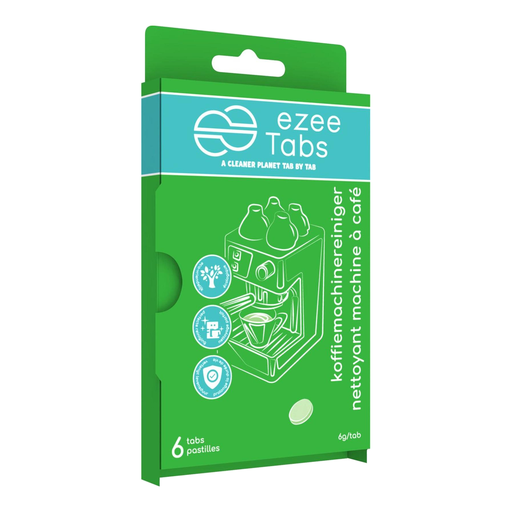
Why this product suits this profile: The set contains six cleaning tablets for bean-to-cup coffee machines and espresso machines, making it suitable for users who want to start with regular basic maintenance.
The product description specifies a dosage of one tablet per cleaning cycle and advises using it according to the machine instructions.
6 tablets, each weighing 6 g; according to the product information, suitable for fully automatic coffee and espresso machines.
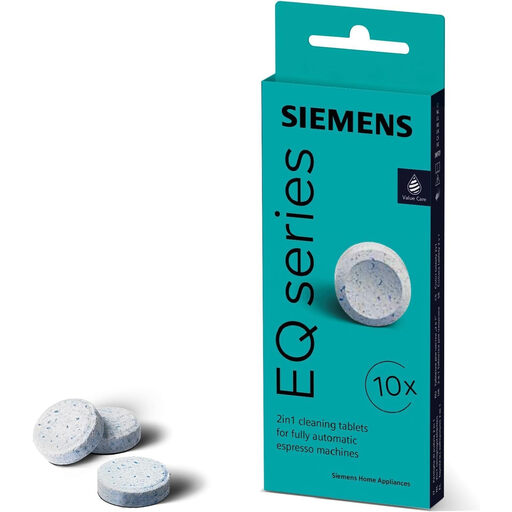
Why this product suits this profile: For owners of compatible Siemens EQ and built-in appliances, the brand-specific compatibility is the main consideration.
The stated compatibility covers several EQ ranges. Nevertheless, you should check your exact model before buying.
10 tablets; according to the product information, chlorine-free and fragrance-free.
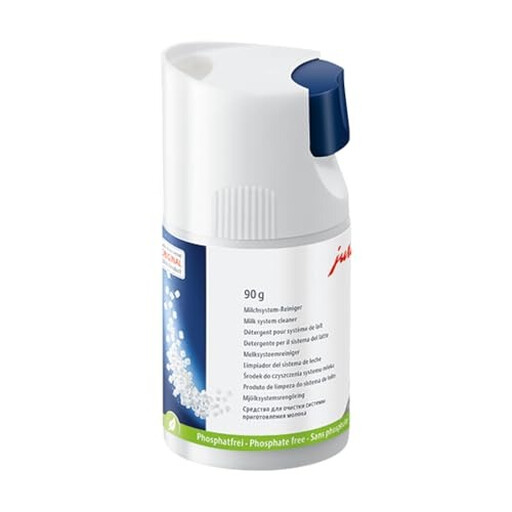
Why this product suits this profile: This product is aimed at JURA users who frequently prepare milk-based drinks and have a clearly defined cleaning requirement.
It is explicitly a milk system cleaner, not a general coffee oil cleaner or descaler.
90 g content for around 30 cleaning cycles according to the product description; integrated dosing system; phosphate-free formula according to the supplier’s information.
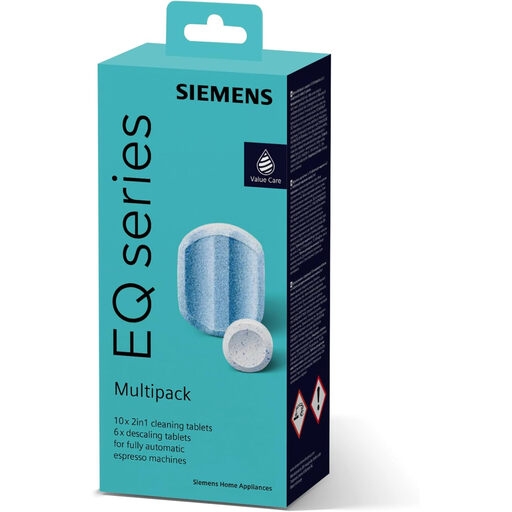
Why this product suits this profile: The set combines cleaning and descaling tablets, making it suitable for users who want to keep both care products separately stocked.
The two product types are clearly identified separately in the pack. This makes it clear which product is intended for coffee oil and which is intended for limescale.
Contains 10 cleaning tablets and 6 descaling tablets; according to the product information, fragrance-free.
We have put together a complete, regularly updated list of products that fully meet these strict selection criteria and the safety regulations applicable in the EU.
Portafilter machines follow different procedures from bean-to-cup coffee machines. You should not put a tablet in the water tank as a general rule unless this is expressly specified.
This depends on how often the machine is used, the machine itself and its cleaning programme. Frequent use may require shorter intervals. The operating manual and product packaging provide the binding instructions. Descaling is carried out separately, according to water hardness and the manufacturer’s recommendation.
Generally, no. Cleaning tablets mainly dissolve coffee oil and organic residues. To remove limescale, you need a suitable descaler for bean-to-cup coffee machines or a combined set with clearly separated cleaning and descaling products.
Not automatically. Check the explicitly stated machine type, dosage and approval. Programmes and care requirements can vary between Siemens, JURA, De’Longhi, Bosch, Saeco, Nivona and Sage machines. The manufacturer’s information for your machine should be the deciding factor before you buy.