
Lieferung heute & morgen

Qualitätsgarantie

Willkommens-Angebote freischalten: KOSTENLOSE Lieferung | Bis zu 80 % RABATT | Kostenlose 30-Tage-JoyPlus-Testphase
App herunterladen
With the vast array of models and technical specifications available, the search for a new bean-to-cup coffee machine can quickly become overwhelming. From grind settings and milk systems to pump pressure, the details determine whether the machine will meet your personal coffee preferences. This article serves as a guide. It highlights the essential features to consider when making your choice and presents a selection of different models to provide you with an informed basis for your decision.
To find the right machine for your needs, it's helpful to understand a few core functions. The following points provide an overview of the most crucial criteria.
A bean-to-cup machine with a grinder is the foundation for an aromatic coffee experience, as the beans are freshly ground immediately before brewing. Most machines use either a conical or flat burr grinder made of ceramic or stainless steel. Stainless steel grinders are considered robust and durable, while ceramic grinders have the advantage of quieter operation and less heat generation during grinding, which can preserve the flavour of the beans. However, more important than the material is the ability to adjust the grind size individually. Finer grinds are suitable for a strong espresso, while coarser settings are better for a milder café crema. A high number of grind settings offers more flexibility in adapting to different types of beans.
For lovers of milk-based coffee specialities, the milk system is a key selection criterion. A bean-to-cup machine with a milk container offers the highest level of convenience. In these models, milk is automatically drawn from an integrated or external container, heated, frothed, and dispensed directly into the cup. Such one-touch systems allow you to prepare a cappuccino machine-quality drink at the touch of a button. An alternative is a manual steam wand (Panarello), which allows for more control over the milk foam's texture but also requires more practice. Integrated systems are particularly practical for quick, everyday enjoyment and in office environments, but they require regular and thorough cleaning to ensure hygiene.
Pump pressure, often specified in bars, is a frequently advertised feature. To prepare an authentic espresso, hot water is forced through the coffee grounds at high pressure. A pressure of about 9 bars directly at the brew head is considered ideal for creating a stable and dense crema. Many manufacturers specify a maximum pump pressure of 15 or 19 bars of pressure. This high value ensures that the necessary brewing pressure of around 9 bars is consistently achieved, even with a fine grind and firmly compacted coffee grounds. A high maximum pump pressure is therefore an indicator of the pump's performance capability, which ensures an even extraction.
Here you will find a selection of machines that cater to different requirements and user profiles. The descriptions are based on the objective features and specifications provided by the manufacturers.
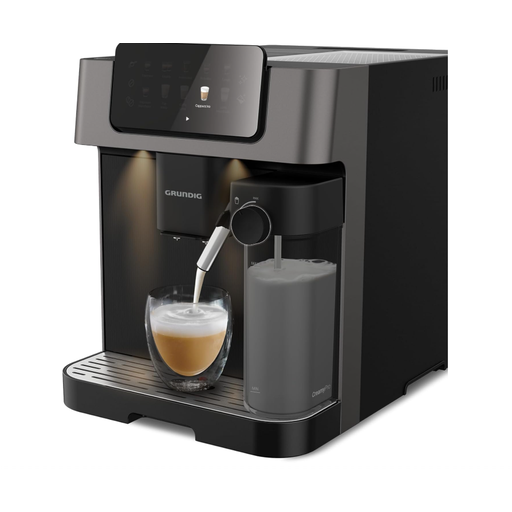
Why This Model Stands Out
The Grundig KVA 7230 is designed as an all-in-one solution, aimed at users who value variety and ease of use. With ten pre-programmed coffee specialities, an integrated milk system, and a powerful grinder, this machine covers a wide range of preferences.
Advantages
Who Is This Machine For? This model is an excellent choice for households and small offices looking for a versatile bean coffee machine that can prepare a wide selection of drinks without manual effort.

Why This Model Stands Out
The Nespresso Essenza Mini is not a classic bean-to-cup machine but a capsule machine that stands out for its ultra-compact design and simple operation. It is designed for the quick and straightforward preparation of espresso and lungo.
Advantages
Who Is This Machine For? The Essenza Mini is ideal for individuals with limited space who prefer quick, clean, and consistent coffee preparation and want to use the Nespresso capsule system.
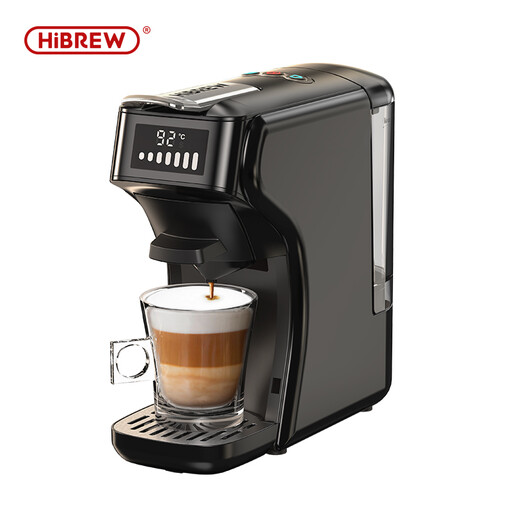
Why This Model Stands Out
The HiBREW H1B is distinguished by its exceptional flexibility. As a 6-in-1 machine, it is compatible with various capsule formats (including Nespresso and Dolce Gusto compatible) as well as ground coffee.
Advantages
Who Is This Machine For? This model is aimed at users who value maximum flexibility and want to switch between different coffee systems and ground coffee without having to purchase multiple devices.
Are you looking for other innovative devices to make daily life at the office or at home easier? Discover our selection of tech equipment.
1. What is the difference between a bean-to-cup machine and a capsule machine? A bean-to-cup machine grinds whole beans fresh for every cup, allowing for individual adjustment of the grind size, coffee strength, and water volume. A capsule machine uses pre-portioned, hermetically sealed capsules. This ensures high consistency in taste and very simple, clean operation, but offers less room for individual adjustments.
2. How important is the pump pressure in a bean-to-cup coffee machine? Pump pressure is a key factor for espresso preparation. High pressure is necessary to force the water through the finely ground coffee powder in a short amount of time. This process extracts the oils and aromatic compounds, creating the characteristic crema. While many machines advertise 19 bars of pressure, the optimal pressure directly at the coffee is considered to be around 9 bars. The pump's high maximum pressure serves as a performance reserve to reliably achieve this target pressure.
3. How often does a bean-to-cup machine need to be cleaned? The cleaning frequency depends on usage and the model. For machines with a milk system, a daily rinse of the milk circuit is recommended. The brew group, if removable, should be cleaned weekly under running water. The coffee grounds container and the drip tray should be emptied and cleaned daily. A full descaling is typically required every few months; most modern machines will automatically indicate when descaling or cleaning is necessary.