
Lieferung heute & morgen

Qualitätsgarantie

Willkommens-Angebote freischalten: KOSTENLOSE Lieferung | Bis zu 80 % RABATT | Kostenlose 30-Tage-JoyPlus-Testphase
App herunterladen
A bean-to-cup coffee machine with a grinder and milk system can prepare espresso, coffee, cappuccino or latte macchiato at the touch of a button. The choice ranges from compact machines for small kitchens to models with touchscreens, user profiles and multiple bean hoppers. However, what matters is not the number of marketing claims, but whether the features, cleaning requirements and space needed fit into your daily routine.
A slim casing is practical, but the footprint alone is not enough to judge the space required. The water tank, bean hopper and brewing unit must remain accessible. On machines with front access, operation beneath wall cupboards is often easier. Also check the machine depth, the height of the coffee spout and the space needed to open the bean hopper.
A bean-to-cup coffee machine for cappuccino and latte macchiato needs a milk system that must be maintained after every use. Automatic rinsing programmes reduce the manual effort, but they do not replace rinsing the milk tube, milk nozzle or milk container. Milk residue can build up quickly. Look for removable, dishwasher-safe parts and clearly described cleaning programmes.
A bean-to-cup coffee machine with an integrated coffee bean grinder uses freshly ground beans before brewing. However, grind settings, noise levels, bean hopper capacity and coffee strength adjustment are also important for everyday use. A specification such as 15 or 20 bar pump pressure describes the pump’s maximum pressure and, on its own, is not a reliable indication of the quality of the finished drink.
A bean-to-cup coffee machine with a grinder should offer several grind settings so that preparation can be adapted to different beans. The models available range from three to 15 settings. More adjustment options allow finer control, but do not automatically make the machine easier to use. The important thing is that the setting is clearly explained and easy to access.
The size of the bean hopper also matters:
A tank with a capacity of 1.5 to 1.8 litres may be suitable for a household. The level drops more quickly when preparing lots of milk drinks for several people, as automatic rinsing cycles also use water. A removable tank makes filling and cleaning easier. Also check the available cup height and whether the coffee spout can be adjusted for height.
A bean-to-cup coffee machine with a milk system should have pipework that is as simple as possible. Removable milk containers and three-part milk units make daily cleaning easier. A bean-to-cup coffee machine with automatic cleaning can run rinsing, cleaning and descaling programmes independently. Depending on the model, the brewing unit must either be removable or maintained using an internal programme.
For compatible Bosch machines, the Bosch Care Set TCZ8004A is designed to include 10 cleaning tablets, three descaling tablets, one BRITA Intenza water filter and one milk tube brush. According to the product specifications, it is suitable for selected TES80, TES71, TES70 and TES50 series. Before buying a care set, check model compatibility against the instruction manual.
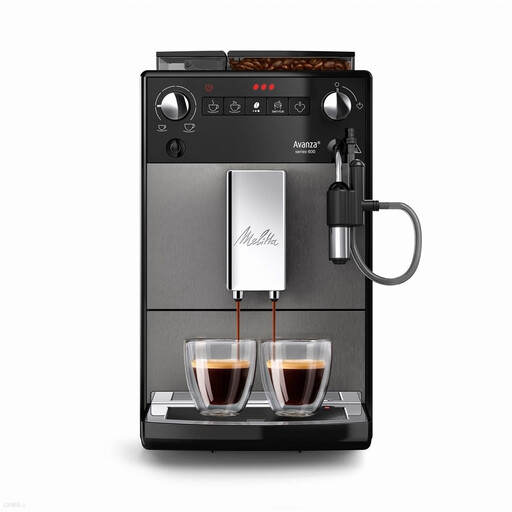
Why this product suits this profile: With a stated width of 20 cm, it is suitable for small kitchens. The LED display, one-touch function and integrated milk system are designed for users who want to get started without navigating complex menus.
The five grind settings and automatic cleaning and descaling programmes make key adjustments and care tasks easy to understand.
20 cm casing width, height-adjustable spout, XL water tank and two-cup function.
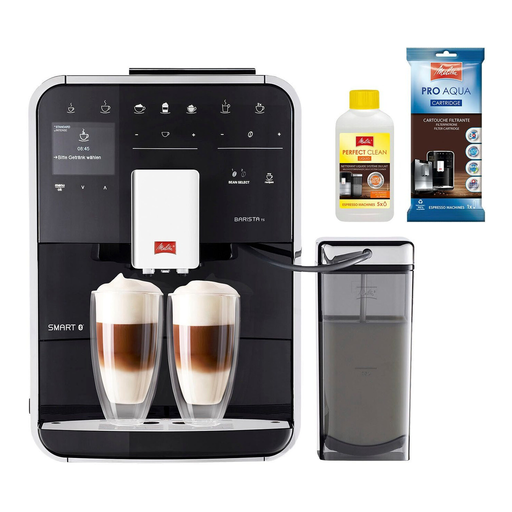
Why this product suits this profile: Eight user profiles, 21 drink variations, a TFT colour display and app control offer plenty of scope for individual configuration.
Information about automatic cleaning, a removable brewing unit and a dishwasher-safe milk jug makes the care requirements easier to plan.
1.8-litre water tank, height-adjustable spout up to 14 cm, two-cup function and two bean hoppers.
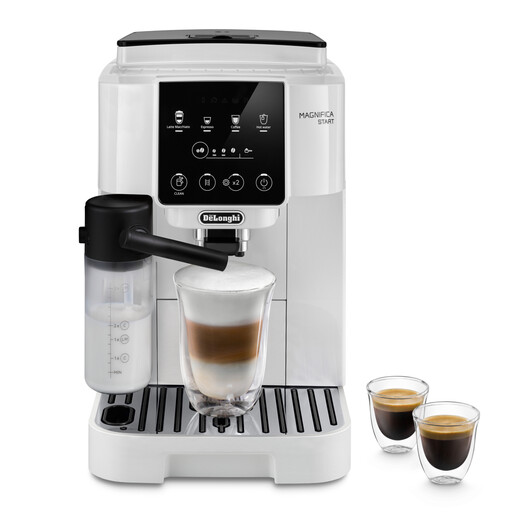
Why this product suits this profile: Four direct recipes, a 250 g bean hopper and a 1.8-litre water tank are designed for regular household use.
According to the product specifications, the milk system runs an automatic cleaning cycle after use; removable parts can be cleaned in the dishwasher.
13 grind settings, two cups at once, four drink programmes and a removable milk container.
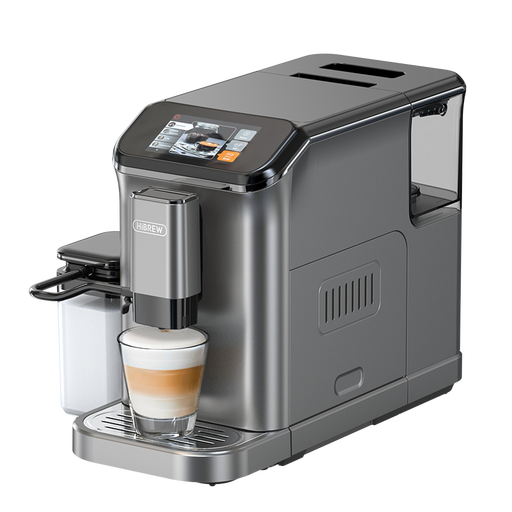
Why this product suits this profile: The 4.3-inch colour display, six drink options and individually storable coffee and milk volumes appeal to users who want to adjust settings directly on the screen.
15 grind settings and a clearly specified cleaning system make the key adjustment and care functions easy to see.
Dual-boiler system, 1.5-litre water tank, 15 grind settings and dimensions of 27 × 32 × 31 cm.
We have put together a complete, regularly updated list of products that fully meet these strict selection criteria and the safety regulations applicable in the EU.
The running costs of a bean-to-cup coffee machine consist of beans, water, electricity and care accessories. With a milk system, regular cleaning of the milk-carrying parts is also required. For limescale care, the water hardness in your area is relevant. Depending on the model and manufacturer’s specifications, a water filter may affect the intervals between descaling, but it does not replace the descaling programme.
For a long service life, you should:
That depends on the model. Compact machines are around 20 cm wide, while larger models can be approximately 25 to 35 cm wide and more than 45 cm deep. You will also need clearance to fill the tank, remove the brewing unit and open the bean hopper.
Daily care usually includes emptying the coffee grounds container and drip tray, as well as rinsing the milk system. Automatic cleaning and descaling programmes are started according to usage, water hardness and the machine’s prompts. The instructions provided by the relevant manufacturer are decisive.
For regular coffee and milk drink consumption, a machine with a large tank, larger bean hopper, two-cup function and individual profiles can be practical. For occasional use, a compact bean-to-cup coffee machine with basic direct-selection buttons is often sufficient. The key is to balance your daily drink volume, cleaning requirements and available worktop space.