
Lieferung heute & morgen

Qualitätsgarantie

Willkommens-Angebote freischalten: KOSTENLOSE Lieferung | Bis zu 80 % RABATT | Kostenlose 30-Tage-JoyPlus-Testphase
App herunterladen
A bean-to-cup coffee machine can grind beans, brew coffee and, depending on its features, froth milk. However, not every model is right for every household. Purchases often disappoint because product names promise more than the technical specifications actually deliver.
Figures such as 15 or 20 bar sound impressive, but initially they only describe the pump’s maximum output. Grind size, dosage, brewing temperature and adjustment options are also important when choosing a machine. Higher pressure alone therefore guarantees neither better espresso nor more flavour.
A bean-to-cup coffee machine with a milk system requires special care after use. Milk tubes, intake nozzles and containers should be rinsed according to the instructions. Removable components, automatic rinsing programmes and dishwasher-safe parts are practical features. If these details are not specified, daily cleaning may be more time-consuming than expected.
A bean-to-cup coffee machine with one-touch functionality can prepare selected drinks at the press of a button. However, this does not necessarily mean that every speciality can be individually customised. Before buying, check whether coffee strength, quantity, temperature and milk ratio can be saved or adjusted.
A bean-to-cup coffee machine with a grinder processes the beans immediately before brewing. The following details are relevant:
If you mainly drink filter coffee, you do not necessarily need a fully automatic espresso machine. A filter coffee machine with a grinder often offers a larger brewing capacity for several cups. Models such as the Melitta AromaFresh X and Philips HD7888/01 use a glass carafe, timer and adjustable coffee strength.
For families or a coffee machine for the office and home, the water tank should be large enough. Capacities between 1.5 and 1.8 litres are practical when preparing several drinks a day. Also bear the following points in mind:
A bean-to-cup coffee machine with an integrated milk frother is convenient for cappuccino and latte macchiato. Check whether the milk container is removable, whether the lines are rinsed automatically and which parts can go in the dishwasher. Cleaning after preparing milk drinks is particularly important for hygiene. Descaling and cleaning intervals depend on water hardness, frequency of use and the manufacturer’s instructions.
App control can make it easier to manage recipes, user profiles or the initial set-up. However, it is no substitute for easily accessible controls on the machine itself. Also check whether the app is compatible with your smartphone’s operating system and which functions it actually offers.
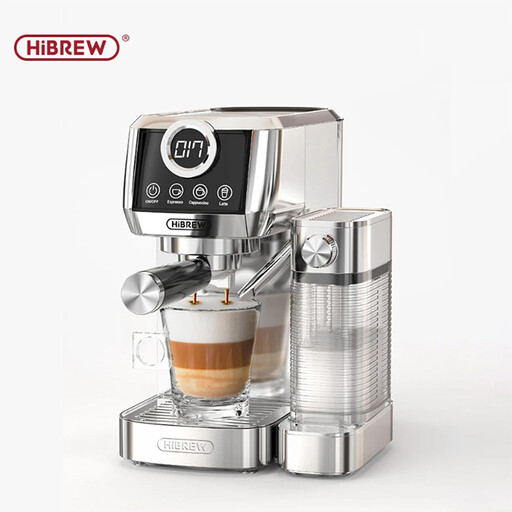
Why this product suits the profile: This compact machine is aimed at users who want to prepare espresso and milk drinks with ground coffee, without needing a fully automatic bean-to-cup model.
The product details clearly state that it is compatible with ground coffee and has a 1.3-litre water tank and a 700-ml milk container. This prevents false expectations of an integrated grinder.
Six coffee programmes, three temperature settings and a dual-boiler system are specified. The machine operates at 220–240 volts.
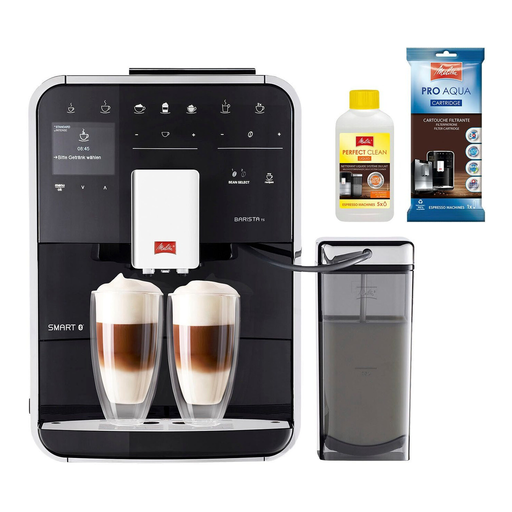
Why this product suits the profile: Suitable for households with several coffee drinkers who want to combine individual profiles, milk drinks and app control.
The specifications mention a removable milk system, cleaning and descaling programmes, as well as a removable brewing unit. This makes the key maintenance features transparent.
The listed features include 21 drink variations, eight user profiles, two bean compartments, a 1.8-litre water tank and Melitta Connect app control.

Why this product suits the profile: This model is designed for users who want to prepare espresso, filter coffee and cold brew with one machine, as well as milk with different frothing settings.
The functions are specified by preparation method and frothing option. Buyers can therefore check in advance whether the desired combination of coffee and milk drinks is covered.
The integrated conical grinder offers 25 grind settings. There are also four frothing programmes, a capacity of 1.5 litres and an output of 1,650 watts.
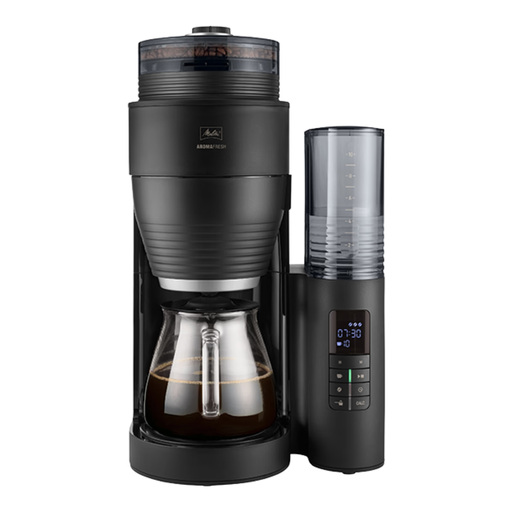
Why this product suits the profile: For preparing several cups of filter coffee, a filter coffee machine with a grinder is often more practical than a fully automatic espresso machine with a milk system.
The machine is explicitly described as a filter coffee machine with an integrated grinder. If you do not need frothed milk, you will not be paying for unused features.
The ceramic grinder offers eleven grind settings and the carafe holds 1.25 litres. Five coffee-strength settings and a timer function are also specified.
We have put together a complete, regularly updated list of products that fully meet these strict selection criteria and the safety regulations applicable in the EU.
Running costs depend mainly on bean consumption, milk, water filters, descaler and cleaning products. Depending on the model and water hardness, a water filter can affect descaling intervals, but it does not replace cleaning. With milk systems, rinsing after every use needs to be part of your routine.
For a long service life, care for the brewing unit, drip tray, coffee-grounds container and grinder in accordance with the instructions. Only use suitable cleaning and descaling products. The water-hardness setting is particularly important if you have hard tap water.
In addition to the purchase price, you will need to budget for beans, filters, descaler and cleaning tablets. Milk drinks use additional milk and require more maintenance. The exact cost depends on the number of cups prepared each day and the consumables used.
The drip tray and coffee-grounds container should be emptied regularly. Milk lines generally need cleaning after use. Depending on the model, automatic cleaning and descaling programmes start after specific cycles or when the machine displays a notification.
That depends on your drinking habits. If you regularly enjoy milk coffee, you will benefit from a removable milk container, automatic milk cleaning and saved recipes. For occasional milk drinks, however, a model without a permanently integrated milk system may be sufficient.