Joybuy Insights

Bean-to-Cup Coffee Machines: How to Choose Without Costly Mistakes

Purchasing a bean-to-cup coffee machine is an investment in your daily coffee enjoyment. But the market is overwhelming and full of marketing promises that often obscure more than they clarify. Many machines entice you with a long list of features that are rarely used in practice, while fundamental quality characteristics get lost in the fine print. The result is often disappointment with the coffee quality, unexpectedly high cleaning demands, or even technical defects after a short time.

As your Joybuy Product Recommendation Officer, I'm here to help you navigate these pitfalls. We'll focus on the facts and the crucial criteria so you can find a machine that truly fits your needs.

The 3 Most Common Traps When Buying a Bean-to-Cup Coffee Machine

Before we dive into the important technical details, let's look at the most common marketing traps that can lead to a poor purchasing decision.

  1. The Myth of "Fully Automatic Cleaning": Many manufacturers advertise self-cleaning functions. In reality, these programs often only refer to rinsing the pipes when turning the machine on and off. The milk system and the brew group—the most critical components for hygiene—almost always require regular manual cleaning. If this is neglected, milk residue and coffee oils can build up, which not only affects the taste but can also lead to mould growth and defects.
  2. An Excessive Variety of Drinks: A machine that promises 20 or more coffee specialities sounds impressive. But ask yourself honestly: How many of them will you actually use in your daily routine? Often, it's just espresso, coffee, cappuccino, and latte macchiato. You pay a significant premium for a rarely used variety, both in the purchase price and through more complex operation.
  3. Focus on Pump Pressure Instead of the Grinder: A high pump pressure of 19 bars is often promoted as a quality feature. However, a pressure of around 9 bars at the brew group is what's crucial for a good espresso, and nearly all modern machines achieve this. Far more important for the aroma is the quality of the coffee machine with a grinder. A low-quality grinder can ruin even the most expensive beans.

What Really Matters: The Core Parameters for Your Bean-to-Cup Machine

To make an informed decision, you should focus on three core technical areas. These largely determine the quality of the coffee, the ease of use, and the longevity of the machine.

1. The Grinder: The Heart of Fresh Aroma

The grinder is crucial for a good bean-to-cup machine. It determines how evenly the coffee is ground and how much aroma can be extracted from the bean.

  • Material: You have the choice between stainless steel and ceramic grinders. Stainless steel conical grinders are very robust and durable. Ceramic grinders are considered taste-neutral, often operate more quietly, and generate less heat during grinding, which can preserve the aroma. However, they can be more sensitive to foreign objects (e.g., small stones in the beans).
  • Grind Settings: Pay attention to the number of adjustable grind levels. The more finely you can adjust the grind (at least 5 settings, ideally 10 or more), the better you can tailor the extraction to different types of beans and your personal taste.

2. The Milk System: The Key to the Perfect Cappuccino Machine for Home

For lovers of cappuccino or latte macchiato, the milk system is a central criterion.

  • Integrated Milk Carafe: These systems are extremely convenient. At the touch of a button, the milk is drawn, heated, frothed, and dispensed directly into the cup. The downside is the higher cleaning effort. A good bean-to-cup machine with a milk container should therefore have an automatic cleaning program for the milk system that rinses the milk-carrying parts with hot water and steam after each use.
  • Manual Steam Wand (Panarello): Here, you froth the milk manually in a separate pitcher, just like a barista. This requires some practice but offers full control over the temperature and consistency of the milk foam. Cleaning is straightforward, as only the external wand needs to be wiped down and briefly purged.

3. The Brew Group: Maintenance and Longevity

The brew group is the unit where the ground coffee is compressed with hot water. Its design determines the maintenance effort.

  • Removable Brew Group: Models from brands like De'Longhi bean-to-cup machines or Melitta bean-to-cup machines usually have a side-removable brew group. This can be easily rinsed under running water to remove coffee residue and oils. This ensures high hygiene and prevents mould growth.
  • Fixed Brew Group: Some manufacturers, like Krups, use fixed brew groups that are cleaned via automatic programs with special cleaning tablets. This is convenient but gives the user less control over the cleanliness inside the machine.

Top Picks for Different Users

Instead of making a one-size-fits-all recommendation, we have selected models that suit different needs and budgets.
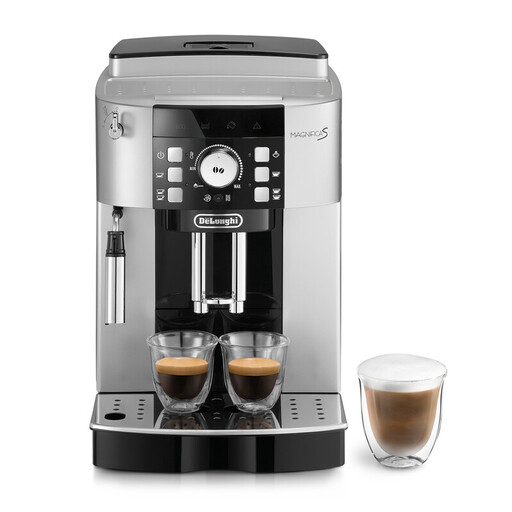
SUITED FOR: BUDGET-CONSCIOUS BEGINNERS
DE‘LONGHI Magnifica S ECAM21.116.SB Fully Automatic Coffee Machine Silver Black

DE‘LONGHI Magnifica S ECAM21.116.SB Bean-to-Cup Coffee Machine

Why this model is a great fit: Ideal for anyone looking for a reliable and durable espresso machine without unnecessary bells and whistles. It focuses on the essentials: good coffee and espresso. The manual steam wand gives you full control over the milk foam and is very easy to clean.

How it avoids the trap

This model forgoes an overloaded drink menu and concentrates on core functions. The manual milk frother avoids the complex cleaning requirements of automatic systems.

Key advantages

Robust conical grinder: The 13-setting grinder is a proven classic. Easy maintenance: The brew group is completely removable for simple cleaning.
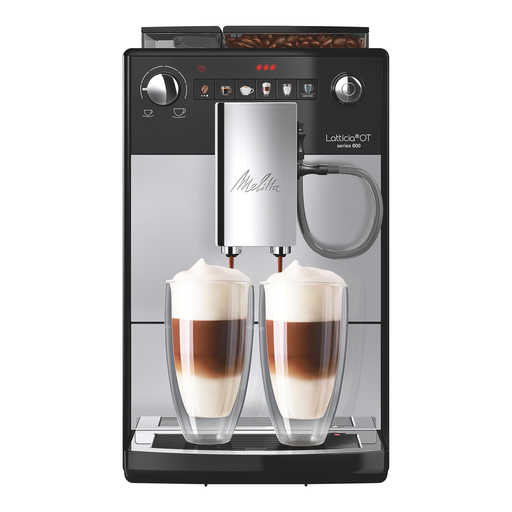
SUITED FOR: COMFORT-ORIENTED ALL-ROUNDERS
Melitta Latticia OT F300-101 Fully Automatic Coffee Machine

Melitta Latticia OT F300-101 Bean-to-Cup Coffee Machine

Why this model is a great fit: Perfect for families and frequent coffee drinkers who value convenience. The One-Touch (OT) function prepares cappuccino and latte macchiato at the press of a button. The Latte-perfection system ensures fine-pored milk foam, and the machine is comparatively quiet during operation.

How it avoids the trap

The automatic cleaning program for the milk system directly addresses the high maintenance effort. It focuses on the most popular drinks without overwhelming the user with too many options.

Key advantages

One-touch milk system: Coffee and milk specialities at the touch of a button. Quiet grinder: Ideal for use in the morning or in open-plan kitchens. XL containers: Large water and bean containers for less refilling.
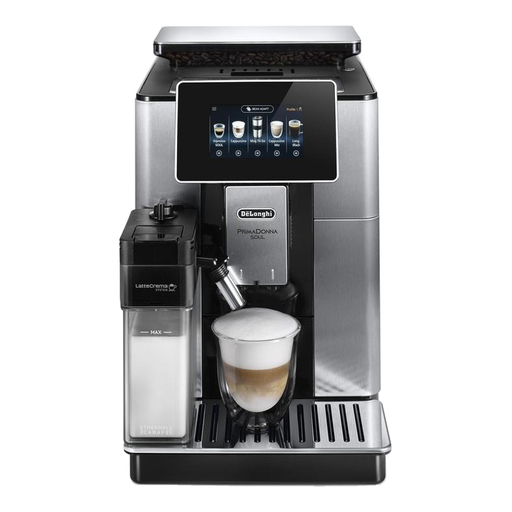
SUITED FOR: DEMANDING TECH ENTHUSIASTS
De'Longhi PrimaDonna Soul ECAM610.75.MB Fully Automatic Coffee Machine

De'Longhi PrimaDonna Soul ECAM610.75.MB Bean-to-Cup Coffee Machine

Why this model is a great fit: For coffee lovers who want maximum control and the latest technology. The Bean Adapt Technology automatically adjusts the grind and brewing parameters to the type of bean used. Countless settings can be configured and up to 21 recipes can be accessed via the app and the large touch display.

How it avoids the trap

Here, the variety of functions is not a gimmick but a core feature. The Bean Adapt Technology ensures that the grinder is used optimally, which maximises coffee quality and puts the focus on the most important component.

Key advantages

Bean Adapt Technology: Automatic adjustment to the coffee beans for optimal extraction. Large touch display & app control: Intuitive operation and personalisation. LatteCrema System: Reliably creamy milk foam with automatic cleaning.

Looking for more options?

We have compiled a complete, up-to-date list of products that fully meet these strict selection criteria and German safety regulations.

Frequently Asked Questions (FAQ)

How often does a bean-to-cup machine really need to be cleaned?

Regular cleaning is essential for hygiene and longevity. Stick to the following routine:

  • Daily: Empty and rinse the drip tray and coffee grounds container. If using the milk system, run the automatic rinse program and clean the milk container.
  • Weekly: Rinse the removable brew group (if applicable) under lukewarm water (without detergent).
  • When prompted (approx. every 1-3 months): Run the automatic descaling and cleaning program using the manufacturer's recommended products.

Which grinder is better, ceramic or stainless steel?

Both materials have pros and cons; there is no single "better" choice.

  • Ceramic grinders are often quieter and heat up less, which can preserve the coffee's aroma. However, they are more brittle and can be damaged more easily by foreign objects in the bean container (e.g., a small stone).
  • Stainless steel grinders are extremely robust and resilient. They can generate slightly more heat with intensive use, but this is compensated for by the design in high-quality machines. The choice is often a preference between noise level and maximum durability.

What does the pump pressure (e.g., 15 or 19 bar) mean, and is more always better?

The specified pump pressure (e.g., 15 or 19 bar) is the maximum pressure the pump can generate. However, for preparing a perfect espresso, a pressure of around 9 bar directly at the brew group is ideal. Almost all modern machines are designed to reliably achieve this target pressure. A higher maximum pressure is therefore not a direct indicator of quality for better coffee. More important are the consistency of the pressure during the brewing process and the interplay with the grind setting, temperature, and amount of coffee.