
Lieferung heute & morgen

Qualitätsgarantie

Willkommens-Angebote freischalten: KOSTENLOSE Lieferung | Bis zu 80 % RABATT | Kostenlose 30-Tage-JoyPlus-Testphase
App herunterladen
Investing in a fully automatic coffee machine is a choice for convenience and indulgence. However, the sheer variety of models, features, and technical specs can make the selection process overwhelming. This guide is designed to give you clear direction. As a Joybuy Product Recommendation Officer, I have compiled the relevant information on various machines to help you find a bean-to-cup coffee machine that fits your needs and your kitchen.
Before we look at specific models, here are some key criteria to simplify your decision. Considering these points will help you prioritise the features that are truly important to you.
The journey from bean to cup starts with the grind. A bean-to-cup machine with a grinder is standard, but the details are what matter. Most machines use conical or flat burr grinders made of steel or ceramic. More important than the material is the number of adjustable grind settings. More levels allow for a finer tuning of the aroma to match the coffee bean being used.
The brew group is just as important. A removable brew group makes regular cleaning under running water much easier and is a crucial factor for the machine's long-term hygiene and ease of maintenance.
For lovers of cappuccino or latte macchiato, the milk system is a key selection criterion. There are essentially three types:
A good bean-to-cup machine with a milk frother should have an automatic cleaning program for all parts that come into contact with milk.
Countertop space is often limited, especially in modern kitchens. Measure your available space carefully before deciding on a model. A compact bean-to-cup machine can be as narrow as 20 cm, while larger models take up significantly more room. Also, pay attention to the capacity of the water tank and bean container. For a multi-person household, a water tank of at least 1.8 litres and a bean container of 250 grams or more are recommended to avoid constant refilling.
Based on the criteria mentioned, we have curated a selection of models that cover a range of needs—from compact, entry-level machines to versatile all-rounders.
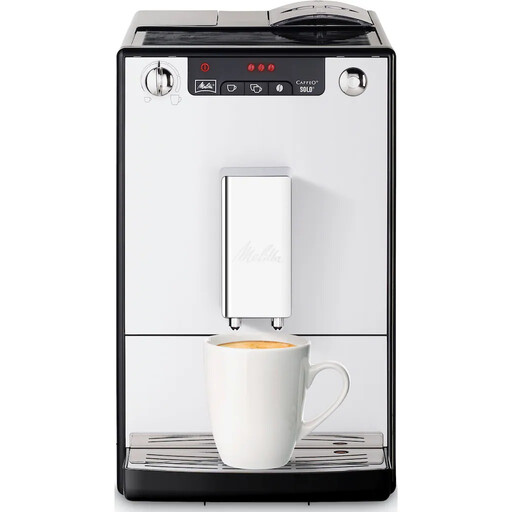
Why This Model Stands Out The Melitta Solo E950-201 is distinguished by its extremely compact design. At just 20 cm wide, it is one of the slimmest options on the market, making it a perfect fit for very small kitchens or office nooks.
Pros
Who is this machine for? This model is ideal for purists who primarily enjoy Espresso and Café Crème and value a space-saving, straightforward machine. It's an excellent choice for single households, students, or as a second machine in the office.

Why This Model Stands Out The Grundig KVA 8230 is a versatile fully automatic espresso machine with an impressive range of features. It offers 18 different coffee specialities and can be controlled via an app or voice assistant thanks to its Wi-Fi connectivity.
Pros
Who is this machine for? This machine is aimed at tech-savvy users and families who want a wide selection of coffee specialities and appreciate the convenience of smart controls. The integrated milk container makes preparing Latte Macchiato and other milk drinks especially easy.

Why This Model Stands Out The De’Longhi Magnifica S is a proven all-rounder that combines solid performance with simple operation and maintenance. Its manual milk frothing wand gives the user full control over the consistency of the milk foam.
Pros
Who is this machine for? The Magnifica S is an excellent choice for coffee lovers looking for a reliable and durable machine. It is suitable for users who want to prepare both classic coffees and milk-based specialities while retaining control over the milk foam.
If the models presented here don't exactly match what you're looking for, or if you'd like to compare other machines with a similar design, you can find a wider selection in our Black & Silver Coffee Machine category. There, you can filter various machines according to your specific preferences.
To wrap up, we'll answer some questions that often come up when searching for a bean-to-cup coffee machine or a "bean-to-cup coffee machine review".
Regular cleaning is crucial for the taste of the coffee and the longevity of the machine. The following intervals are recommended:
A medium to fine grind is generally recommended for a bean-to-cup coffee machine. However, the optimal setting depends on the coffee bean and personal taste. A lighter roast often requires a finer grind than a dark roast. Start with a medium setting and adjust it step-by-step until you find the perfect aroma for you.
A bean-to-cup coffee machine is an all-in-one system: it grinds the beans, tamps the coffee grounds, and brews the coffee at the touch of a button. A classic espresso machine (portafilter machine) requires significantly more manual steps. With these, you must grind the coffee separately, fill the portafilter, tamp (compress) the grounds, and manually lock it into the machine. The advantage lies in the greater control over every step of the preparation process, which is prized by experienced baristas. In contrast, a bean-to-cup machine offers maximum convenience and consistently uniform quality.