
Lieferung heute & morgen

Qualitätsgarantie

Willkommens-Angebote freischalten: KOSTENLOSE Lieferung | Bis zu 80 % RABATT | Kostenlose 30-Tage-JoyPlus-Testphase
App herunterladen
A bean-to-cup coffee machine with a grinder combines a bean hopper, conical or flat burr grinder, brewing unit and often a milk system in one appliance. This means you can do away with a separate coffee grinder and many manual steps. However, the choice is vast: not every fully automatic coffee machine suits a small household, an office, or people who like to fine-tune their drinks.
Manufacturers often boast a high number of coffee specialities. What really matters, though, is whether you can adjust coffee strength, grind size, water volume and temperature. A machine with fewer recipes can be more suitable if you can save individual settings for espresso, café crème or cappuccino.
Also, check whether two drinks can be prepared at the same time. This is handy in a family home or office, but not essential for a small two-person household.
A bean-to-cup coffee machine with a milk system needs extra cleaning after milk-based drinks. A tube system, a milk wand or a separate milk container all have different requirements:
A slim bean-to-cup coffee machine saves space, but will need refilling more often. For several people or an office, a larger water tank and a roomy bean hopper make sense. The water tank should also be easy to access and remove, especially if the machine sits under wall cupboards.
A steel grinder is common in the models shown. More important than the material alone is the number of grind settings. Five levels allow basic adjustment, while 30 levels on a bean-to-cup espresso machine with a grinder offer much finer tuning.
For a bean-to-cup machine, a manageable number of settings is fine if you mainly make standard drinks. If you switch between light and dark roasts, look for more adjustment options and a separate bean selection.
Guide values from the product selection:
The pump rating in bar describes the maximum pump pressure, not the quality in the cup alone. With an espresso fully automatic machine, you should consider the brewing unit, temperature control, dosing and cleaning options together.
A colour display or an app can simplify operation. A bean-to-cup coffee machine with an app is especially interesting if you want to manage user profiles and recipe changes via your smartphone. However, for ongoing costs, also consider:
A pod machine involves less cleaning of the grinder, but ties you to compatible pods. If you buy beans regularly, a fully automatic machine can be more flexible in the long run, while a pod machine is fine for occasional use with fixed portion sizes.
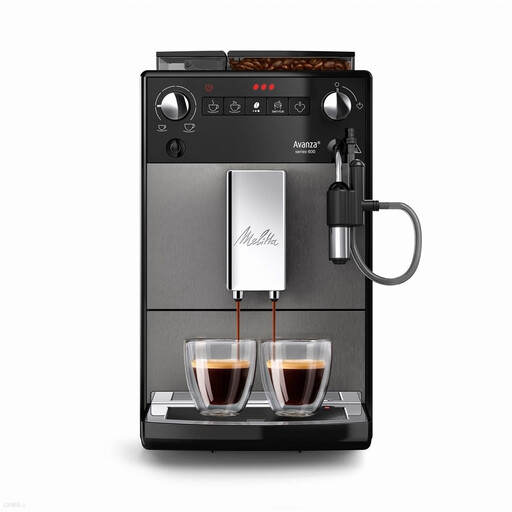
Why this product fits the profile: This slim machine is 20 cm wide and offers one-touch operation for everyday use. An integrated milk system expands the drink selection to include cappuccino and latte macchiato.
The five-step adjustable grind and adjustable water volume prevent completely rigid preparation. The brewing unit and water tank are removable.
20 cm machine width, five grind settings, removable components and automatic cleaning and descaling programmes.
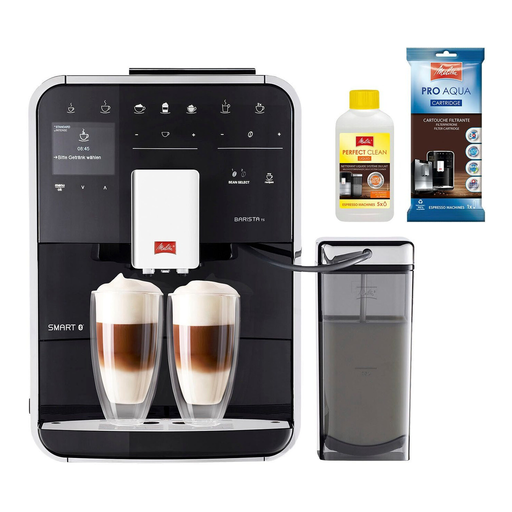
Why this product fits the profile: The combination of two bean chambers, eight user profiles and 21 drink variations suits households with different preferences.
Personal settings can be saved instead of having to be reselected each time you make a drink. The milk system and brewing unit are removable for cleaning.
1.8-litre water tank, TFT colour display, app control, two bean chambers and automatic cleaning programmes.
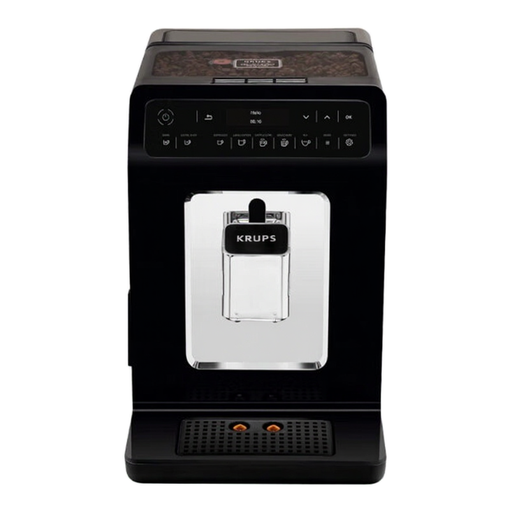
Why this product fits the profile: The 2.3-litre water tank and bean hopper holding around 260 g are designed for several cups a day in the office or a larger household.
The selection isn’t limited to coffee: alongside eleven coffee drinks, there are three tea programmes with different water temperatures.
2.3-litre water tank, 260 g bean hopper, one-touch cappuccino for two cups and automatic cleaning function.
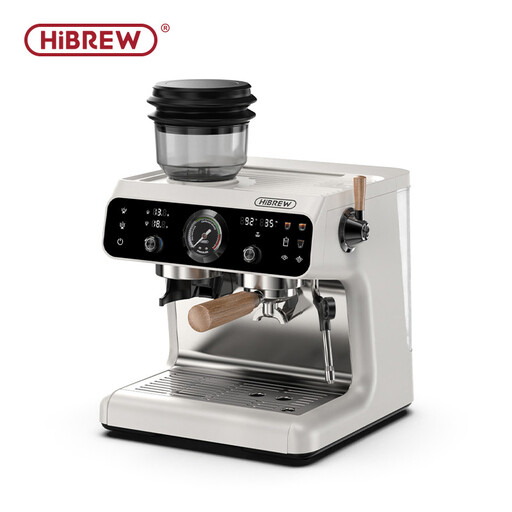
Why this product fits the profile: This machine is aimed at users who want more control over grinding, tamping and milk frothing, and who are happy with the extra space it needs.
The 30 grind settings offer more fine-tuning than many classic fully automatic machines. The dual boiler system separates the brewing and steam circuits.
250 g bean capacity, 2.8-litre water tank, 30 grind settings and simultaneous brewing and steaming.
We’ve put together a full, regularly updated list of products that fully meet these strict selection criteria and the safety regulations in force in the EU.
The drip tray and coffee grounds container should be emptied regularly depending on use. After milk-based drinks, it’s a good idea to rinse the milk system straight away. On machines with a removable brewing unit, this should be rinsed at the intervals specified by the manufacturer. Descaling and cleaning depend on water hardness, how often you use the machine and the appliance’s own indicator.
There’s no one-size-fits-all answer to lifespan. It depends on the number of cups, water quality, beans, cleaning and maintenance. A household making just a few cups a day puts different strain on the grinder and brewing unit than an office. So pay attention to accessible cleaning areas, available care products and the manufacturer’s customer service.
On top of the purchase price, you’ll have costs for coffee beans, electricity, water filters, descaler and cleaning tablets. Milk systems may need additional cleaning products. So don’t just compare the price of the machine itself, but also tank size, filter requirements, cleaning intervals and the cost of the recommended consumables.