
Lieferung heute & morgen

Qualitätsgarantie

Willkommens-Angebote freischalten: KOSTENLOSE Lieferung | Bis zu 80 % RABATT | Kostenlose 30-Tage-JoyPlus-Testphase
App herunterladen
For many, the aroma of freshly ground coffee beans is the epitome of a perfect start to the day. A coffee machine with an integrated grinder promises just that: flavour and freshness at the touch of a button. However, the market is crowded, and many devices fail to deliver on their advertising claims. Before you make a decision, it's crucial to understand the common pitfalls that often only become apparent after the purchase.
As your Joybuy Product Recommendation Officer, I'll help you define objective criteria for your choice and distinguish marketing hype from genuine product features.
An investment in a high-quality appliance should pay off in the long run. Pay attention to these two critical points to avoid disappointment:
To make the right choice, you should focus on the technical fundamentals. These three factors are the primary determinants of your coffee's quality and the machine's longevity.
The integrated grinder is the heart of every bean-to-cup coffee machine. It determines how many aromas are extracted from the whole bean coffee.
The brew group is where hot water meets the coffee grounds. Its design has a direct impact on hygiene and maintenance.
If you want to prepare milk-based drinks like cappuccino, the type of milk system is crucial.
Here are three models tailored to different needs that specifically avoid the pitfalls mentioned.

Why This Fits Their Persona: Ideal for users who appreciate the pure taste of freshly ground drip coffee without the complexity of a fully automatic machine. Perfect for the home office or weekend breakfast when multiple cups are needed.
This drip coffee machine with a grinder bypasses the pitfall of complex cleaning. There is no complicated brew group, just an easy-to-clean filter holder and carafe.
The thermal carafe keeps coffee hot for hours without letting it turn bitter on a warming plate. The integrated grinder is optimised for drip coffee.
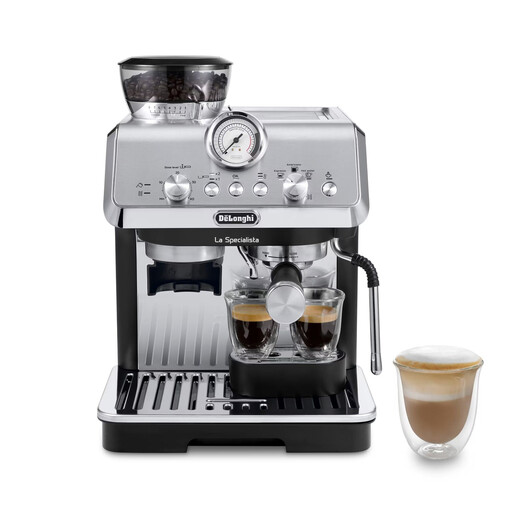
Why This Fits Their Persona: For coffee lovers who want to celebrate the brewing process. This portafilter machine offers full control over grind size, dosage, and milk texture for authentic espresso and latte art.
It avoids the pitfall of an inadequate grinder with 8 precise grind settings. The included barista kit also supports correct and consistent preparation.
The manual My LatteArt steam wand allows for fine-pored microfoam. Three preset temperature levels ensure a stable extraction temperature.
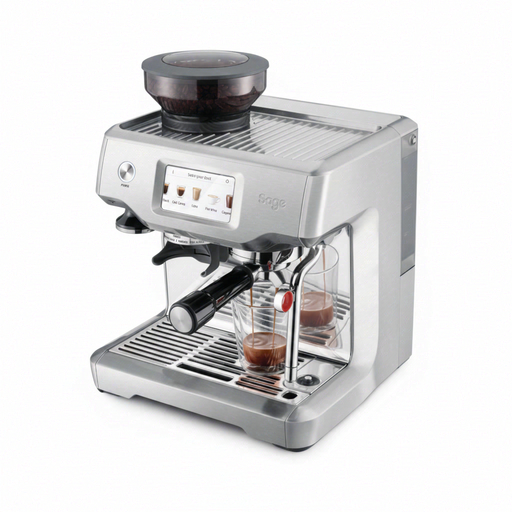
Why This Fits Their Persona: Perfect for busy connoisseurs and families who want a variety of café-quality coffee specialities at the touch of a button. The intuitive operation makes it accessible to everyone.
The integrated conical burr grinder and precise temperature control (PID) prevent inconsistent extraction. The automatic milk system purges itself after each use.
The ThermoJet heating system reaches the optimal brewing temperature in 3 seconds. The touchscreen allows you to save coffee strength, milk texture, and temperature.
We have compiled a complete, up-to-date list of products that fully meet these rigorous selection criteria and safety standards.
1. How often do I need to descale a coffee machine with a grinder? The frequency depends on the water hardness in your area and your usage. Most modern devices, like a De'Longhi bean-to-cup machine or a Melitta coffee machine, will indicate when descaling is necessary. As a rule of thumb: with average water hardness and daily use, about every 2 to 3 months. Many machines allow you to set the local water hardness level for a more precise reminder.
2. Which grinder is better for espresso, ceramic or stainless steel? Both materials can deliver excellent results. Ceramic grinders are very wear-resistant and completely taste-neutral. Stainless steel grinders, often found in Sage Barista models, are considered somewhat more robust against impurities in the beans and produce a very precise grind, which is advantageous for espresso extraction. Ultimately, the quality of the construction is more important than the material alone.
3. Can I use pre-ground coffee in a bean-to-cup machine? Yes, most bean-to-cup machines have a separate chute for ground coffee. This is useful if, for example, you want to prepare decaffeinated coffee without changing the beans in the main container. However, note that the freshness and aroma are significantly superior when using whole beans that are ground immediately before brewing.