
Lieferung heute & morgen

Qualitätsgarantie

Willkommens-Angebote freischalten: KOSTENLOSE Lieferung | Bis zu 80 % RABATT | Kostenlose 30-Tage-JoyPlus-Testphase
App herunterladen
The desire for café-quality coffee in the comfort of your own home leads many to purchase a new coffee machine. Whether it's a creamy cappuccino at the touch of a button, an intense espresso, or a silky latte macchiato – a modern bean-to-cup coffee machine promises both indulgence and convenience. However, the sheer variety of models, features, and brands can be overwhelming. This guide offers objective guidance and introduces different machine concepts to help you choose the right espresso machine for your home.
Before making a decision, several technical features should be considered. These factors are crucial in determining the coffee quality, ease of use, and longevity of the appliance.
The grinder is essential for the aroma. Most fully automatic coffee machines have an integrated conical or flat burr grinder made of ceramic or stainless steel. Conical burr grinders often operate at lower speeds and are considered particularly aroma-preserving. A multi-level adjustable grind size is important to adapt the extraction to the specific coffee bean.
The brew group is the unit where the ground coffee is compacted and extracted with hot water. A key criterion is whether the brew group is removable for cleaning. A removable brew group can be easily cleaned under running water, which contributes to hygiene and consistent coffee quality.
For lovers of milk-based specialities, the milk system is a central factor. There are fundamental differences here:
Modern machines increasingly rely on touch displays for control, while other models use a combination of buttons and rotary dials. The choice is a matter of personal preference. More important are integrated cleaning and descaling programmes. They significantly simplify regular maintenance and ensure the bean-to-cup machine functions properly for years to come.
Here, we present three machines that cater to different concepts and user needs. The selection is based on objective product characteristics and features.
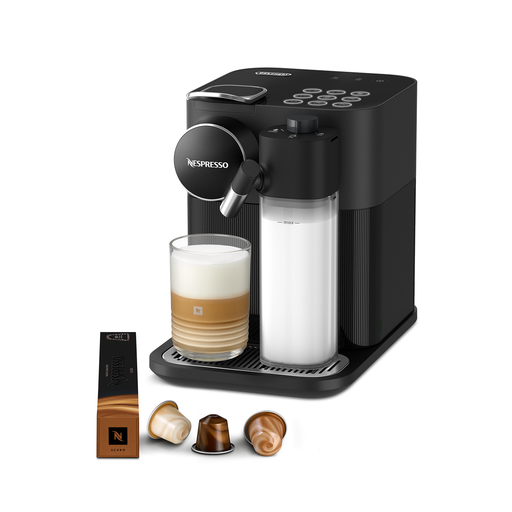
Why it stands out: The Gran Lattissima combines the simplicity of the Nespresso capsule system with a fully automatic milk system. It is a specialised latte macchiato machine that prepares a variety of coffee and milk drinks at the touch of a button.
Advantages:
Who it's for: Users who want maximum convenience and a wide variety of drinks without the hassle of grinding beans and manual cleaning. Ideal for quick and consistent results in daily life.
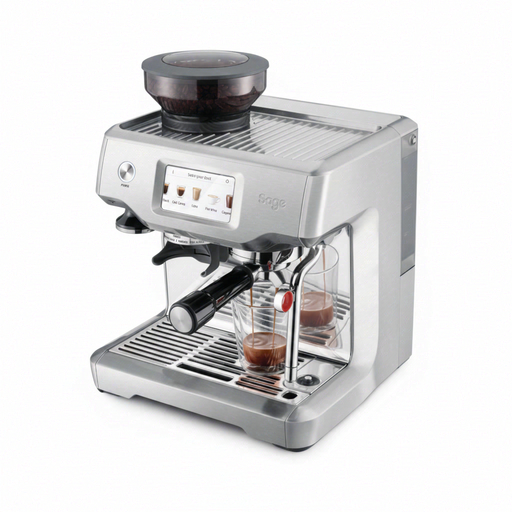
Why it stands out: The Sage Barista Touch is a hybrid solution that combines the control of a portafilter machine with the convenience of a fully automatic one. The touchscreen allows you to control and personalise every step – grinding, brewing, and milk frothing.
Advantages:
Who it's for: Enthusiast home baristas who appreciate the process of coffee making and want control over parameters like grind size, coffee dose, and milk texture, but also value the support of intuitive automation.

Why it stands out: The De'Longhi coffee machine Magnifica S is a classic model that focuses on the core functions of a bean-to-cup machine. It offers a robust build and straightforward operation via direct selection buttons and a rotary dial.
Advantages:
Who it's for: Pragmatic coffee lovers looking for a durable and reliable bean-to-cup machine for espresso and coffee, who also appreciate the flexibility of a manual steam wand.
The machines presented here already cover a broad spectrum. However, if your requirements have different priorities, such as a different budget, a more compact design, or specific smart features, it's worth taking a look at the entire range.
1. What is the difference between a bean-to-cup machine and a portafilter machine? A bean-to-cup machine handles all steps from grinding to brewing (and often milk frothing) at the touch of a button. A portafilter machine requires manual steps: the user grinds the coffee separately (or uses a model with an integrated grinder), fills and tamps the coffee grounds in the portafilter, and starts the extraction manually. Portafilter machines offer more control but also require more knowledge and practice.
2. How often does a bean-to-cup machine need to be cleaned? Daily maintenance includes emptying the coffee grounds container and the drip tray. The milk system should be rinsed after each use. The removable brew group should be cleaned weekly under running water. A full descaling and intensive cleaning with special tablets are required every one to three months, depending on water hardness and frequency of use; most machines provide automatic reminders for this.