
Lieferung heute & morgen

Qualitätsgarantie

Willkommens-Angebote freischalten: KOSTENLOSE Lieferung | Bis zu 80 % RABATT | Kostenlose 30-Tage-JoyPlus-Testphase
App herunterladen
The desire for café-quality coffee in the comfort of your own home leads many to purchase a fully automatic coffee machine. But the market is overwhelming and full of marketing claims that often fail to deliver. As a Joybuy Product Recommendation Officer, I'm here to analyse the facts and show you what truly matters, so you can make an informed decision and avoid expensive buyer's remorse.
Before you invest, you should be aware of the typical pitfalls that often only become apparent after the purchase.
When making your choice, focus on three technical features that decisively determine the quality, longevity, and user-friendliness of your machine.
The grinder is the heart of the machine. It determines how much aroma is extracted from the coffee bean.
The brew group is the unit where the ground coffee is compressed with hot water. There are two basic designs with different maintenance requirements.
For lovers of cappuccino or latte macchiato, the milk system is a key criterion. A good bean-to-cup machine with a milk system should not only produce good foam but also be easy to clean.
Instead of making a one-size-fits-all recommendation, we have matched models that meet the needs of specific user profiles.
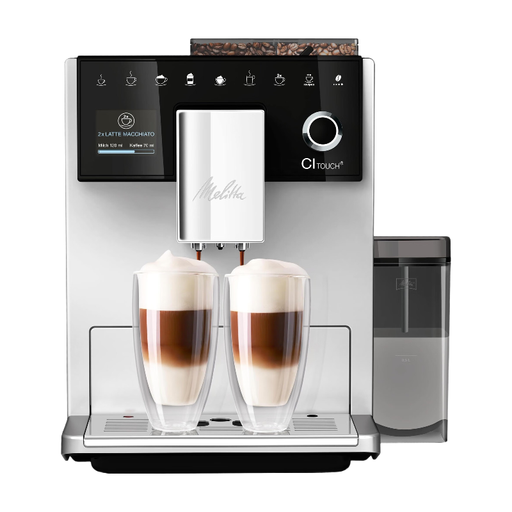
Why This Fits Their Persona: Ideal for households where different coffee preferences need to be met without complication. With memory profiles for up to four people and the two-chamber bean container, individual preferences can be recalled at the touch of a button without constantly having to change beans.
The features are designed for practical use, not just for show. The milk system is external and easy to clean, which bypasses the hygiene trap. The brew group is removable.
High customisation through user profiles and Manual Bean Select. The quiet steel conical grinder ensures a gentle grinding of the beans.
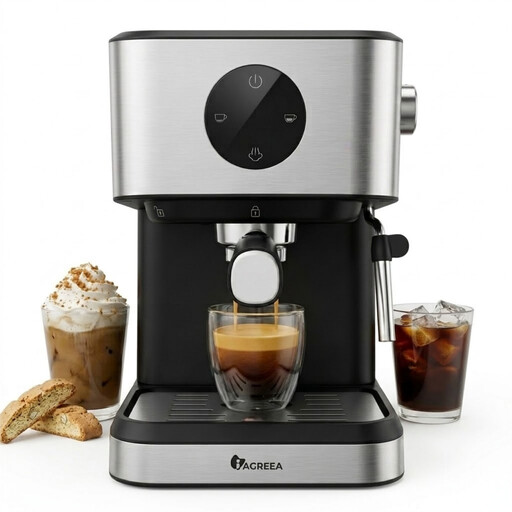
Why This Fits Their Persona: This portafilter machine is for coffee lovers who want to take control of the brewing process. It offers the control and ritual of a barista machine at an accessible price and is a great alternative to an expensive fully automatic machine.
It deliberately avoids complex automatic functions and electronics. There are no hidden cleaning programs or expensive follow-up costs. What you see is what you get: a robust machine for espresso.
The high 20 bar pump pressure ensures optimal extraction and a rich crema. The manual steam wand gives you full control over the milk foam for your cappuccino machine.

Why This Fits Their Persona: Perfect for users who want more than just standard coffee. This device combines an espresso machine, a drip coffee maker, and a cold brew function. It's ideal for those who love to experiment and try different types of coffee.
Although it has many functions, it justifies its price by consolidating multiple devices. The Barista-Assist technology actively helps the user to actually use the diverse possibilities instead of ignoring them.
An integrated conical grinder with 25 grind settings and a versatile milk frother for hot and cold foam offer maximum flexibility in a compact device.
A perfect cappuccino also needs the right milk foam. Discover compatible devices that perfectly complement your new coffee machine or offer a flexible alternative to integrated systems.
1. How often does a bean-to-cup coffee machine need to be cleaned? The cleaning frequency depends on usage. As a general rule:
2. What is the difference between a bean-to-cup machine and a portafilter machine? A bean-to-cup machine is designed for maximum convenience. It grinds the beans, brews the coffee, and froths the milk at the touch of a button. A portafilter machine (or espresso machine in the classic sense) requires more manual work: you need a separate coffee grinder, you fill and tamp the coffee grounds into the portafilter yourself, and you froth the milk manually. The reward is full control over every step of the process and the potential for excellent espresso.
3. Is a bean-to-cup machine with an integrated milk system worth it? That depends on your habits. If you prepare several milk-based drinks like cappuccino or latte macchiato daily, an integrated system offers great convenience. However, if you only need milk foam occasionally or value particularly simple and hygienic cleaning, a separate electric milk frother can be a very good and often more cost-effective alternative. It is flexible to use and cleaning is straightforward.