
Lieferung heute & morgen

Qualitätsgarantie

Willkommens-Angebote freischalten: KOSTENLOSE Lieferung | Bis zu 80 % RABATT | Kostenlose 30-Tage-JoyPlus-Testphase
App herunterladen
By Joybuy Product Recommendation Officer, July 28, 2026
Purchasing a bean-to-cup coffee machine is an investment in daily coffee enjoyment. But the market is filled with tempting promises that often fail to deliver. Many buyers only realise after a few months that their expensive machine is more of a daily chore than a pleasure. Before you make a decision, it's crucial to understand the common pitfalls that can lead to disappointment and unnecessary expense.
This guide focuses on the objective criteria that truly matter, helping you separate marketing hype from genuine functionality.
The decision to buy a bean-to-cup coffee machine is often clouded by three key issues that are rarely mentioned in advertising:
To avoid these pitfalls, you should focus on three core technical areas. These largely determine the quality of your coffee and the machine's everyday convenience.
The heart of any bean-to-cup machine is the grinder. It determines how evenly and finely the beans are ground, which has a direct impact on the aroma.
For lovers of cappuccino or latte macchiato, the milk system is a critical factor. A bean-to-cup machine with a milk system can be designed in two ways:
A good bean-to-cup machine for cappuccino should offer a one-touch function that froths the milk and prepares the coffee without needing to move the cup.
A truly low-maintenance self-cleaning bean-to-cup machine is distinguished by intelligent automatic programmes and a well-thought-out design. A crucial factor is whether the brew group is removable. This is the only way to completely free it from coffee residue and oils under running water. Permanently installed brew groups rely on chemical cleaning tablets, which often fail to reach inaccessible areas.
Based on the objective criteria above, we have identified a few models that represent a suitable solution for different user profiles.
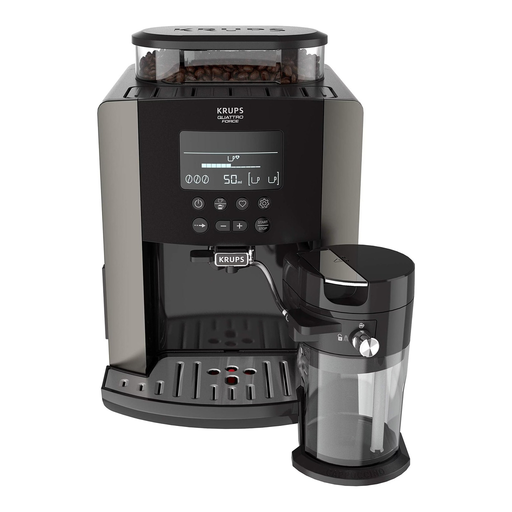
Why this model is a good fit: This machine focuses on the essential functions of a bean-to-cup coffee maker. It's compact and offers straightforward operation via an LCD display, making it ideal for users who want to make great coffee and cappuccino directly, without a flood of options.
The machine avoids the "feature overload" pitfall. Instead of countless specialities, it offers a solid foundation and a clear operating structure. The brew group is fixed, which focuses the cleaning effort on automatic programmes.
According to the manufacturer, the Thermoblock heating system ensures a very short heat-up time of about 30 seconds. The stainless steel conical grinder is adjustable in 3 settings.
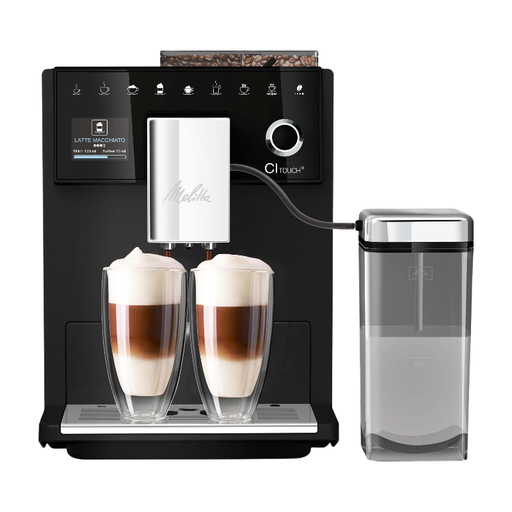
Why this model is a good fit: Ideal for households with diverse coffee preferences. The coffee machine with 2 bean hoppers allows for a quick switch between, for example, espresso and café crème beans. Additionally, up to four people can save their individual preferences.
This model directly addresses the "lack of customisation" pitfall. The memory function and the manual bean selector switch offer a high degree of personalisation. The milk system operates via a tube and features an automatic cleaning programme.
The "My Coffee Memory" saves individual settings for up to 4 people. The "Bean Select" two-chamber bean container allows for the use of different types of beans without mixing them.
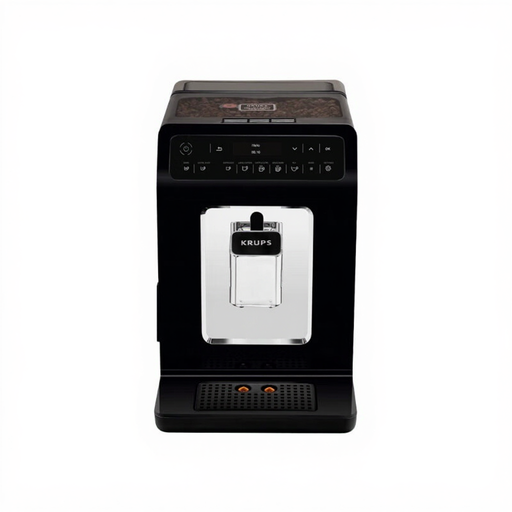
Why this model is a good fit: For users who want maximum variety with minimal effort. With 11 coffee specialities and 3 tea varieties at the touch of a button, plus an intuitive OLED display, this machine offers a high level of convenience. The one-touch cappuccino function for two cups at once is particularly practical.
The Autoclean system, combined with the enclosed brew group, minimises manual cleaning effort, thus addressing the "complicated cleaning" pitfall. According to the manufacturer, the system is automatically rinsed and drained after each preparation.
According to KRUPS, the Quattro Force technology optimises four key aspects of preparation: grinding, tamping, brewing, and cleaning. The metal brew group is designed for durability.
We have compiled a complete, up-to-date list of products that fully meet these strict selection criteria and German safety regulations.
1. How often does a bean-to-cup machine need to be descaled? The frequency depends on the water hardness in your area and your usage. Most modern machines automatically indicate when descaling is needed. As a rule of thumb, with average use and medium water hardness, descaling is required approximately every 2 to 3 months. Some machines are compatible with water filters, which can significantly extend the descaling intervals.
2. Which grinder is quieter, ceramic or stainless steel? Generally, ceramic grinders are considered to be quieter in operation than stainless steel ones. However, the overall construction and sound insulation of the machine are more critical factors for the perceived noise level. A high-quality, well-insulated stainless steel grinder can be quieter than a poorly constructed ceramic one.