
Lieferung heute & morgen

Qualitätsgarantie

Willkommens-Angebote freischalten: KOSTENLOSE Lieferung | Bis zu 80 % RABATT | Kostenlose 30-Tage-JoyPlus-Testphase
App herunterladen
A bean-to-cup coffee machine with grinder combines a bean hopper, conical burr grinder, brewing unit and coffee outlet in one appliance. This saves individual preparation steps and lets you enjoy coffee made from freshly ground beans. However, the wide range of options does not automatically make it easy to find the right coffee machine. Your usage habits, available space, cleaning requirements and preferred drinks are all important factors.
A model with a wide range of recipes can be appealing if people in your household have different preferences. However, if you mainly drink espresso and coffee, you may not need an extensive menu structure. Check whether drinks can be selected directly and whether coffee strength, water volume and temperature can be saved.
A bean-to-cup coffee machine with a milk system can prepare cappuccino or latte macchiato automatically. However, milk residue requires consistent care. A milk container that is easy to remove, a rinsing programme and components that are preferably dishwasher-safe are all important. A system that is cleaned only rarely can become unhygienic and make the appliance more difficult to use over time.
The footprint alone is not enough for planning. A water tank at the back can be difficult to access beneath wall units. You should also allow space for opening the bean hopper, removing the brewing unit and emptying the drip tray. The product dimensions should therefore be compared with the available space in your kitchen.
A bean-to-cup coffee machine for fresh beans should have a sufficiently large bean hopper if several people use the appliance. The reference models show a wide range of capacities: the Melitta Latticia OT, for example, holds 250 g of beans, while the De’Longhi PrimaDonna Soul is specified with a capacity of 500 g. For a smaller household, a smaller hopper may be more suitable, as beans will not remain in the appliance unnecessarily long.
Look out for:
Tank capacity is relevant for families, couples, small offices and similar households. The models compared here offer capacities of 1.2 to 2.2 litres, for example. A larger tank reduces the need for refilling, but usually increases the appliance’s height or depth. A removable tank makes filling and cleaning easier.
A height-adjustable outlet helps prevent splashes and allows you to use different cup sizes. Also check whether a two-cup function is available. For tall latte macchiato glasses, the maximum outlet height is a specific, verifiable measurement.
A bean-to-cup coffee machine for cappuccino and latte macchiato should offer more than just a milk frother. Clear care and maintenance functions are important too. One-touch models combine coffee and milk at the press of a button. However, the term one-touch bean-to-cup coffee machine says nothing about how easy the appliance is to clean. Check whether it offers:
A bean-to-cup coffee machine with app control can manage profiles or drink settings. However, the app does not replace manual cleaning and is not available on every model.
The following selection categorises appliances according to specific everyday situations and objective product data. For traditional filter coffee, a filter coffee machine with grinder is more suitable than a fully automatic espresso machine. You can find a corresponding selection in the filter coffee machine with grinder category.
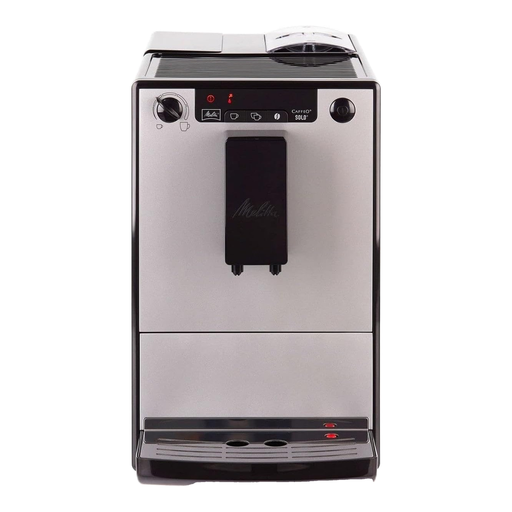
Why this product suits the profile: This compact appliance focuses on coffee and espresso. It offers three intensity levels and a height-adjustable dual outlet for one or two cups.
The manageable selection of programmes reduces unnecessary complexity. The 1.2-litre tank and compact design make it easier to fit into smaller kitchens.
Integrated grinder, three intensity levels, removable water tank and automatic cleaning function.
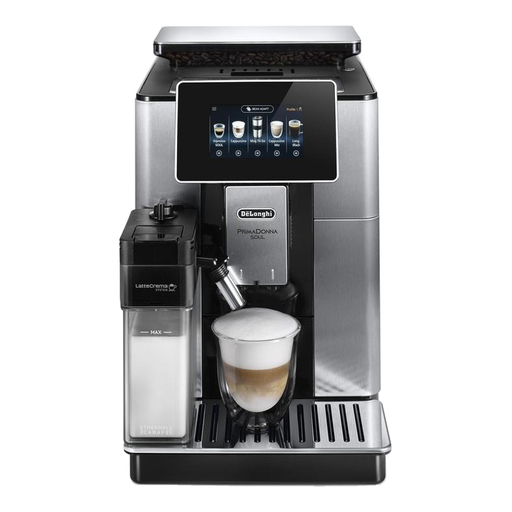
Why this product suits the profile: With 21 preset drinks, five user profiles, a 2.2-litre water tank and app control, this model is designed for households with different preferences.
The features are clearly defined through specific capacities, profiles and cleaning programmes. The milk system has an automatic cleaning function.
500-g bean hopper, 13 grind settings, LatteCrema milk system and Coffee-Link app according to the product specifications.
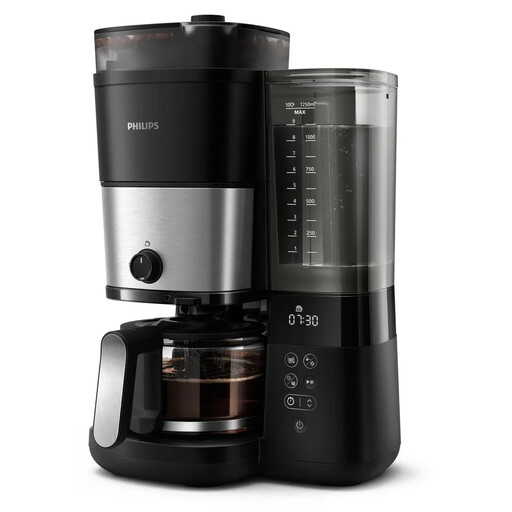
Why this product suits the profile: This filter coffee machine makes up to ten cups and can use whole beans or pre-ground coffee. That makes it suitable for families, offices and larger gatherings.
Its capacity is designed for filter coffee and should not be confused with small espresso portions. The switchable grinding function means you are not limited to using beans.
1.25-litre water tank, adjustable grind settings, timer, keep-warm function and direct preparation into a cup or travel mug.

Why this product suits the profile: The combination of a portafilter, integrated conical burr grinder, touchscreen and automatic milk frothing appeals to users who want greater control over extraction and milk foam.
The product type is clearly classified as an espresso machine with grinder. It does not replace a traditional one-touch bean-to-cup machine, but it offers greater manual control when grinding, tamping and frothing.
Five preset recipes, up to eight saveable settings, 2-litre water tank and automatic microfoam function.
We have put together a complete, regularly updated list of products that fully meet these strict selection criteria and the safety regulations applicable in the EU.
The lifespan of a coffee machine depends greatly on water hardness, frequency of use and maintenance. Regular rinsing, descaling according to the manufacturer’s instructions and cleaning the grinder help reduce build-up. With milk systems, the milk line should be rinsed after every use. The water tank and drip tray should also be cleaned regularly.
Ongoing costs include:
A filter coffee machine with grinder can be practical when preparing larger quantities. A bean-to-cup machine, on the other hand, is more versatile for espresso and milk-based drinks, but it has more components and often requires more intensive care.
This depends on the price of the beans, number of cups, type of drink and electricity consumption. Milk-based drinks also require milk and involve more cleaning. Do not compare only the purchase price; also consider the bean hopper, water filter, descaler and replacement parts.
The drip tray and coffee grounds container should be emptied regularly, depending on how often the machine is used. Milk lines usually need to be cleaned after every milk-based drink. The brewing unit, grinder and descaling programme should be maintained according to the relevant brand’s instructions. The exact intervals vary depending on the model and water hardness.
A bean-to-cup machine is ideal for preparing drinks quickly at the touch of a button and for households with several users. An espresso machine with grinder offers greater manual control over grind size, dosing and milk foam. When comparing bean-to-cup coffee machines, you should therefore first decide whether convenience or personalised preparation is your priority.