What should you look for when buying?
First, decide whether you want an espresso shot to pour over ice or a dedicated programmed cold drink. For machines sold in Germany that fall within the scope of the EU Low Voltage Directive, CE marking is relevant. EUR-Lex and Your Europe explain that it indicates the manufacturer’s declaration of conformity; it is not individual approval by a government authority.
| What matters |
What to check before buying |
Who it matters most to |
| Espresso over ice |
Check that espresso is included in the recipe list. Choose a Cold Brew or iced drink programme as an extra only if you want that specific recipe. Philips describes its iced coffee programme as using a lower brewing temperature and longer brewing time than a standard espresso. |
If you want to pour an espresso shot yourself into a glass of ice, make sure the machine can make espresso. Around 33% of consumers prioritise this feature. |
| Footprint and access |
Krups lists the SA403BE0 as 15 cm wide, while Melitta gives a width of 20 cm for the Purista. Also compare depth and height, and make sure there’s room to access the water tank and cleaning parts. |
If worktop space is limited, you’ll still want to be able to reach the machine easily when filling and cleaning it. Around 27% of consumers prioritise the space it takes up. |
| Cold milk drinks |
Check whether the specific recipe list includes cold milk drinks and what care the milk system requires. Philips lists LatteGo for the EP5547/90; De’Longhi offers cold milk recipes for the ECAM450.55.S. |
If you want to make cold milk drinks, you’ll need suitable recipes and a milk system that fits your daily routine. Around 20% of consumers prioritise cold milk drinks. |
| Cleaning and daily upkeep |
Krups says the coffee grounds need to be emptied after every drink. If the machine has a milk system, check the care instructions for the specific model. |
If you want to keep daily maintenance simple, the steps involved may matter more than a long list of drinks. Around 20% of consumers prioritise ease of care. |
Brands and models to consider
The details below apply to the specific models named. Models in the same range can have different features, so check the exact version and its dimensions.
Melitta
The Purista is a slim option for espresso and café crème, without a milk system.
- Melitta lists the Purista as 20 cm wide, with adjustable coffee strength, grind size, temperature and volume.
- The Purista does not list a dedicated iced drink programme. Check the recipe list if you want this feature.
Krups
According to Krups, the Coffee Crush Experience SA403BE0 combines a slim design with espresso and Cold Brew.
- Krups lists a bean grinder, several recipes and a machine width of 15 cm.
- Krups says the coffee grounds need to be emptied after every drink. The width alone doesn’t show how much space the machine needs overall.
Philips
The LatteGo 5500 EP5547/90 is aimed at buyers who also want dedicated iced recipes and milk drinks.
- Philips lists 20 hot and iced recipes, as well as a LatteGo milk system.
- Philips says its iced programme uses a lower brewing temperature and a longer brewing time than a standard espresso. This is a different preparation method from a classic espresso shot poured over ice.
De’Longhi
According to De’Longhi, the Eletta Explore ECAM450.55.S offers Over Ice and cold milk recipes.
- De’Longhi lists Over Ice and cold milk drinks, among other options.
- The manufacturer gives the dimensions as 260 × 450 × 385 mm. Check that you have enough space for the whole machine before choosing this model.
Siemens
The EQ700 TQ717D03 is an example of a model with a dedicated Cold Brew option and a wide choice of drinks.
- Siemens lists the dimensions of this specific model as 380 × 352 × 467 mm.
- Siemens marks the TQ717D03 as no longer available. These details do not automatically apply to other EQ700 models.
Joybuy products
This selection features bean-to-cup machines with an espresso setting, so you can make espresso to use in a drink over ice. Before buying, check the electrical specification of the specific machine and the applicable CE marking requirements. Your Europe explains that the marking represents the manufacturer’s declaration of conformity.
 No image available
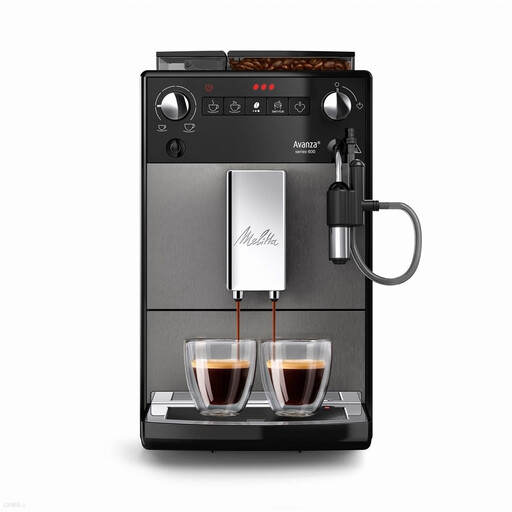
Melitta Avanza F270-100, Mystic Titan
The espresso setting is ideal if you want to pour the shot yourself into a glass of ice.
The product description lists a width of 20 cm, an adjustable grinder and an integrated milk system.
It also lists a removable brewing unit and automatic cleaning programmes. Check that you have enough room to access and maintain the machine where you plan to put it.
View at Joybuy
 No image available
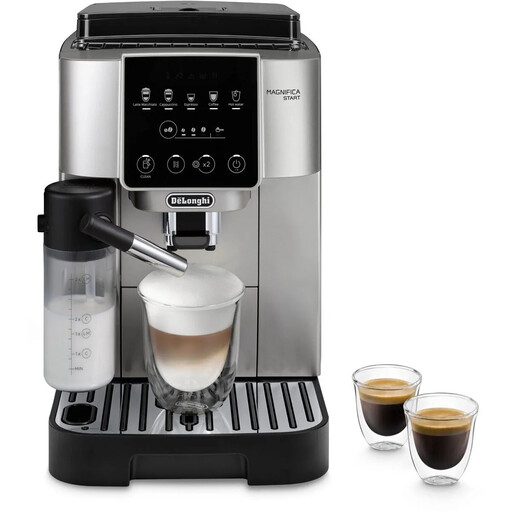
De’Longhi ECAM 220.80.SB Magnifica Start
The espresso setting is worth considering if you want to add the shot to ice yourself. The machine also features a LatteCrema Hot milk system.
The listed dimensions are 24 × 35 × 44 cm, and the machine has a conical burr grinder with 13 grind settings.
Other listed specifications include 15 bar, 1450 W, a 1,8-l water tank, a 250-g bean hopper and five one-touch drinks. Check the electrical specification of the specific machine before buying.
View at Joybuy
Frequently asked questions
Do I need a Cold Brew programme to make espresso over ice?
No. If you want to pour an espresso shot into a glass of ice, first check that the machine can make espresso. Cold Brew and dedicated iced coffee programmes use different preparation methods. Philips says its iced programme uses a lower brewing temperature and a longer brewing time than a standard espresso.
What should I bear in mind when positioning and cleaning the machine?
Compare the machine’s full dimensions with your available space, and make sure you can access the water, beans and cleaning parts. Krups says the coffee grounds need to be emptied after every drink on the SA403BE0. If you choose a machine with a milk system, it’s also important to check the care instructions for the specific model.
What electrical marking should I look for on a new bean-to-cup machine in Germany?
Mains-powered machines within the scope of the EU Low Voltage Directive must meet conformity requirements, including CE marking. Your Europe explains that the manufacturer uses this to declare conformity with the relevant EU rules; it is not individual approval by a government authority. Also check the voltage of the specific machine being offered.
Who is responsible if there’s a fault: the seller or the manufacturer?
For purchases from a trader in Germany, statutory consumer rights apply against the seller for at least two years from the date you receive the goods. A voluntary manufacturer’s warranty is separate and does not replace these rights.
How should I dispose of an old bean-to-cup machine?
In Germany, waste electrical equipment must be collected separately. The German Environment Agency explains that municipal collection points generally accept waste electrical equipment free of charge. If you want to return it to a retailer, check the return arrangements that apply.


