
Lieferung heute & morgen

Qualitätsgarantie

Willkommens-Angebote freischalten: KOSTENLOSE Lieferung | Bis zu 80 % RABATT | Kostenlose 30-Tage-JoyPlus-Testphase
App herunterladen
Coffee oils, oily residues and limescale build up during every brewing cycle. If they are not removed, deposits can accumulate in the brew group, pipes or coffee outlet. However, if you are looking to buy cleaning tablets for a bean-to-cup coffee machine, you should not focus solely on pack size or marketing claims. What matters is the purpose of the product, compatibility with your appliance and correct usage.
Coffee machine cleaning tablets, also known as coffee oil remover tablets, are primarily designed to remove coffee oils, grease and organic residues. Descaling tablets for bean-to-cup coffee machines, on the other hand, dissolve mineral deposits caused by hard water.
A cleaning tablet therefore cannot replace a descaler. Conversely, a descaler does not automatically remove coffee oils from the brew group. The appliance’s instruction manual specifies which programme and product are required.
“Suitable for bean-to-cup coffee machines” does not necessarily mean that every tablet is compatible with every model. Siemens EQ, Philips, JURA, Saeco, De'Longhi, Nivona and Sage use different cleaning and care programmes. You should therefore check the manufacturer, model range and intended application.
For a Siemens EQ900, for example, an original bean-to-cup coffee machine accessory such as the Siemens TZ80001A, or a suitable multipack, may be a better choice than a generic product without a specific model reference.
A low price per tablet is of little use if the tablets are not suitable for your machine’s cleaning cycle or are stored incorrectly. Cleaning tablets, descalers, powders and liquid products also differ in dosage and frequency of use. You should therefore compare the number of applications, tablet weight and manufacturer’s instructions, rather than just the total price.
Cleaning tablets with a clearly stated purpose are suitable for removing coffee oils and oily residues. According to the product description, the Siemens TZ80001A is intended for Siemens EQ bean-to-cup and built-in coffee machines and contains 10 odourless cleaning tablets. The Saeco CA6704/99 is also offered as a coffee oil remover in tablet form, with 10 tablets per pack.
For limescale deposits, you need a separate descaling product. The Siemens TZ80002A contains three descaling tablets for compatible EQ and built-in appliances. The Philips CA6700/10 is listed as a 250 ml descaler for espresso machines. For JURA appliances, the designated Jura descaling tablets should be matched to the relevant descaling programme.
Look for specific information such as “Siemens EQ300 to EQ900”, “for JURA bean-to-cup coffee machines” or “for Sage coffee machines”. For third-party products, the packaging should explicitly mention bean-to-cup coffee machines or espresso machines. Products for dishwashers do not belong in a coffee machine. These include Claro Classic Tabs, Finish Machine Care and EZEE Tabs Dishwasher Descaler.
Before use, check whether the tablet goes into a cleaning compartment, the brew group or the water tank. Some programmes control the dosage automatically via the display. Other products must be dissolved in water according to the instructions.
Check the information on fragrances, acids, chlorine compounds and allergy warnings. The Siemens TZ80001A is described as chlorine-free and odourless. According to the product information, the Philips CA6700/10 contains lactic acid. The Sage descaler is listed as a powder containing apple, sulphamic and citric acid.
Cleaning products are not intended for consumption. Keep them out of the reach of children and follow the instructions on hand, eye and face protection. After every cleaning or descaling cycle, complete the prescribed rinsing cycles with fresh water.
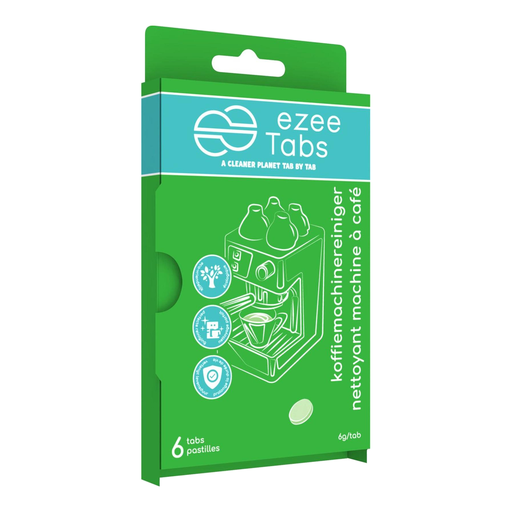
Why this product suits the profile: The pack contains six cleaning tablets for regular maintenance and, according to the product information, is suitable for fully automatic coffee and espresso machines. Check the specific approval in your manual before buying.
The stated purpose explicitly mentions coffee oils, grease and residues. This clearly distinguishes it from dishwasher tablets and pure descalers.
Six tablets per pack; according to the supplier, biodegradable, vegan and free from microplastics.
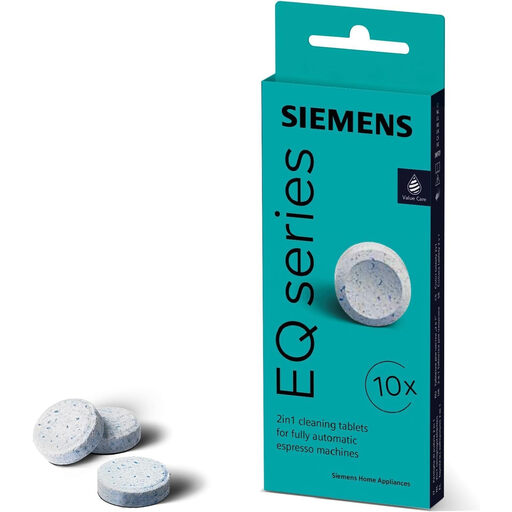
Why this product suits the profile: For owners of compatible Siemens EQ models who prefer original accessories and want to use the automatic cleaning programme.
The model list includes Siemens EQ300, EQ500, EQ6 plus, EQ700, EQ9 plus, EQ900 and EQ900 plus, as well as built-in appliances. This information makes it easier to check compatibility.
10 tablets; according to the product description, odourless and chlorine-free; designed for automatic cleaning.
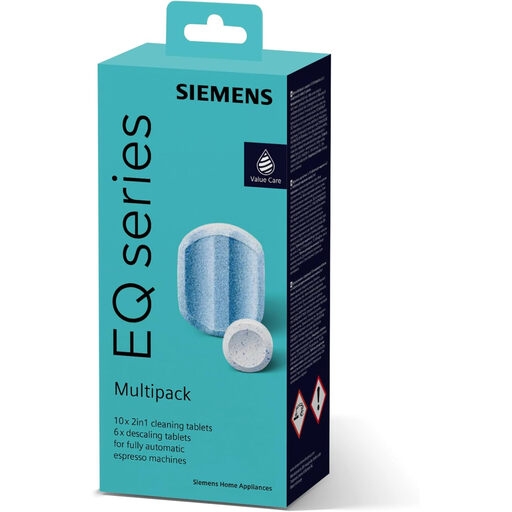
Why this product suits the profile: This set is aimed at households with a compatible Siemens EQ bean-to-cup coffee machine that want to keep cleaning and descaling products separately, but stocked together.
The pack lists 10 cleaning tablets and six descaling tablets separately. This prevents the two care tasks from being confused.
16 pieces in total; according to the product description, fragrance-free and intended for the automatic cleaning and descaling programmes of compatible Siemens appliances.
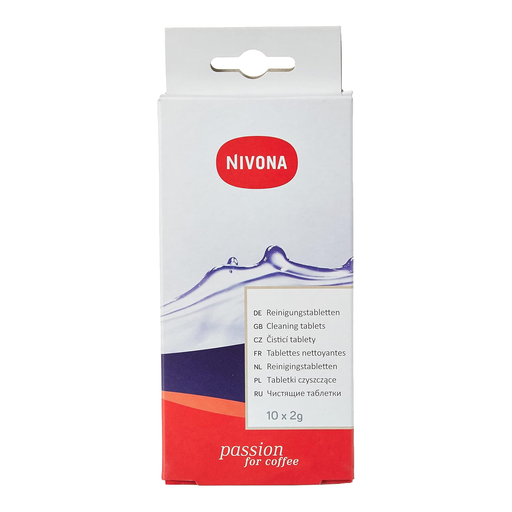
Why this product suits the profile: According to the product information, it is specially designed for Nivona bean-to-cup coffee machines and is suitable for users who prefer brand-specific care products.
The product description explicitly states that it is suitable for coffee and oil residues. A separate descaler is still required for limescale.
One tablet per pack; according to the manufacturer, with antibacterial properties, silicone-free and free from genetically modified ingredients, with a coffee fragrance.
We have put together a complete, regularly updated list of products that fully meet these strict selection criteria and the safety regulations applicable in the EU.
There are suitable product ranges for other brands, such as Philips CA6700/10, Jura descaling tablets, Saeco cleaning tablets and De'Longhi cleaning tablets. Nivona cleaning tablets and Sage descaler should also be selected according to the relevant appliance model.
This depends on the model, number of drinks prepared and the manufacturer’s programme. Many appliances automatically indicate when cleaning is required. More frequent use may call for shorter intervals. The instruction manual and the bean-to-cup coffee machine’s display remain the key references.
No, not usually. Cleaning tablets primarily dissolve coffee oils and organic residues. For mineral deposits, you need descaling tablets or a descaler approved by the manufacturer. Use both products only in the programmes intended for them.
Not necessarily. Some products are specified for bean-to-cup coffee machines and espresso machines, while others are designed for specific automatic programmes. Before using a tablet, check the product labelling and the instructions for your portafilter or integrated coffee machine.