
Lieferung heute & morgen

Qualitätsgarantie

Willkommens-Angebote freischalten: KOSTENLOSE Lieferung | Bis zu 80 % RABATT | Kostenlose 30-Tage-JoyPlus-Testphase
App herunterladen
A fully automatic coffee machine promises café-quality results at the touch of a button, taking you from fresh bean to perfect cup in seconds. But the market is saturated and confusing, and many machines fail to live up to their advertising claims. Before you invest a significant amount of money, it's crucial to understand the common pitfalls that often only become apparent after your purchase. Instead of relying on marketing buzzwords, you should focus on the technical details that determine a machine's durability and the actual quality of the coffee it produces.
Three common problems often lead to disappointment for many users:
To avoid a bad purchase, focus on three core technical aspects. These will determine the quality of your coffee, the ease of use, and the machine's lifespan.
The integrated grinder is the biggest advantage of this type of coffee machine. It grinds the beans fresh for every cup, optimally releasing their aromas. Pay attention to the following features:
For lovers of cappuccino or latte macchiato, the milk system is crucial. There are two basic types:
A good fully automatic coffee machine with a milk system will feature an automatic rinsing or cleaning programme for the milk nozzles that can be run immediately after preparation.
The easiest and most effective way to ensure the hygiene and longevity of a bean-to-cup machine is a removable brew group. This central component tamps the coffee grounds and brews the coffee. If it's removable, you can simply rinse it under running water to remove old coffee oils and residue. Models with a fixed brew group rely solely on chemical cleaning tablets, which often cannot completely remove stubborn build-up.
Based on these objective criteria, we have identified several models that represent a smart choice for different user profiles.
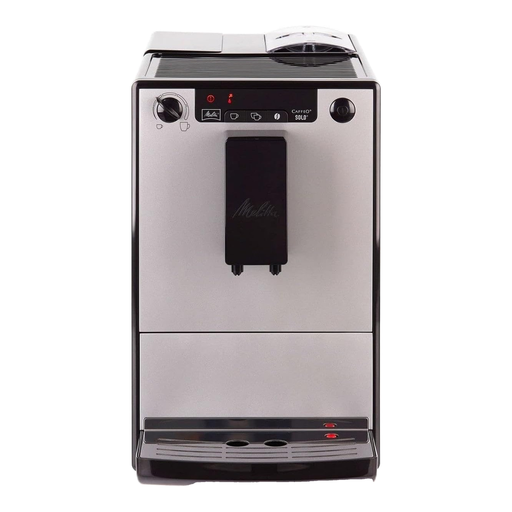
Why it's a great fit: Ideal for users who primarily enjoy high-quality espresso and café crème and can do without a milk system. Its very compact design is perfect for kitchens with limited space.
This model intentionally omits a complex milk system, thereby avoiding the associated cleaning trap. The brew group is removable for easy cleaning.
Compact dimensions (20 cm wide). Aroma-Extraction System for pre-brewing the coffee, ensuring intense flavour development.
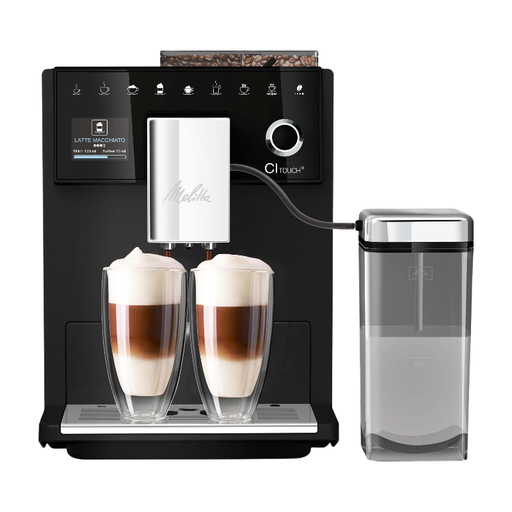
Why it's a great fit: Perfect for households with multiple people and different coffee preferences. The memory function for up to four people and the two-chamber bean container offer a high degree of customisation and convenience.
The external milk system is easy to clean. The brew group is removable for thorough manual cleaning, which ensures excellent hygiene.
Two-chamber bean container for different types of beans. "My Coffee Memory" function for up to 4 people. One-touch function for 10 coffee recipes.

Why it's a great fit: This hybrid model combines the convenience of a fully automatic machine with the control of a portafilter machine. It's aimed at enthusiasts who want to actively shape the brewing process and create latte art.
The open design with a portafilter and steam wand encourages conscious and thorough cleaning. The ThermoJet heating system eliminates long waits and is ready to use almost instantly.
Extremely fast 3-second heat-up time (according to the manufacturer). Automatic milk frothing with adjustable temperature and texture. Touchscreen operation with memory for 8 personalised drinks.
If you're looking for a separate coffee grinder for your existing setup, we've compiled a list of products that meet our strict selection criteria.
1. How often does a bean-to-cup machine need to be descaled? The frequency depends on the water hardness in your area and your usage. Modern machines measure the flow rate and will automatically prompt you when it's time to descale. As a rule of thumb, with average use and water hardness, expect to descale every two to three months. Using a water filter in the tank can reduce the frequency.
2. What is the difference between a ceramic and a stainless steel grinder? A ceramic grinder is often quieter and generates less frictional heat, which helps preserve the coffee's aroma. However, it is more sensitive to foreign objects (e.g., small stones in the beans). A stainless steel grinder is mechanically very robust and durable but can be louder during operation. Both types can deliver excellent grinding results when well-made.