Portions of beans in a small space
If you freeze individual portions and have limited floor space, a small four-star chest freezer could be a good fit. Make sure its usable capacity and freezing capacity suit the quantities you need to store.


A small four-star chest freezer may be enough for individual portions of beans and very limited floor space. For larger harvests or several types of frozen food, an upright freezer with drawers may be a better fit, provided there’s enough room for it and its door to open. Compare the dimensions, freezing capacity in kg/24 h and annual energy consumption of the specific model, not just its usable capacity. Blanching prepares beans for freezing, but you’ll still need to cook them thoroughly before eating.
If you freeze individual portions and have limited floor space, a small four-star chest freezer could be a good fit. Make sure its usable capacity and freezing capacity suit the quantities you need to store.
If you regularly process larger quantities of beans, compare the freezing capacity per 24 hours with the amount you plan to freeze in a day. An upright freezer with drawers can also help you keep different foods separate.
If you plan to keep food in the freezer long term, consider the appliance’s size, annual energy consumption and maintenance requirements together. The smallest appliance isn’t automatically the right choice.
The figures below relate to consumers choosing a freezer for blanched green beans in a small kitchen. Each row shows the factor that matters most to that group.
| Priority | What to check before buying | Who it matters most to |
|---|---|---|
| Kitchen space | Check the footprint, door clearance, route for delivery and the installation requirements for the specific model. | If I’m placing it in a small kitchen, the appliance and its open door need to fit in the available space. Around 33% of consumers put finding the right fit first. |
| Batch size and storage space | Compare the largest batch you plan to freeze in a day with the freezing capacity in kg/24 h; consider storage space and freezing capacity separately. | If you regularly freeze larger quantities of beans, you’ll need enough freezing capacity for each batch and suitable storage space. Around 27% of consumers prioritise batch size and storage space. |
| Energy use | Compare the current EU energy label and the annual energy consumption of the specific model. The German Environment Agency describes the current A to G scale. | If I’m running the appliance all the time, I want to weigh its annual energy consumption against my space and storage needs. Around 20% of consumers put energy use first. |
| Positioning and maintenance | Check the defrosting method, door hinges, required niche dimensions and installation instructions. Don’t place the appliance next to heat sources or in direct sunlight. | When space is limited and I need frequent access, suitable positioning and manageable maintenance are important. Around 20% of consumers prioritise positioning and ease of use. |
Usable capacity tells you how much storage space there is; freezing capacity in kg/24 h tells you how much fresh food can be frozen in a day. The small chest freezers mentioned here are rated at 2 kg/24 h, while the Bosch GTV15NWEB is rated at 4.0 kg/24 h.
Estimate the largest batch you’ll freeze in a day and the storage space you’ll need separately. For a larger harvest, you could also plan to freeze it in several batches.
The Verbraucherzentrale (German consumer advice service) points out that small freezers can use more energy than you might expect. If you’ll be running an appliance continuously, compare the annual energy consumption of the specific model.
Compare kWh/year and don’t buy more usable capacity than you’re likely to need. The Verbraucherzentrale recommends keeping a particularly close eye on the energy use of small appliances.
The German Federal Centre for Nutrition recommends blanching for three minutes to prepare beans for freezing. The German Federal Institute for Risk Assessment recommends boiling fresh beans for at least 30 minutes to cook them thoroughly.
Don’t treat blanched or thawed beans as ready to eat. Cook them thoroughly before serving.
An open door needs extra room, while an under-counter appliance also requires a suitable niche. For example, the manufacturer gives the Exquisit GS80-040E a depth of 108 cm with the door open.
Measure the space, door clearance and delivery route before ordering. For built-in appliances, check that the required niche dimensions are also suitable.
The GB 8886 is a freestanding chest freezer for small portions when floor space is limited.
The GB 341.1 in a stainless-steel look is a small chest freezer for portioned food.
The models listed suit different installation needs: the freestanding GTV15NWEB and the under-counter freezer GUN21ADE0.
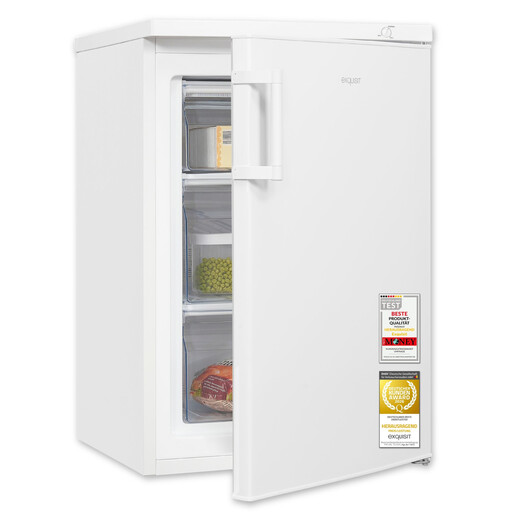
The freestanding GS80-040E white has drawers for storing several portions separately.
This selection includes small chest freezers and compact freestanding upright freezers for portioned food and fresh batches of beans.
 No image available
For keeping portions of food separate, if you’re looking for a freestanding upright freezer with drawers.
85 l, three drawers, four-star freezer compartment and reversible door; manual temperature control.
 No image available
A chest freezer to compare if you’re considering a model that can switch between fridge and freezer modes.
95 l, removable basket and defrost drain; energy class E according to the product name.
 No image available
For individual portions of beans when floor space is limited.
31 l, four-star freezer compartment, 147 kWh/year, adjustable feet and reversible door.
 No image available
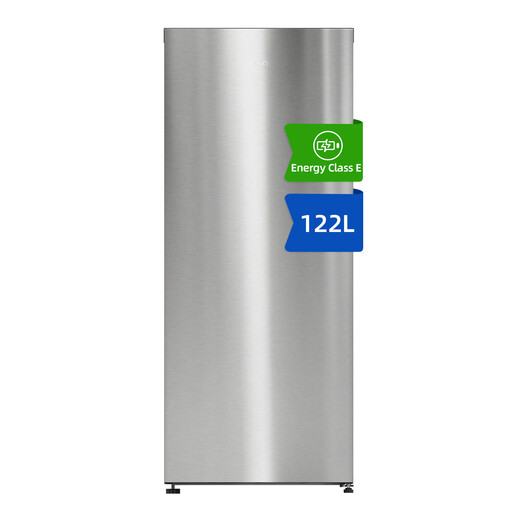
For storing several types of food separately, if you have room for a larger upright freezer in your kitchen.
122 l, four-star freezing, NoFrost and Multi-Airflow according to the product name.
 No image available
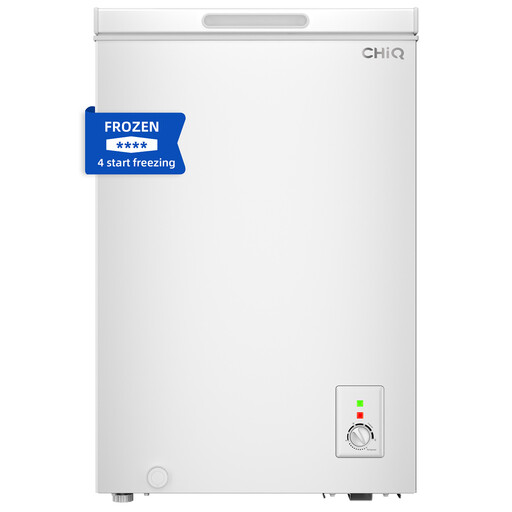
A chest freezer to compare if you regularly freeze batches of beans and have space for a freestanding appliance.
99 l, four-star freezing, wire basket and energy class E according to the product name.
No. The German Federal Centre for Nutrition recommends blanching for three minutes to prepare beans for freezing; the German Federal Institute for Risk Assessment recommends boiling fresh beans for at least 30 minutes. So don’t treat blanched beans as fully cooked: cook them thoroughly before eating.
Wash and trim the beans, blanch them briefly, cool them in iced water and drain them well. Freeze them in suitable portions and label the containers with the contents and date they were frozen.
Compare the kWh/year figure on the current EU energy label and take usable capacity into account when making your decision. To estimate your own costs, multiply the stated kWh/year by your electricity price per kWh; actual energy use also depends on positioning and how you use the appliance. The current scale runs from A to G.
If a product is faulty, the seller is generally responsible for the statutory warranty, not the manufacturer. For newly purchased goods, the period is generally two years from delivery. The Verbraucherzentrale explains that for sales contracts from 31 July 2026, a repair due to a fault extends the period once by 12 months. A voluntary guarantee has its own terms and doesn’t replace your statutory warranty rights.
Energy labelling is required for appliances covered by EU rules for domestic refrigeration and freezing appliances. The label shows, among other things, the energy efficiency class and declared annual energy consumption; the current scale runs from A to G.