What should you look for when buying?
First, decide how many portions of beans you want to freeze at once and how everyone sharing the freezer will keep track of their supplies. You can then weigh up the appliance size, where it will go and how much ongoing maintenance it will need.
| What matters |
What to look for |
Who is this important to? |
| Keeping track of portions |
Check the compartments, drawers or baskets, and make sure there’s room for labelled containers. |
If several people use the freezer, I want to identify and find each portion of beans quickly. Around 31% of consumers rank being able to clearly identify shared supplies as their top priority. |
| Freezing larger quantities |
Compare the freezing capacity in kg/24 h and the space available for newly added portions. |
If I add a lot of fresh beans at once, I want to know whether the appliance can freeze them without affecting the food already stored. Around 25% of consumers rank freezing capacity as their top priority. |
| Finding the right spot |
Check the external dimensions, door or lid opening, and the installation guidance for the specific model. |
If there’s only a certain amount of free space in the kitchen, the appliance needs to fit there and remain easy to access day to day. Around 25% of consumers rank finding the right place for it as their top priority. |
| Energy consumption and maintenance |
Compare the annual consumption in kWh on the energy label and the defrosting method. Agree who will take care of maintenance. |
If several people share the costs and maintenance, I want to know how much energy the appliance uses and who will defrost it. Around 19% of consumers prioritise running costs and maintenance. |
Freezers on Joybuy
This selection of Joybuy products includes compact and larger upright freezers, as well as chest freezers to suit different space and storage needs.
 No image available
COMFEE’ RCU60WH2(E), freezer, 60 l, 3 compartments
A compact option if you want to store portions of beans in separate compartments. 60 l; three compartments.
View on Joybuy
 No image available
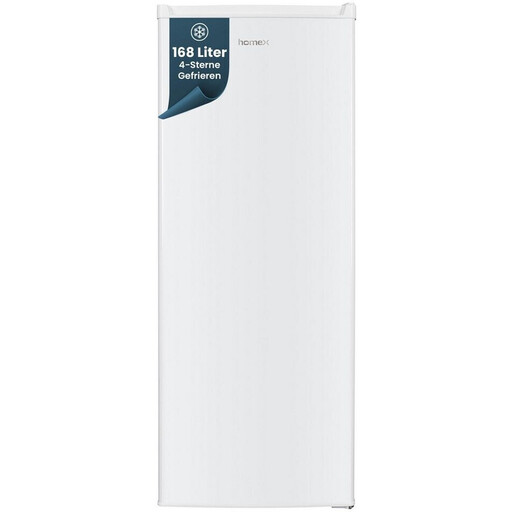
homeX FS1681E-W, freezer, 168 l, 4 drawers and 1 flap compartment
If several people need more separate storage areas, this model offers a choice of compartments. 168 l; 4 drawers and 1 flap compartment; energy class E; 40 dB.
View on Joybuy
 No image available
Exquisit GS581-H-010E, freezer, 85 l, 3 drawers
A compact drawer layout can make it easier to keep track of portions of beans. 85 l; three drawers; four-star freezing. The care instructions recommend manual defrosting if frost exceeds 5 mm.
View on Joybuy
 No image available
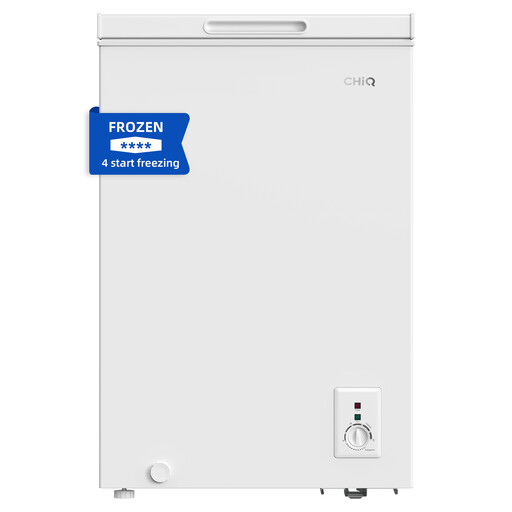
CHiQ chest freezer, 99 l, four-star freezing
A chest freezer is worth considering if you need freezer space without taking up much floor area and have agreed how to organise shared supplies. 99 l; four-star freezing; energy class E; wire basket.
View on Joybuy
 No image available
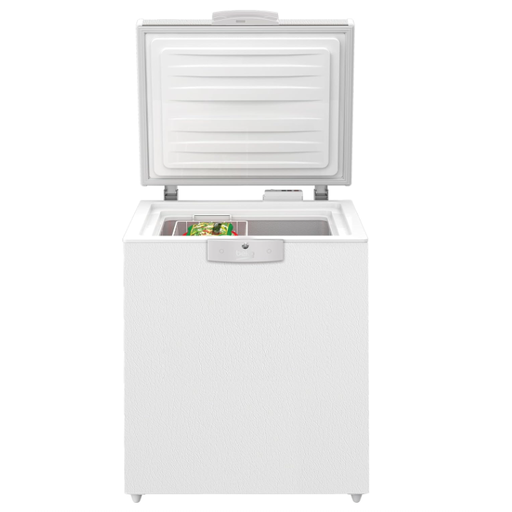
Beko HSM14550, chest freezer, 148 l, 1 freezer basket
A chest freezer with its own freezer compartment could suit larger quantities of beans, provided you have enough floor space and everyone sharing it agrees how to organise supplies. 148 l; 1 freezer basket; energy class D; 39 dB(A). According to the product information, manual defrosting is required if ice build-up exceeds 5 mm.
View on Joybuy
Frequently asked questions
Is a three-star compartment enough to freeze fresh beans?
No. The Federal Centre for Nutrition recommends a four-star compartment for freezing fresh food. A three-star compartment is suitable for long-term storage of food that’s already frozen. For this, the compartment needs to reach at least −18 °C.
When is your existing freezer compartment enough?
It may be enough if it’s suitable for freezing fresh food and has enough free space for your cooled portions of beans. If you regularly freeze larger quantities or are short on space, a separate appliance may be a good idea. Check its freezing capacity and internal layout.
How can you organise portions of beans in a shared kitchen?
Pack the beans into freezer-safe containers in portions, then label each one with the contents, quantity and date, as recommended by the Federal Centre for Nutrition. You should also agree which compartments or baskets everyone will use.
Can I eat blanched beans straight after defrosting them?
No. Blanched beans aren’t automatically ready to eat. The Federal Centre for Nutrition recommends boiling them for three minutes to blanch them before freezing. The Federal Institute for Risk Assessment advises heating green beans thoroughly before eating them. Make sure you cook the beans fully after defrosting.
What information should you compare to check energy consumption?
Compare the annual consumption in kWh shown on the energy label, and take the appliance size into account. The EU energy label also shows information including the energy efficiency class, volume and noise level. Actual consumption may vary depending on where the appliance is installed and how it’s used.


