
Lieferung heute & morgen

Qualitätsgarantie

Willkommens-Angebote freischalten: KOSTENLOSE Lieferung | Bis zu 80 % RABATT | Kostenlose 30-Tage-JoyPlus-Testphase
App herunterladen
As a Joybuy Product Recommendation Specialist, I understand that selecting the right follow-on nutrition for your child is a significant decision. The market for baby milk powder is vast, and the different stages and ingredients can be confusing. This article is designed to provide you with clear and objective guidance to find the appropriate BEBA follow-on milk for your child's specific developmental phase. We will highlight the differences between the products and help you make an informed decision.
The choice of the right infant nutrition depends on several factors. To identify the most suitable option from the Nestlé BEBA range, you should pay special attention to your child's age and the specific ingredients.
Nestlé BEBA offers a clear structure based on age to meet the nutritional needs of each developmental phase. The numbering system helps with orientation:
Modern infant nutrition contains specific components based on scientific findings. For BEBA, these include:
The safe preparation of milk powder is crucial for your child's health. Always follow the instructions on the packaging exactly. Use freshly boiled water that has cooled to approx. 40°C and prepare each meal fresh. An opened can should be stored well-sealed in a cool, dry place and used within 28 days.
Important Notice: Breastfeeding is the ideal nutrition for infants. Follow-on milk should only be used on the advice of a doctor or other healthcare professional and as part of a mixed diet.
Here you will find a detailed overview of three key products from the BEBA range, tailored to different age stages.
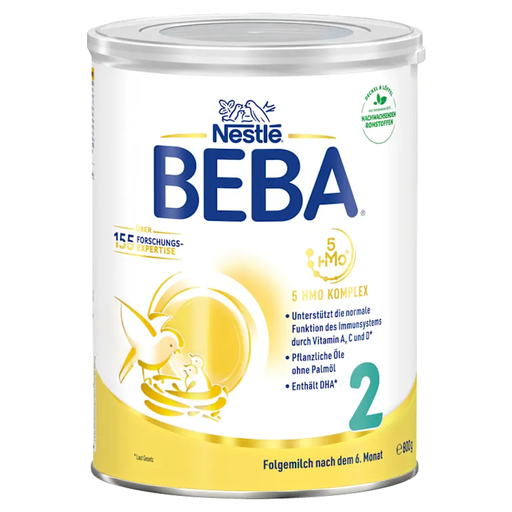
Product Highlights This Follow-on Milk 2 is specially developed for babies from the 7th month and supports the transition to complementary feeding. The formula is without palm oil and contains a blend of sunflower and rapeseed oil. It provides essential nutrients such as vitamins A, C, and D (as per legal requirements) and is enriched with the omega-3 fatty acid DHA from sustainable algae oil. It also contains the breast milk-inspired HMO 2'-FL.
Benefits:
Suitable for: Infants from the end of the 6th month who are already receiving complementary foods and need an age-appropriate follow-on formula as a supplement.
View Product: Nestlé BEBA Follow-on Milk 2
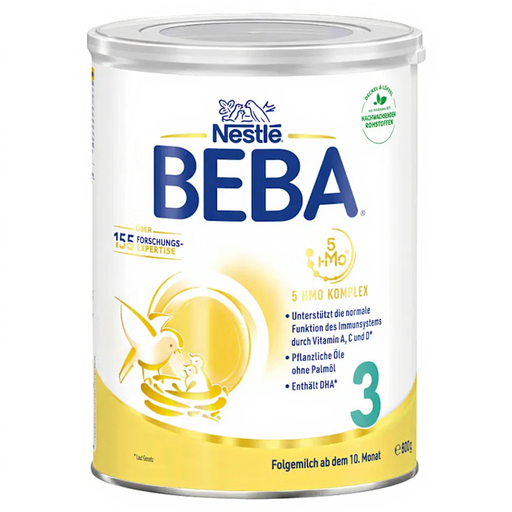
Product HighlightsBEBA Follow-on Milk 3 is tailored to the nutritional needs of babies from the 10th month. It serves as part of a varied diet alongside family meals. The formula also contains the HMO complex (2'-FL) and DHA from algae oil. Vitamins A, C, and D contribute to the normal function of the immune system. The protein content is age-appropriately adapted, and this formula is also without palm oil.
Benefits:
Suitable for: Babies from the 10th month who need a nutrient-rich supplement to their solid food as part of a mixed diet.
View Product: Nestlé BEBA Follow-on Milk 3
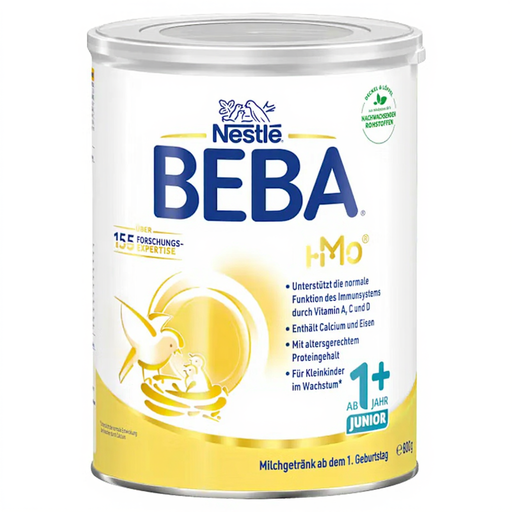
Product HighlightsBEBA Toddler Milk 1+ was developed for toddlers from one year of age. It serves as a milk drink and provides important nutrients relevant to this growth phase. These include vitamins A, C, and D to support the immune system, as well as calcium for normal bone growth. The protein content is reduced to be appropriate for their age. This formula is also without palm oil and contains the HMO 2'-FL.
Benefits:
Suitable for: Toddlers from their first birthday as part of a balanced and varied diet.
View Product: Nestlé BEBA Junior 1+ Toddler Milk
The products presented here are a selection from the Nestlé BEBA range. Depending on your child's individual needs or if you are looking for alternatives, it may be worthwhile to explore the entire product line.
Discover our full range of infant and toddler milk
The main difference lies in the age-appropriate adaptation of the nutrient composition. Follow-on Milk 2 is designed for babies from the 7th month, while Follow-on Milk 3 is tailored to the changing energy and nutrient requirements of babies from the 10th month. This affects, among other things, the content of proteins and certain vitamins and minerals.
The "without palm oil" claim means that Nestlé refrains from using palm oil in the formula of the respective BEBA follow-on milk. Instead, a blend of other vegetable oils, such as sunflower and rapeseed oil, is used to achieve the necessary fat composition.
HMO stands for Human Milk Oligosaccharides. These are complex carbohydrates developed based on the model of the oligosaccharides found in breast milk. After lactose and fat, they are the third-largest solid component of breast milk. Nestlé adds the specific HMO 2'-Fucosyllactose (2'-FL) to its BEBA formulas.