
Lieferung heute & morgen

Qualitätsgarantie

Willkommens-Angebote freischalten: KOSTENLOSE Lieferung | Bis zu 80 % RABATT | Kostenlose 30-Tage-JoyPlus-Testphase
App herunterladen
A bed guard for children is designed to stop a baby or toddler from rolling out of bed while asleep. In practice, however, suitability isn’t determined by height alone. The bed size, mattress thickness, fixing method and future use all need to work together.
Many models are marketed for different types of bed. That doesn’t automatically mean they’re compatible with every slatted base, mattress or bed frame. Before you buy, make a note of the following measurements:
For example, a child bed roll-out guard with a maximum permitted mattress height of 18 cm must not be used with a significantly thicker mattress.
A foldable bed guard makes getting in and out easier and can be handy when changing the bedding. What really matters, though, is whether the mechanism can be operated safely when fitted, and whether the structure stays stable. Check whether the guard actually swings down, whether the opening is wide enough, and whether there are any pinch points.
A bed guard that requires no drilling is often fixed with hook-and-loop tape, straps or clamp brackets. That can simplify assembly, but it does rely on a suitable sub-structure. If the slatted base is unsuitable or the bed frame is unstable, the fixing may give way. Before each use, you should check the straps, hook-and-loop fastenings, screws and hinges.
Look for a clear assembly guide and a fixing method that suits your bed. When you first set it up, the bed guard should not just rest against the mattress; it should be secured to the bed or slatted base according to the manufacturer’s instructions. A steel frame, T-shaped support feet or adjustable straps can be useful design features for different bed types. However, they don’t replace the need to check whether your specific bed is suitable.
For a baby bed guard or a toddler bed guard, all connections must be tight. Damaged parts, loose fixings or visible gaps are reasons not to use the product.
The height must match the mattress. If a very thick mattress covers too much of the guard, the effective protection area is reduced. The roba bed guard has a stated height of 38 cm; it is designed for mattresses up to 18 cm high.
The spacing between the bars is also important. On the roba model mentioned, the gap is 6 cm. Such technical values should be clearly stated in the product description. For a 70 x 140 cm cot, you must also use a mattress that matches these exact dimensions, if the manufacturer specifies this.
A wooden bed guard can be wiped clean with a damp cloth and often suits a classic nursery look. Textile and mesh elements, on the other hand, can offer good visibility, and removable covers make cleaning easier. Check whether the cover is washable and how it is attached.
Avoid products with unclear information about materials, weight capacity, age range or assembly. Rounded corners and easy cleaning are practical considerations, but they don’t replace regular checks.
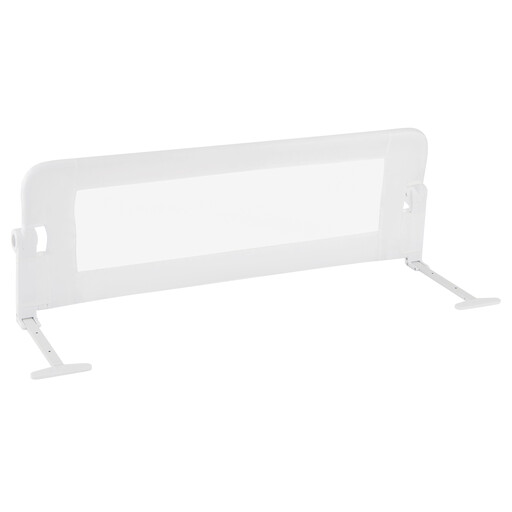
Why this product fits the profile: This model is designed for various bed types and features a foldable construction for easier access. Adjustable straps can be adapted to different bed sizes.
The product data lists dimensions, materials, assembly instructions and a weight capacity of up to 20 kg. This makes it easier to check before buying and avoids choosing based on marketing claims alone.
Steel frame with T-shaped support feet, visible mesh fabric and a removable, washable Oxford fabric cover.
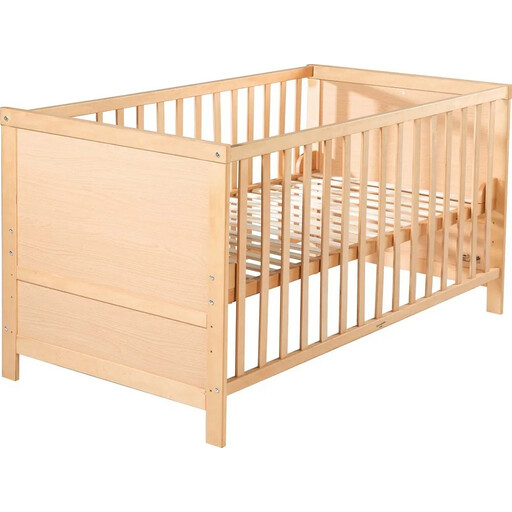
Why this product fits the profile: This growing cot is designed for long-term use from infancy through to a junior bed. The mattress area measures 70 x 140 cm.
The three height positions and three removable bars are clearly specified. This means the structure can be adapted to different developmental stages, rather than just adding a separate guard later.
Height-adjustable cot with conversion option to a junior bed, engineered wood construction and stated use from birth to around seven years.
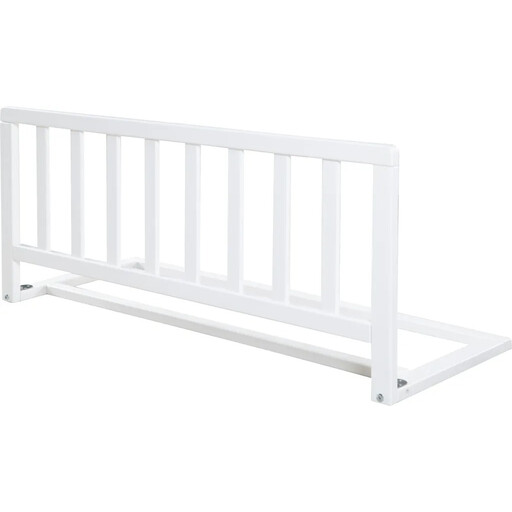
Why this product fits the profile: This compact wooden bed guard is aimed at families who want a fixed side barrier for children from around 18 months and prefer a no-drill installation.
The maximum mattress height of 18 cm and the fixing point on the slatted base are clearly stated. This allows you to check compatibility before ordering.
Solid wooden slats, 6 cm bar spacing, 38 cm height and fixing with supplied hook-and-loop tape without drilling.
We’ve put together a complete, regularly updated list of products that fully meet these strict selection criteria and the safety regulations in force in the EU.
Before first use, parents should:
A bed guard does not replace an age-appropriate sleeping environment or parental supervision. Always follow the instruction manual and the stated age and weight limits.
That depends on the individual model. According to the product information, the roba wooden guard is intended for use from around 18 months up to approximately five years. Another baby bed guard may be designed for different bed types. The manufacturer’s specifications, the construction of the bed and the child’s development are always the deciding factors.
Models that don’t require drilling are fixed, for example, with hook-and-loop tape or straps to the slatted base. The surface must be suitable and stable. Fixing directly to an unsuitable mattress does not provide a reliable hold. After assembly, you should check the connection by gently testing that it is secure.
The length of use depends on the child’s age, mattress height, bed size and the condition of the product. A model with a fixed age recommendation should not be used beyond that point. With a growing cot, the side barrier can be removed later if the product instructions allow for this conversion. Regular checks and the specific manufacturer’s information remain essential.