If your bedding can dry in good time, you have enough space and you ventilate well when drying it indoors, there’s plenty to be said for sticking with a clothes airer: it doesn’t use any electricity. A heat pump tumble dryer can be useful for large loads or when you need your bedding again quickly. Check the care label, the bedding programme’s load limit, and the specific model’s energy use, condensation efficiency and dimensions.
Who should consider this choice?
Households with large loads of bedding
If you often dry duvet covers or sheets indoors, a heat pump tumble dryer can free up your clothes airer sooner. The key question is whether the specific bedding programme is suitable for your load. Manufacturer information about individual models can help, but it’s no substitute for checking the manual.
Households with a damp-prone drying room
If you use a clothes airer indoors, remember to factor in the extra moisture and the need to ventilate regularly. The German Environment Agency lists damp washing as a source of moisture indoors. For a tumble dryer, the specific model’s condensation efficiency is also a useful point of comparison.
Households that use a tumble dryer frequently
If you use a tumble dryer regularly, consider energy use alongside noise, floor space and typical load size. The German Environment Agency recommends considering energy efficiency when buying and using appliances. The consumer advice centre also suggests comparing figures such as energy use per 100 Eco cycles and the noise level.
What should you look for when buying?
Clothes airer as your main option
A good fit if: your bedding can dry in good time, you have enough space and you ventilate the room well.
The trade-off: an airer takes up space and your washing needs time to dry. As the German Environment Agency explains, air-drying doesn’t use any tumble dryer electricity.
Heat pump tumble dryer as a helping hand
A good fit if: bedding that’s suitable for tumble drying often takes a long time to dry on the airer or you need it again quickly, and you have room for an appliance.
The trade-off: the appliance uses electricity and needs looking after. For large duvet covers, check the programme load limit and whether the specific model has a reversing drum.
| Buying consideration |
What to check |
Who it matters most to |
| Large bedding items |
Check the bedding programme’s load limit in the manual and compare it with the dry load. |
If I dry large duvet covers, I want to know whether the specific programme can handle the load; around 33% of consumers say large bedding loads are their top buying consideration. |
| Moisture in the home |
Plan to ventilate regularly when air-drying, and compare the stated condensation efficiency when choosing a tumble dryer. |
If I use a clothes airer in a damp-prone room, ventilation and condensation matter to me; around 27% of consumers put indoor humidity first. |
| Energy use |
Compare kWh per 100 Eco cycles on the same label basis. This figure doesn’t guarantee the energy use of a special bedding programme. |
If I use a tumble dryer frequently, I want to keep an eye on the extra electricity it uses compared with a clothes airer; around 27% of consumers prioritise comparing running costs. |
| Space, noise and care |
Check the appliance and door dimensions, the noise level in dB(A), and the care instructions in the model manual. |
If I’m placing the appliance in a small space or near a living area, I want to know whether it will fit and be easy to maintain; around 13% of consumers prioritise space, noise or maintenance. |
Common buying mistakes
-
Comparing old and current energy labels as if they were the same
Comparing the previous A+++ to D scale with the current A to G scale can give a misleading impression of differences in efficiency.
Since 1 July 2025, covered household tumble dryers must display the current EU label, using the A to G scale. Compare current figures on the same basis; the European Commission explains when the new requirements came into effect.
-
Focusing only on the maximum capacity in kilograms
The stated capacity alone doesn’t tell you how much bedding you can dry on the programme you’ve selected. If the load is too large, you may have to split it or keep using your clothes airer.
Compare the weight of your dry washing with the bedding programme’s permitted load in the manual.
-
Assuming an airer or tumble dryer means you don’t need to ventilate
Damp washing adds moisture to the air indoors. A tumble dryer doesn’t remove the need to check where it will be installed and whether there are suitable ventilation options.
Plan to ventilate regularly when air-drying, and check the tumble dryer’s condensation efficiency and guidance on where it should be installed.
Brands and models to consider
Bosch
The WQN245B91 is an example of a 9 kg tumble dryer with a bedding programme and a reversing drum.
- Bosch also lists Auto Dry and a self-cleaning condenser for this model.
- Check the permitted load for the bedding programme and the actual maintenance requirements in the manual.
Siemens
The WR47B2C40 is a 9 kg model with a reversing drum and a self-cleaning condenser.
- Siemens lists a noise level of 57 dB(A) for this model and describes its drum as rotating in alternating directions.
- This information doesn’t confirm that all Siemens tumble dryers have the same features, or prove an independently measured benefit when drying bedding.
AEG
The TR9T75680 is an 8 kg model with published energy label figures.
- AEG lists a condensation efficiency of 91% for this model.
- The manufacturer promotes 3DScan for multi-layered fabrics; check the permitted load for the programme you plan to use for bedding.
Miele
The TS740I WP is a 9 kg model for which Miele lists features including DryCare 40 and SilenceDrum.
- These features may be relevant to your choice, depending on the fabrics or where you plan to install the appliance.
- The features alone don’t demonstrate a proven benefit when drying the bedding discussed here; the care label and programme load limit remain key.
Beko
The B3T42249S is an 8 kg model with OptiSense sensor drying.
- Beko lists energy efficiency class C and a noise level of 63 dB(A) for this model.
- The manufacturer’s description of the drum movement isn’t an independent test on bedding; check the programmes and load limits for the specific model.
Heat pump tumble dryers at Joybuy
The models below are heat pump tumble dryers that can complement a clothes airer. Compare their specifications with your bedding load and the intended installation space.
 No image available
Haier I-Pro 1 HD80-E929E-DE
The stated capacity helps you compare your actual bedding load with the appliance’s size.
Heat pump tumble dryer; 8 kg; sensor drying; multiple drying programmes.
View at Joybuy
 No image available
LG RT80X7B
The 8 kg capacity is a useful starting point for comparing your dry bedding load with the appliance’s capacity.
Freestanding; heat pump tumble dryer; 8 kg; Dual Inverter Heat Pump.
View at Joybuy
 No image available
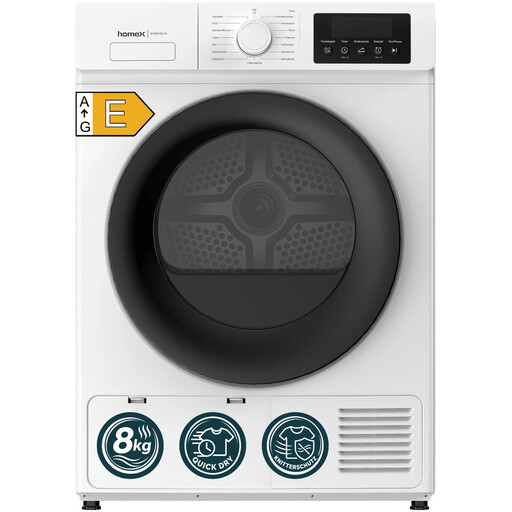
homeX WT8W1E-W
The product description lists a dedicated bedding programme; check its permitted load in the manual.
Freestanding; heat pump tumble dryer; 8 kg; 15 programmes.
View at Joybuy
 No image available
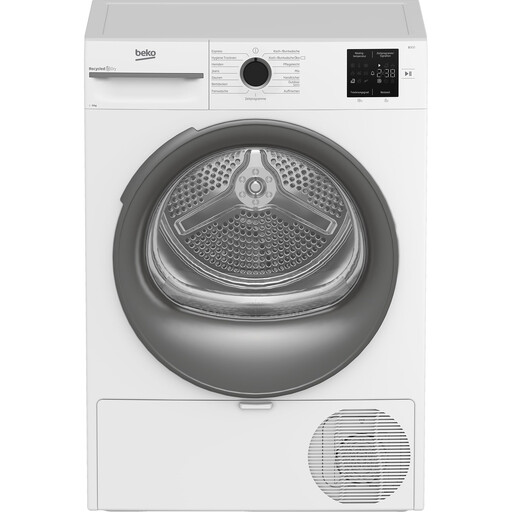
Beko BM3T39210W1
The stated capacity helps you compare the appliance with large bedding loads; the programme’s load limit is what matters.
Heat pump tumble dryer; 9 kg; 15 programmes.
View at Joybuy
 No image available
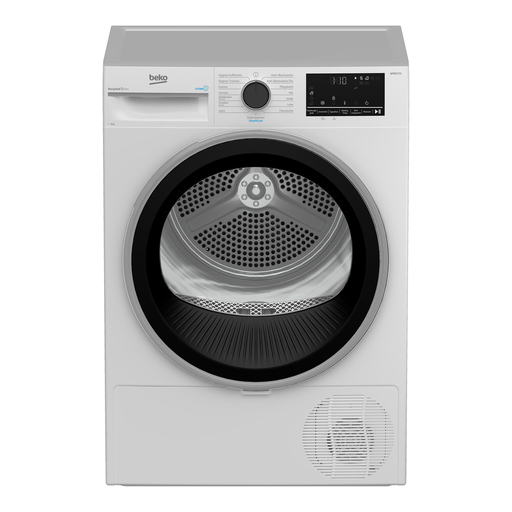
Beko B5TD6821B
Compare the 8 kg capacity with your typical dry load and check the bedding programme’s load limit.
Heat pump tumble dryer; 8 kg; 15 programmes; sensor drying.
View at Joybuy
Frequently asked questions
Can all bedding go in a heat pump tumble dryer?
No. Check the care label: the tumble-drying symbols distinguish between drying at a normal or low temperature and items that must not be tumble-dried. A bedding programme doesn’t override the care instructions.
Is a 9 kg tumble dryer automatically big enough for any bedding load?
No. The figure in kilograms refers to the appliance’s rated capacity. You also need to check your specific load against the limit for the selected programme in the model manual.
Do I still need to clean a model with a self-cleaning feature?
Yes. Follow the model-specific instructions for the lint filter and any other accessible parts. A self-cleaning condenser doesn’t mean the tumble dryer is maintenance-free.
What does ‘kWh per 100 cycles’ tell me about my bedding?
This is a comparison figure for the Eco programme on the EU label, not a guarantee of energy use for a different bedding programme. Your actual electricity costs also depend on how you use the appliance and your electricity tariff.
Which energy label applies when buying in Germany?
Since 1 July 2025, covered household tumble dryers sold in shops and online must display the EU A to G scale. The European Commission gives the date when this requirement came into effect, so don’t compare products using an old A+++ rating in isolation.


