
Lieferung heute & morgen

Qualitätsgarantie

Willkommens-Angebote freischalten: KOSTENLOSE Lieferung | Bis zu 80 % RABATT | Kostenlose 30-Tage-JoyPlus-Testphase
App herunterladen
A bedding set needs to fit your bed, your duvet and your personal care routine. Yet product images and abbreviated descriptions often lead to the wrong purchase. What really matters are the actual set contents, the dimensions and the material specification. An attractive pattern is no substitute for the right size, and a description like “cotton-like” does not automatically mean cotton is included.
A bedding set can consist of a duvet cover, a duvet cover with pillowcases, or several covers. A 3-piece bedding set usually contains one duvet cover and two pillowcases. A 4-piece bedding set, on the other hand, may contain two duvet covers and two pillowcases. Some offers labelled as a “set” may, according to the product description, only include a single duvet cover.
Before buying, you should therefore check the following details:
Microfibre made from polyester can feel soft and smooth, but it is not made of cotton. Cotton bedding and cotton percale bedding have different material properties to microfibre bedding. What matters is the exact fibre composition, for example “100% cotton”, “90% cotton” or “100% polyester microfibre”.
A cover measuring 140 × 200 cm is suitable for many single duvets. For a double bed, sizes of 200 × 200 cm, 200 × 220 cm or larger variants are common. For a king-size bed, 240 × 220 cm or 260 × 240 cm may be relevant. You should measure your duvet before buying. A cover that is too large can create wrinkles, while one that is too small can distort the filling.
The specification bedding 140x200 cm usually refers to the duvet cover, not automatically the pillowcases. An offer for bedding 200x200 cm may, for example, be combined with two pillowcases measuring 80 × 80 cm. With bedding 260x240 cm, buyers should also check whether the version is intended for an extra-wide duvet.
The following sizes can serve as a guide when choosing:
The actual dimensions of your duvet and pillows are what matter. The duvet cover and pillowcases should be chosen based on the specific internal measurements, not just the bed size.
Cotton is often chosen for its natural fibre structure and breathability. Cotton percale is densely woven and is often described in product details as smooth, lightweight and breathable. If you are looking for breathable bedding, you should pay attention to the fibre composition and care instructions, rather than relying solely on terms like “airy”.
Microfibre bedding is usually made of polyester. It can be lightweight, shape-retaining and easy to care for. At the same time, the feel, warmth and moisture management can vary significantly depending on the weave. For your buying decision, you should therefore consider the material, washing temperature and tumble dryer suitability together.
A bedding set with a zip can usually be put on and taken off quickly. Internal ties or loops can prevent the duvet from slipping inside the cover. These details are particularly practical with large covers.
With OEKO-TEX bedding, the specific certification should be stated in the product description. The OEKO-TEX STANDARD 100 standard relates to the testing of textiles and components for certain harmful substances. A certification is not a guarantee of sleep comfort or medical effect.
For care, the following applies:
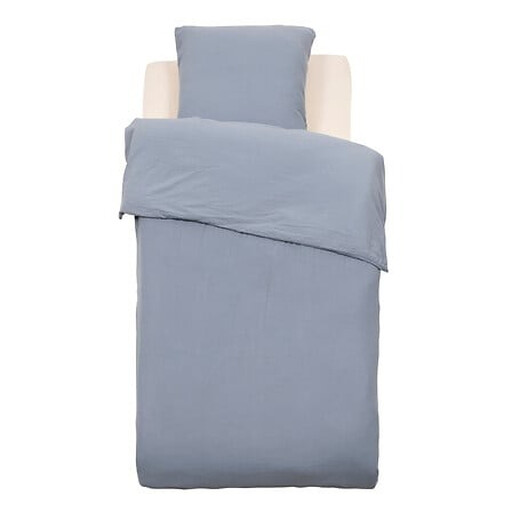
Why this product fits the profile: The 140 × 200 cm version with cotton material is aimed at buyers looking for a single duvet cover for everyday use. The set contents should be checked before purchase, as the product description refers to a single bedding item.
The size and material are clearly stated. If you also need pillowcases, you can check the actual delivery contents specifically.
140 × 200 cm, cotton, blue-grey colour scheme and a stated product weight of 1 kg.
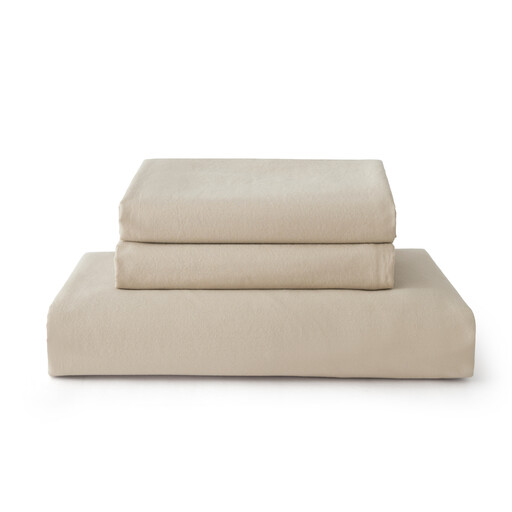
Why this product fits the profile: The 200 × 200 cm version contains one duvet cover and two pillowcases measuring 80 × 80 cm. According to the product details, the fabric is made of 90% cotton and features a zip and corner ties.
The material composition and delivery contents are clearly listed. The closure type reduces the effort required when putting on the cover.
90% cotton, 3-piece, 200 × 200 cm, two pillowcases and OEKO-TEX STANDARD 100 according to the product details.
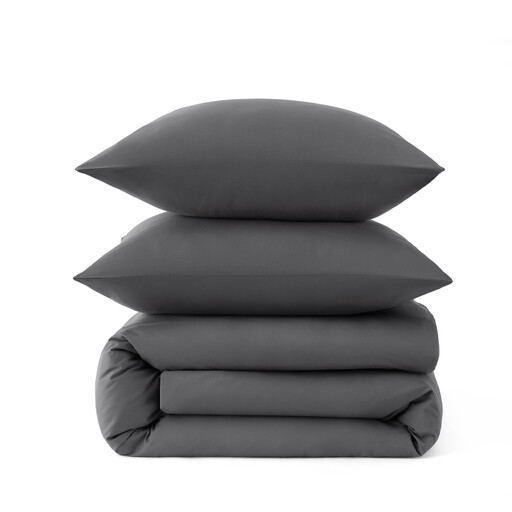
Why this product fits the profile: The 4-piece set contains two duvet covers measuring 135 × 200 cm and two pillowcases measuring 80 × 80 cm. This makes it ideal for households that change bedding regularly or want to equip two single beds.
The number of covers is explicitly stated. Zips make it easier to remove and wash regularly.
Two duvet covers, two pillowcases, microfibre, zips and OEKO-TEX STANDARD 100 according to the product description.
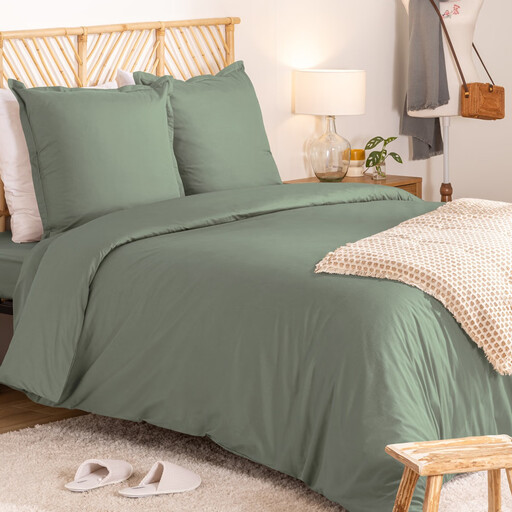
Why this product fits the profile: The dimensions of 260 × 240 cm are designed for particularly large duvets. The product details mention 100% cotton percale as well as a breathable, lightweight version.
The unusual extra-large size is clearly stated. Buyers can compare it with the dimensions of their duvet before ordering.
260 × 240 cm, 100% cotton percale, linden green colour and machine-washable care according to the product description.
We have put together a complete, regularly updated list of products that fully meet these strict selection criteria and the safety regulations in force in the EU.
For single beds, 135 × 200 cm or 140 × 200 cm are commonly used. What matters is the size of your existing duvet. Pillowcases must be checked separately for their size, often 80 × 80 cm.
The lifespan depends on fibre quality, workmanship, washing temperature, drying method and washing frequency. Zips, seams and fabric edges should be checked regularly. Following the care label and drying completely can help maintain usability; a fixed lifespan cannot be given as a general rule.
That depends on the specific version. Microfibre bedding is often washed at low temperatures and dries relatively quickly. Cotton bedding may allow higher washing temperatures depending on the weave and care instructions. What matters are the manufacturer’s instructions, not just the material name.