
Lieferung heute & morgen

Qualitätsgarantie

Willkommens-Angebote freischalten: KOSTENLOSE Lieferung | Bis zu 80 % RABATT | Kostenlose 30-Tage-JoyPlus-Testphase
App herunterladen
A new bedding set often looks more appealing in product photos than it does in everyday use. Common problems only become apparent after purchase: the duvet cover does not fit the duvet you already have, the material feels warmer or smoother than expected, or the care instructions are impractical for your household. Comparing products carefully can help you avoid these costly mistakes.
A duvet cover set may consist of two or three pieces. A 3-piece bedding set often includes one duvet cover and two pillowcases. However, smaller versions may include just one pillowcase. Before buying, check:
It is especially worth checking carefully when looking at 80 x 80 cm pillowcases. This size is common in Germany, but it is not automatically included with every set.
Cotton bedding, microfibre bedding and satin bedding differ in feel, care requirements and moisture management. “Satin” initially describes the weave rather than a specific raw material. Cotton sateen can behave differently from synthetic satin fabrics.
Terms such as “breathable”, “soft” or “kind to skin” should also be supported by specific details. More useful information includes:
Machine-washable bedding is practical for family households, but the permitted temperature and drying method vary from product to product. According to product information, microfibre sets can often be washed at low temperatures and tumble-dried on a low-heat setting. Cotton covers may have different care requirements depending on their construction.
With duvets, it is also important to distinguish between a summer duvet, an all-season duvet and a more heavily filled duvet for cold rooms. A lightweight duvet with a low fabric weight is not automatically suitable for every sleeping preference.
For single beds, 135 x 200 cm bedding is a common choice. Taller people or those using longer duvets often choose 155 x 220 cm bedding. For double beds, options include 200 x 200 cm bedding and longer oversized formats.
Measure your existing duvet before placing your order. The cover should not be significantly smaller. If it is too large, the filling may move around; if it is too small, it can become tight and creased.
With a quilted duvet, the stitching keeps the filling in separate sections. This can help to stabilise its distribution, but it does not replace checking the filling material and warmth rating. For an allergy-friendly duvet, check the manufacturer’s specific description, washability and cover material. The term does not establish individual health suitability.
If a product mentions OEKO-TEX, RDS or Downpass, it should be clear what the relevant statement refers to. Depending on the standard, OEKO-TEX relates to tested textile components and specific requirements concerning harmful substances. Such a label is not a blanket promise of suitability for every individual. Details relating to Dermatest or similar tests should be understood as manufacturer or product information.
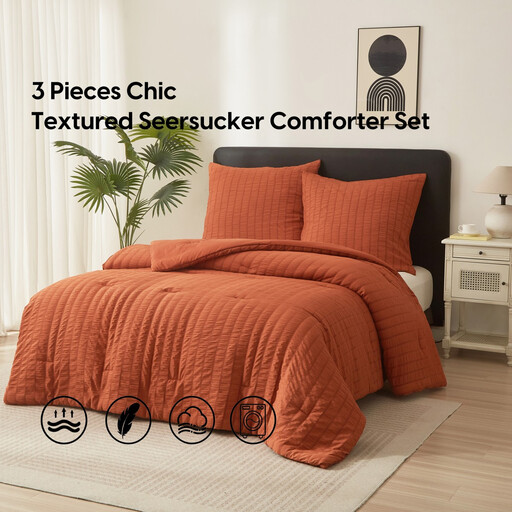
Why this product suits this profile: This three-piece set combines a larger duvet with a textured surface and two pillowcases. It is suitable for users looking for an easy-care duvet.
The product details state the material, dimensions and care instructions: 100% polyester microfibre, machine washing below 30 °C and low-temperature drying.
Quilted construction, textured seersucker surface and a clearly stated three-piece set.
We have put together a complete, regularly updated list of products that fully meet these strict selection criteria and the safety regulations applicable in the EU.
Wash new bedding before using it for the first time, following the care label. Use a mild detergent for delicate surfaces and avoid bleach unless it is expressly permitted. Fasten zips before washing. With microfibre bedding, a low-heat drying cycle reduces the risk of heat damage.
An additional 130 x 170 cm cosy blanket should not be used as a sleeping blanket for babies or young children. Synthetic blankets should also be kept away from naked flames, candles and heaters. Regular airing and storing the blanket only when completely dry can help prevent odours and moisture problems.
The size depends on the duvet, not just the mattress. For single duvets, 135 x 200 cm and 155 x 220 cm are common sizes. For double beds, 200 x 200 cm or larger formats may be suitable. Before buying, you should also check the pillow dimensions and the set contents.
Its lifespan depends on the fibre type, construction, washing frequency and drying method. Gentle cycles, suitable detergents and avoiding unnecessarily high temperatures can reduce strain on the fabric and fastenings. Without details about quality and usage, it is not possible to give a reliable specific timeframe.
Microfibre bedding can be easy to care for and washable at low temperatures. However, this does not automatically mean it is personally suitable for allergy sufferers. Material compatibility, care instructions and, where applicable, tested product properties are the key considerations. If you have known sensitivities, check the full material specification and the manufacturer’s information.