
Lieferung heute & morgen

Qualitätsgarantie

Willkommens-Angebote freischalten: KOSTENLOSE Lieferung | Bis zu 80 % RABATT | Kostenlose 30-Tage-JoyPlus-Testphase
App herunterladen
A new bedding set often looks straightforward in product images. In practice, however, mistakes happen because of overlooked measurements, unclear material details, or a set composition that doesn’t match your own bed. If you only focus on colour and price, you might end up with a duvet cover that’s too big, creases heavily after washing, or doesn’t include enough pillowcases.
Three typical buying misconceptions are particularly relevant:
In Germany, bedding 135x200 and bedding 155x220 are common sizes for single beds. The smaller option is usually suitable for standard single duvets, while 155 x 220 cm offers more length and width. For children’s and teenagers’ beds, bedding 140x200 unicorn can be a suitable motif and size option.
The key is to match the size of your duvet with the size of the duvet cover. A cover that is too large can create wrinkles, while one that is too small puts strain on the seams and zip. You should also check the pillow size: for the sets featured here, it is 80 x 80 cm.
Cotton bedding is often chosen for its breathability and natural fibre content. The 155 x 220 cm set made from 90% cotton has a stated fabric weight of 110 g/m², making it a lightweight, breathable fabric. Cotton can be appealing if you prefer a drier, airier feel when you sleep.
Microfibre bedding is usually made from polyester. It generally dries quickly, is lightweight, and can have a smooth, soft surface. The two anthracite-coloured sets in 135 x 200 cm are made from 90% polyester or polyester microfibre. Claims like “soft” or “breathable” should always be considered alongside care instructions, fabric composition and workmanship.
A duvet cover with pillowcases can be offered as a 3-piece or 4-piece set:
The name alone isn’t enough. You should read the exact item count and breakdown in the product description. Among the sets featured here, several models also have eight internal or corner ties. These can help keep the duvet in place inside the cover, but they don’t replace the need for the correct size.
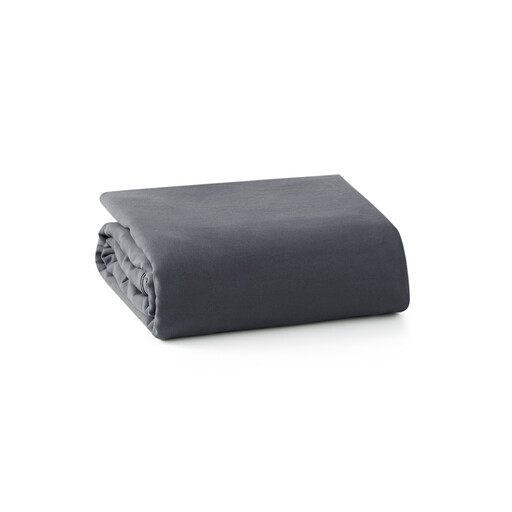
Why this product suits the profile: Two duvet covers in 135 x 200 cm and two pillowcases give you an extra change option for single beds. The anthracite colour scheme works well with many bedroom textiles.
The clearly stated set contents reduce the risk of mistakenly expecting a second duvet cover. Zips and eight corner ties are also specified.
90% polyester, machine washable at 40 °C, zip closure and two duvet covers in the set.
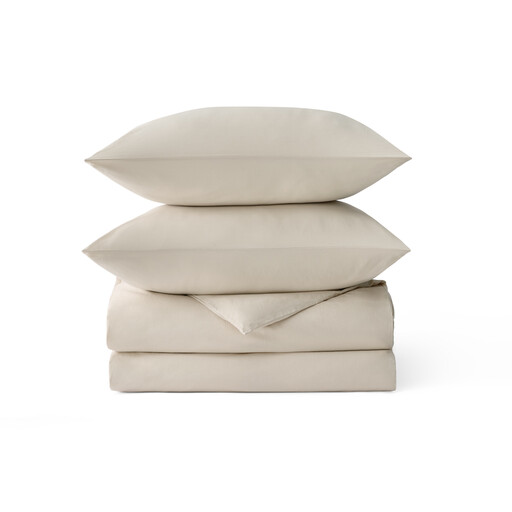
Why this product suits the profile: This set combines 90% cotton with a pre-washed finish, eight corner ties and a concealed zip. It’s aimed at buyers who assess material specification, workmanship and appearance together.
The product details state the fibre content, size, set contents and a care limit of 40 °C. The OEKO-TEX Standard 100 label is shown with the certificate number 24.HCN.19195.
155 x 220 cm, 90% cotton, two pillowcases at 80 x 80 cm and a zip closure.
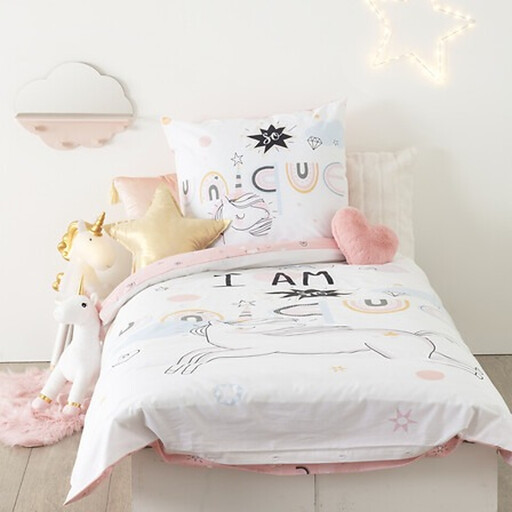
Why this product suits the profile: The stated size of 140 x 200 cm and the unicorn motif appeal to families looking for child-friendly bedding for a single or teenager’s bed.
The specific size measurement helps prevent accidentally buying a motif set for a 135 x 200 cm or 155 x 220 cm duvet. Material and care details should be checked additionally before purchase.
Stated size 140 x 200 cm, unicorn motif and manufacturer details from a company based in the European Union.
We’ve put together a full, regularly updated list of products that fully meet these strict selection criteria and the safety regulations in force in the EU.
Before using your bedding for the first time, it’s a good idea to check the care label. Depending on the version, the models mentioned are machine washable at under 40 °C or up to 40 °C. A tumble dryer may be allowed on a low setting, but should only be used if the label confirms this.
For a longer lifespan, three points are important:
Colour can also play a role. Anthracite bedding, beige bedding and white bedding don’t differ fundamentally in function, but they look different in the bedroom and may require different colour sorting when washing.
For many single duvets, bedding in 135 x 200 cm is used. However, you should measure the actual size of your duvet before buying. For longer duvets, bedding in 155 x 220 cm may be suitable.
This depends on usage, personal preference and care instructions. Many households change their bedding regularly every one to two weeks. If you sweat heavily, are ill, or notice visible soiling, changing it sooner may be sensible. The key factors are the permitted washing temperature and the manufacturer’s instructions.
An OEKO-TEX label shows that textile components have been tested for certain harmful substances according to the relevant standard. This does not provide a general guarantee for allergy sufferers or sensitive skin. If you react to certain fibres or finishes, you should check the material composition, care instructions and your own tolerance particularly carefully.