Who is this relevant to?

Households with a bedroom next to the bathroom

If you notice moisture in the bedroom next door after showering, start by checking whether it’s spreading from the bathroom and how humidity levels change over time. The German Environment Agency recommends removing peaks in humidity immediately by ventilating thoroughly; Germany’s Verbraucherzentrale consumer advice service suggests using a hygrometer to monitor room humidity.

People with a cool bedroom

If your bedroom stays cool for long periods and remains damp despite ventilation, it’s important to check that the appliance is suitable for the room’s actual temperature. Trotec points out that the amount of water collected by adsorption dehumidifiers also depends on the surrounding conditions.

Light sleepers

If you plan to run an appliance close to bedtime, check the noise levels, operating mode and display settings for the specific model. Meaco lists a night mode for the DD8L Pro, but that doesn’t mean every model or setting will be silent.

What should you look for when buying?

Ventilate the bathroom

When: If most of the moisture is produced immediately after showering, the German Environment Agency recommends ventilating the bathroom thoroughly and keeping the bathroom door closed.

Trade-off: This relies on having an effective way to ventilate and doing so regularly. If the moisture persists, this won’t necessarily address its underlying cause.

Electric adsorption dehumidifier

When: If the bedroom repeatedly stays damp after you’ve checked for sources of moisture, and it remains cool for long periods, an adsorption dehumidifier may be worth considering.

Trade-off: The drying material needs heat to regenerate. The air blown out may feel warmer, and maximum figures in l/24 h don’t guarantee the amount of water the appliance will collect in your bedroom.

Compressor dehumidifier

When: In a normally heated bedroom, you can compare a compressor model as an electric alternative if you still need to dehumidify after ventilating.

Trade-off: At lower room temperatures, the dehumidifying performance you can achieve in practice may fall. Compare noise levels and power consumption for each model.

What matters What to check before buying Who is most affected?
Source of moisture and whether you need an appliance Whether you can keep the bathroom door closed and ventilate after showering; monitor humidity levels in the bedroom with a hygrometer. If I first want to establish whether the bedroom is actually staying damp, I’ll monitor conditions before buying an appliance. Around 33% of consumers prioritise identifying the source of moisture.
Dehumidifying a cool room Operating temperature and the temperature and humidity conditions used to calculate the stated l/24-h capacity; consider room size alongside the moisture level. If my bedroom stays cool for long periods, the key question for me is whether the appliance can be used at that temperature. Around 27% of consumers prioritise dehumidifying at low room temperatures.
Comfort while sleeping Noise level and the corresponding operating mode; check whether the specific model has a night mode and whether its displays can be turned off. If the appliance will be running near bedtime, I’ll check its noise level, lights and operating mode. Around 20% of consumers prioritise sleeping comfort.
Power consumption, water tank and maintenance Power consumption and planned running time; check the tank, automatic shut-off, drainage options and filter maintenance. If I’m using it regularly, I’ll want to know how often I need to empty the tank and how running time and power consumption affect usage. Around 20% of consumers prioritise running costs and maintenance.

Common buying and usage mistakes

  • Dehumidifying the bedroom while damp air is coming in from the bathroom

    The peak in humidity starts in the bathroom. Leaving the door open can allow moisture to spread into adjoining rooms.

    After showering, remove the moisture in the bathroom first. Then use a hygrometer to monitor how humidity levels change in the bedroom.

    If an appliance doesn’t address the source of the moisture, it may run for longer than necessary while the underlying problem remains.

  • Comparing maximum litres-per-day figures without checking test conditions

    Manufacturers may base their figures on different temperature and humidity conditions. So a maximum capacity can’t necessarily be applied to your own bedroom.

    Only compare figures when they’re based on comparable test conditions, and check the conditions for the specific model.

  • Assuming ‘no compressor’ means silent or electricity-free

    An electric adsorption dehumidifier needs power. Its fan and the regeneration of the drying material don’t automatically make it silent. Trotec also describes the heat needed for regeneration.

    Check the appliance type, power consumption and noise level for the setting you actually plan to use.

    Longer running times use electricity. Power consumption alone doesn’t tell you how much water the appliance will remove in your room’s conditions.

Brands to consider

Meaco

Meaco positions its DD8L adsorption models for cooler rooms. For the DD8L Pro, the manufacturer also lists app control and a night mode.

  • Meaco lists a night mode for the DD8L Pro.
  • The washable filter and 2-l tank are specifications for the DD8L Junior and shouldn’t be assumed to apply to other models.

Trotec

Trotec lists the TTR 57 E for rooms of up to 20 m². Room size is a useful guide, but it doesn’t replace checking the room temperature and moisture level.

  • Trotec lists a 5-l tank and up to 9 l/24 h for this model.
  • The stated maximum capacity doesn’t guarantee the amount of water the appliance will collect in your bedroom.

Aktobis

Aktobis positions the WDH-DS3 as an adsorption dehumidifier for cool rooms, with a stated room size of up to 25 m².

  • Aktobis lists a capacity of up to 10 l/day at around 8 °C and 80 % relative humidity.
  • This capacity applies under the stated conditions and can’t be assumed for other room temperatures.

De’Longhi

The Tasciugo AriaDry Light DNS65 is an electric alternative with a stated humidistat and laundry function.

  • De’Longhi lists a capacity of 6 l/24 h for the DNS65 at 30 °C and 80 % relative humidity, with a noise level of 34 dB(A).
  • The capacity applies under the stated conditions. De’Longhi also lists an input power of 520 W.

Wood’s

Wood’s positions the WDD80 as an adsorption dehumidifier for cold rooms.

  • Wood’s lists a 2-l tank and a hose connection for the WDD80.
  • Check the specifications of the version you’re buying before factoring the tank or drainage into your decision.

Product options at Joybuy

These Joybuy options are intended for dehumidifying a bedroom and include different types of appliance. Before buying, check the appliance type and operating conditions. For electric models, make sure the voltage version is suitable and check the relevant conformity information.
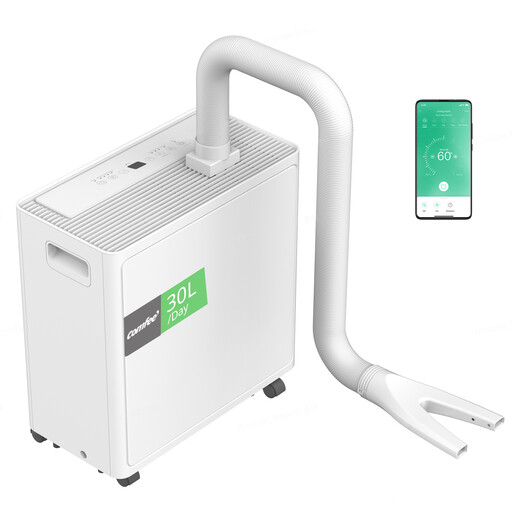
Comfee’ MDDA-30DEN7-SD dehumidifier

Comfee' MDDA-30DEN7-SD dehumidifier

An option for recurring damp in the bedroom. Compare the stated figures with the conditions and needs in your room.

30 l/day; 3.2-l tank; R290 refrigerant; approx. 130 m³ (73 m²).

View at Joybuy

Comfee’ MDDO-10DEN7 dehumidifier

Comfee' MDDO-10DEN7 dehumidifier

Compare it with models whose product name specifies a sleep mode. Check the noise level and how it operates for the way you plan to use it.

10 l/day; 2.5-l tank; 36 dB; approx. 40 m³ (16 m²).

View at Joybuy
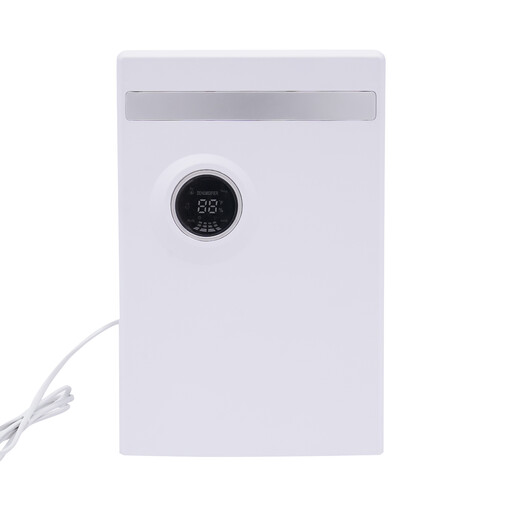
Portable dehumidifier, 100 W

Portable dehumidifier, 100 W

A compact option to compare. Check that the stated room size is suitable for the conditions in your bedroom.

100 W; 2,200-ml tank; stated room size 30 m².

View at Joybuy
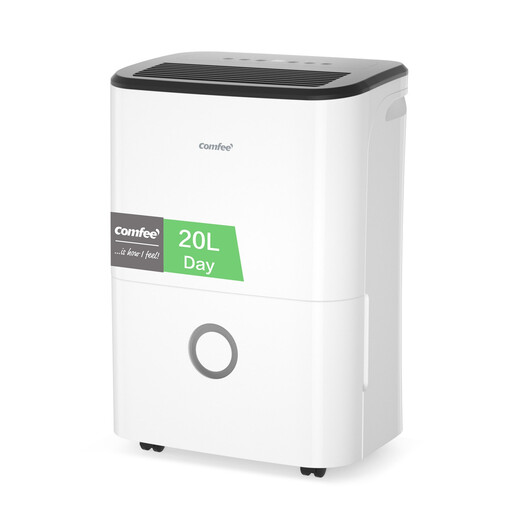
Comfee’ MDDF-20DEN7 dehumidifier

Comfee' MDDF-20DEN7 dehumidifier

Worth comparing if your bedroom is repeatedly damp. Check the stated room size and whether the way it operates suits your room.

20 l/day; 3-l tank; approx. 100 m³ (40 m²).

View at Joybuy

CONOPU CS10B dehumidifier

CONOPU CS10B dehumidifier

An option to compare with models that have a stated sleep mode. Check the noise level and other operating conditions for your bedroom.

16 l/day; 2.5-l tank; 24-hour timer.

View at Joybuy

Frequently asked questions

Should a dehumidifier draw damp air directly from the bathroom into the bedroom?

No. For moisture from showering, the German Environment Agency recommends removing the peak in humidity directly in the bathroom and keeping the bathroom door closed. If ventilation is limited, you should also wipe water off the walls and floor after showering.

How can I tell if I need extra dehumidification?

Use a thermo-hygrometer to measure relative humidity and room temperature regularly, including after showering and ventilating. Germany’s Verbraucherzentrale consumer advice service gives 40–60 % relative humidity as a guide for living spaces; a reading alone won’t identify the cause of an ongoing problem.

Can I put an adsorption dehumidifier next to the shower?

Follow the instructions for the intended location and the safety guidance for the specific model. Aktobis explicitly warns that water must not get into the electrical components of the WDH-DS3. For the bedroom use considered here, there’s no need to place it where it could be splashed.

What should I bear in mind when it comes to maintenance and ongoing power use?

Check the model’s instruction manual for guidance on the tank, drainage and filter. To calculate electricity use in kWh, multiply the input power in watts by the actual number of hours it runs, then divide by 1,000.

Which product markings and consumer rights matter when buying in Germany?

Electrical equipment covered by the EU Low Voltage Directive, for voltages from 50 to 1,000 V AC, must meet the relevant safety requirements, including CE marking. A CE mark isn’t an independent performance test. When you buy from a business seller in the EU, the statutory two-year guarantee applies against the seller, in addition to any manufacturer’s warranty. Take-back obligations for old appliances depend on the legal requirements that apply to the relevant retailer.