Who might benefit from a dehumidifier?

Bedrooms with persistently high humidity

If your windows are repeatedly wet, measurements can help you work out whether ventilation and heating are enough or whether additional dehumidification may be needed. The Verbraucherzentrale recommends checking humidity with a thermo-hygrometer; the Umweltbundesamt advises airing the bedroom thoroughly before going to bed and after getting up.

Light sleepers

If a running appliance could disturb your sleep, check the noise level for the mode you intend to use and consider whether you could run it outside your sleeping hours. Bosch and Comfee publish noise levels and operating modes for some models, which you can compare with your needs.

People with a cool bedroom

If you keep your bedroom cool, compare the actual room temperature with the stated operating range for the specific model. Meaco lists different operating temperatures for some of its units; these shouldn’t be taken as general temperature limits for a particular type of dehumidifier.

What should you look for when choosing one?

What to consider What to look for Who this matters most to
Recurring damp Monitor humidity and temperature with a thermo-hygrometer; check the room size, humidistat and conditions used for the stated performance figures. If I repeatedly find wet windows in the morning, I want to check the readings first and find out whether ventilation and heating are enough. Around 36% of consumers put recurring damp at the top of their list.
Quiet sleep Check the stated noise level and the mode it applies to; consider night mode, the display and delayed operation. Figures for different models aren’t directly comparable unless they were measured under the same conditions. If I’m a light sleeper, I want to know whether the appliance will disturb me in the mode I plan to use, or whether I can run it during the day. Quiet sleep is the main concern for around 29% of consumers.
Cool room temperature Compare the measured temperature with the operating range for the specific model; compare compressor and desiccant dehumidifiers using the information provided for each. If my bedroom stays cool, the model I choose needs to be rated for that temperature. Around 21% of consumers focus mainly on operation at low room temperatures.
Running and maintenance Consider power consumption, planned operating hours, your electricity rate, tank capacity and any replacement filters you may need. If I want to keep running costs and maintenance to a minimum, I check power use, how often the tank needs emptying and whether filters need replacing. Running and maintenance are the main buying considerations for around 14% of consumers.

Common buying mistakes

  • Buying a unit straight away because a window has misted up

    Condensation on a cold surface alone doesn’t tell you the room’s humidity throughout the day or whether there’s an underlying issue with the building.

    First, measure humidity and temperature, then check your ventilation and heating. If damp keeps coming back or you can see mould, investigate the cause.

  • Assuming the maximum litres-per-day figure reflects bedroom performance

    Without the operating conditions, a maximum figure doesn’t tell you how much water the specific appliance will remove at your room temperature.

    Check that the stated temperature range suits your bedroom, and take room size and humidity control into account.

  • Assuming night mode or a dB(A) rating means silent operation

    Manufacturers’ figures for different models and operating modes are no substitute for hearing the appliance where you sleep.

    Check which mode the noise figure applies to, and consider whether you could run the appliance outside your sleeping hours.

  • Overlooking the tank, drain and optional filters

    Tank capacity and accessories affect how much maintenance is involved; an additional filter may be sold separately.

    For the exact product version, check the tank, automatic shut-off, drainage options and which accessories are included or optional.

Brands and models to consider

Bosch

Bosch’s German Dry range includes models for different room sizes. Bosch Home Comfort rates the Dry 1000 for rooms up to 17 m² and the Dry 4000 for rooms up to 33 m².

  • For the Dry 4000, Bosch Home Comfort lists up to 16 l per day, 38 dB(A), automatic and night modes, and a 2.5-l tank.
  • These figures describe the model, not how it will perform in your particular bedroom. An additional filter is sold separately.

Meaco

Meaco offers compressor and desiccant dehumidifiers. If your bedroom is cool, the stated operating temperature for the specific model may be an important factor in your choice.

  • Meaco Germany states that the DD8L Junior desiccant dehumidifier operates from 0 °C, while the MeacoDry ABC 10L compressor dehumidifier operates from 10 °C.
  • These figures apply to the models named and aren’t general temperature limits for the two types of dehumidifier.

Trotec

The TTK 66 E is a compressor dehumidifier with an adjustable humidity target and a laundry-drying function.

  • Trotec lists up to 24 l per day, coverage of up to 50 m² or 125 m³, a 3-l tank and an operating range of 5 to 32 °C.
  • These figures alone don’t indicate whether it’s a good choice for a small bedroom where noise is a concern.

Comfee

According to the manufacturer, the MDDO-10DEN7 is designed for rooms up to 16 m² or 40 m³.

  • Comfee lists 10 l per 24 hours, a 2.5-l tank, humidity control and a sound pressure level of up to 35 dB(A).
  • Check the mode you plan to use and the conditions under which the noise figure was measured.

Dehumidifiers available on Joybuy

The options below are dehumidifiers for use in the home. Compare their room coverage, operating modes and maintenance requirements with your bedroom; the stated maximum performance isn’t a guarantee of what you’ll get in your own conditions.

Comfee MDDO-10DEN7 dehumidifier

Comfee MDDO-10DEN7

An option for your bedroom if its stated room size matches the actual floor area and room volume.

Figures listed include 10 l per day, a 2.5-l tank, a sleep mode at 36 dB and suitability for around 16 m² or 40 m³. Automatic humidity control is also listed.

View on Joybuy
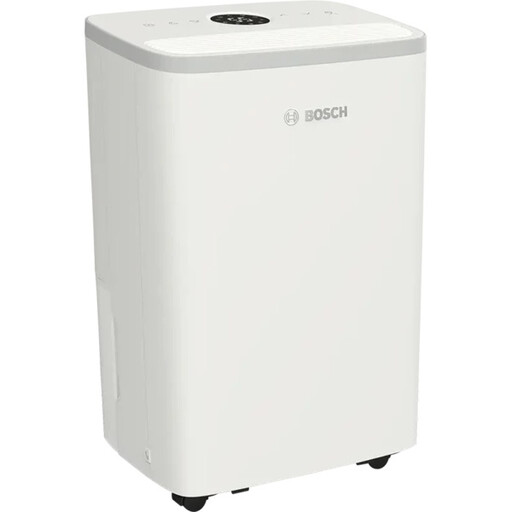
Bosch Dry 2000 dehumidifier

Bosch Dry 2000

An option if night mode matters to you and the stated room size suits your bedroom.

Figures listed include up to 12 l per day, a 2.5-l tank, 38 dB in night mode and a room size of up to 55 m³. An automatic humidity control mode is also listed.

View on Joybuy
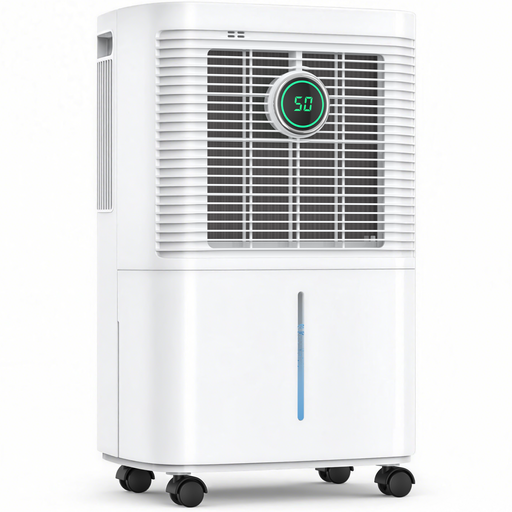
Ateroll dehumidifier with automatic humidity control

Ateroll dehumidifier

For shoppers comparing automatic humidity control and a sleep mode.

The product name lists up to 16 l per day and a sleep mode at 36 dB. Automatic humidity control, a humidity display, a timer and automatic defrosting are also listed.

View on Joybuy
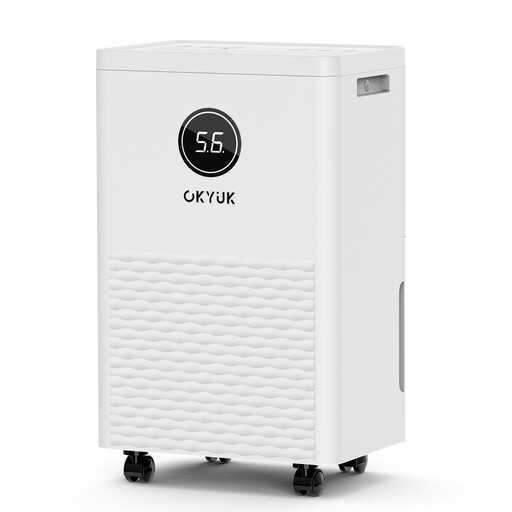
OKYUK D036D-12L dehumidifier

OKYUK D036D-12L

A compressor dehumidifier to consider if the stated room size suits your bedroom and you want a sleep mode.

Figures listed include 12 l per day, a 2.5-l tank, a sleep mode at 35 dB and coverage of up to 30 m². The description also mentions humidity control and automatic shut-off when the tank is full.

View on Joybuy

VINO 20L Smart dehumidifier with Wi-Fi control

VINO 20L Smart

For shoppers who want to include Wi-Fi control and a sleep mode in their comparison.

Figures listed include up to 20 l per day, a 2.5-l tank, a sleep mode at 35 dB and coverage of up to 40 m². The product name also mentions Wi-Fi control and R290.

View on Joybuy

Under applicable harmonised EU legislation, electric dehumidifiers may need to carry a CE marking. Check the marking and accompanying documentation for the specific product version; the CE marking is the manufacturer’s declaration, not an independent quality mark.

Frequently asked questions

What humidity levels should I monitor before buying?

Measure humidity and temperature with a thermo-hygrometer over several days, paying particular attention to the mornings. The Verbraucherzentralen give around 40–60% relative humidity as a range for a comfortable indoor climate. This isn’t a universal switch-on point for every bedroom, and humidity on cold surfaces matters too.

Can I just leave the window on the latch instead of using a dehumidifier?

The Umweltbundesamt recommends airing bedrooms thoroughly before going to bed and after getting up. A dehumidifier doesn’t replace this air exchange; you should also check the room temperature and any possible sources of damp.

What should I know about the tank and filter?

Check the instructions for your specific model for information about the tank, filter and, where applicable, the condensate drain. For the Bosch Dry 4000, the manufacturer lists a removable 2.5-l tank and the option of continuous drainage; the additional 2-in-1 filter is sold separately.

Which marking matters for an electric dehumidifier?

Under applicable harmonised EU legislation, electric dehumidifiers may need to carry a CE marking. This is the manufacturer’s declaration of conformity; it isn’t approval by a central EU testing body. Check the marking and accompanying documentation for the exact product version you’re considering.

What happens if the appliance develops a fault: a guarantee or your statutory rights?

Your statutory rights are against the seller; a guarantee is an additional voluntary promise, so check its terms separately. If a product is faulty, the first step is for the seller to put things right.