Measure humidity and temperature, and air your bedroom before going to bed and in the morning when you get up. If the air is repeatedly too humid, choose a dehumidifier to suit the room size, moisture levels and noise output. An electric dehumidifier can help to reduce humidity in the room, but it won’t fix a leaking wall or another underlying cause of damp. Any visible mould needs to be investigated.
Who might need a dehumidifier?
People with a persistently damp bedroom
If you repeatedly measure high humidity despite airing the room carefully, choose a dehumidifier based on the room and the level of moisture, rather than focusing only on a high litres-per-day figure. If you can see mould or a wall is wet, the underlying cause also needs to be investigated. The German Environment Agency recommends identifying and addressing the causes of excess moisture when mould is growing.
Light sleepers
If you plan to run a dehumidifier at night, consider the noise level, operating mode and display of the specific model, as well as its dehumidifying performance. Check whether the appliance can run while you sleep, or plan to use it before you go to bed.
People with cool bedrooms
In a cool room, it’s important to check the operating temperature specified for the model. Compare it with the lowest temperature your room typically reaches before choosing a type of appliance.
What should you look for when buying?
| Buying priority |
What to check before buying |
Who is it important to? |
| Dehumidifying performance for the room and its moisture levels |
Measure humidity and temperature; compare the room size with the performance specified for the model. If there is mould or damp building fabric, investigate the cause of the moisture too. |
If I repeatedly measure high readings despite airing the room carefully, I want to match the dehumidifier to the room and its moisture levels. Around 36 % of consumers have this priority. |
| A peaceful night while the appliance is running |
Check the noise rating and corresponding operating mode; also consider a night mode and whether the display can be switched off. |
If the appliance is going to run at night, an acceptable noise level matters more to me than high maximum performance. Around 29 % of consumers prioritise a peaceful night’s sleep. |
| Suitability for a cool room |
Compare the lowest typical room temperature with the operating range specified for the specific model. |
If my bedroom stays cool, I want to know before buying whether the specific model is suitable for that temperature. Around 21 % of consumers have this as their main priority. |
| Energy use and ongoing maintenance |
Check the power consumption, expected running time and tank capacity; also consider a hose drain, filter or any granules needed. |
If I plan to use the appliance regularly, I want to keep its energy use and recurring maintenance in mind. Around 14 % of consumers prioritise ongoing maintenance. |
Common buying and usage mistakes
-
Assuming the maximum daily output reflects bedroom performance
A litres-per-day rating doesn’t automatically tell you how much moisture will be removed in the conditions in your bedroom. For example, De’Longhi’s stated normal operating figure for the DNS65 is based on 30 °C and 80 % relative humidity.
Compare the stated test conditions and the model’s recommended room size with the temperature, humidity and size of your bedroom.
-
Assuming night mode means silent operation
Night mode doesn’t necessarily mean an appliance will be inaudible wherever you sleep. The noise you hear also depends on where the appliance is placed and how sensitive you are to sound.
Check the noise rating, operating mode and display of the specific model. If noise wakes you, using the appliance before bed may be a better option.
-
Only dehumidifying the air when there’s mould
The German Environment Agency points out that the cause of excess moisture must be identified and addressed when mould is growing. A dehumidifier won’t repair a leaking wall.
Check damp building materials and visible mould separately, and have the cause investigated rather than relying on the appliance as the sole solution.
-
Confusing no electricity with no maintenance
Calcium chloride granules absorb water, which collects as liquid in the container. This approach avoids the need for electricity, but you’ll still need to check the container and top up the granules.
When choosing, consider how often the appliance needs refilling, where the container will sit and how regularly it needs checking.
With this option, the ongoing maintenance includes regularly buying suitable granules.
Brands to consider
Bosch
According to Bosch Home Comfort Deutschland, the Dry range includes models with different room-size recommendations and daily output ratings.
- Bosch rates the Dry 1000 at up to 10 l/day and 17 m², the Dry 2000 at up to 12 l/day and 24 m², and the Dry 4000 at up to 16 l/day and 33 m².
- These are manufacturer specifications, not measurements for your bedroom. The room size, operating mode and noise level of the specific model all matter.
Meaco
In Germany, Meaco offers compressor models in the Arete One range and desiccant dehumidifiers in the DD8L range.
- Meaco specifies that the DD8L Junior can operate from 0 °C and the Arete One 12L from 10 °C. For the Arete One 12L, the manufacturer also states 38 dB(A) and a HEPA-H13 filter.
- These specifications apply to specific models and manufacturer conditions. A filter won’t address the cause of excess moisture.
Trotec
According to Trotec, the TTK 27 E is a compressor model for rooms up to 15 m² or 37 m³.
- Trotec states an output of up to 12 l/24 h, a humidistat, automatic defrost and a 1,6-l tank.
- The tank may need emptying regularly if you dehumidify frequently. The manufacturer’s description of the appliance as ‘quiet’ is not independent confirmation that it won’t disturb your sleep.
Beurer
According to Beurer, the LE 150 has automatic, continuous and laundry-drying modes.
- Beurer states an output of up to 12 l/day for rooms up to 30 m², a 2,0-l tank, automatic shut-off and an external condensate drain.
- According to the manufacturer, automatic mode is set to 45–55 %. Check that the operating mode, display and noise level suit where you sleep.
De’Longhi
The Tasciugo AriaDry Light DNS65 is another option with published operating and noise specifications for the specific model.
- De’Longhi states 34 dB(A), a power input of 520 W and an output of 6 l/24 h in normal operation at 30 °C and 80 % relative humidity.
- You can’t use this test condition to predict the daily output in a cooler bedroom. The manufacturer’s claim that it is suitable for sleeping is not independent confirmation.
Joybuy product selection
The electric dehumidifiers below may be useful if you’ve repeatedly measured high humidity and want to compare models by room-size recommendation, tank capacity and operating mode. Always check the specifications for the individual product and the conditions in your own bedroom.
 No image available
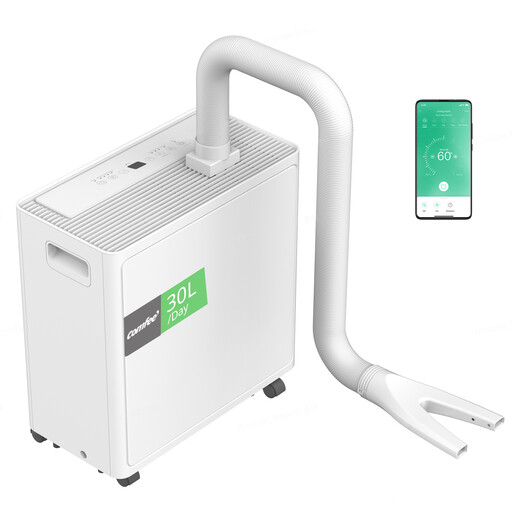
Comfee’ MDDA-30DEN7-SD dehumidifier
This could be a good option if the recommended room size suits your bedroom and a larger tank would be useful for how you plan to use it.
Up to 30 l/24 h; recommended for rooms up to 73 m²; 3,2-l tank; several operating modes and a 24-hour timer.
According to the product description, the hose for continuous drainage is not included.
View at Joybuy
 No image available
Comfee’ MDDO-10DEN7 dehumidifier
This could be an option for a bedroom if it falls within the recommended room size and you’d like to use a sleep mode.
Up to 10 l/24 h; up to 16 m²; 2,5-l tank; sleep mode with a stated noise level of 36 dB(A).
The product description also lists a full-tank warning with automatic shut-off, automatic defrost and a 24-hour timer.
View at Joybuy
 No image available
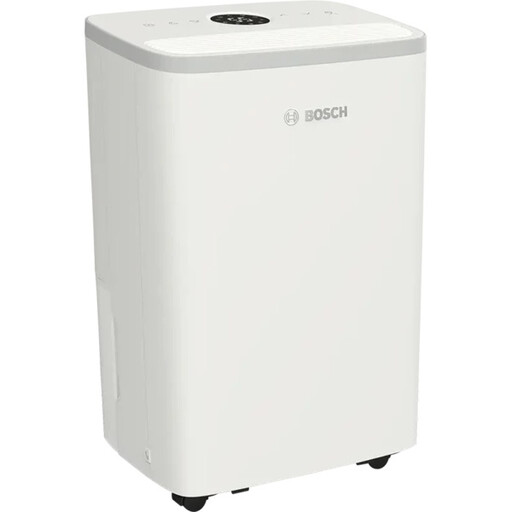
Bosch Dry 2000 dehumidifier
This could be a good option if the product’s recommended room size suits your bedroom and you’d like a night mode.
Up to 12 l/day; recommended for rooms up to 55 m³; 2,5-l tank; stated noise level of 38 dB.
According to the product description, the hose for continuous drainage is not included.
View at Joybuy
 No image available
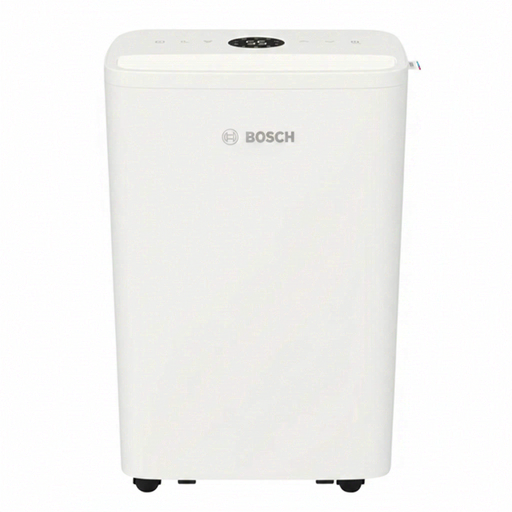
Bosch dehumidifier, 10 l/day
This could suit a bedroom within the recommended room size if you’d like a night mode or hose drainage.
Up to 10 l/day; recommended for rooms up to 17 m²; 2,5-l tank; stated noise level of 36 dB.
The product description lists a hose for continuous drainage, as well as automatic and night modes.
View at Joybuy
 No image available
Bosch Dry 4000 dehumidifier
This could be an option if the manufacturer’s recommendation of up to 33 m² suits your room and you need a night mode.
Up to 16 l/day; Bosch Home Comfort Deutschland recommends the Dry 4000 for rooms up to 33 m². The product description lists a 2,5-l tank and 40 dB.
According to the product description, the hose for continuous drainage is not included. The noise rating is no guarantee of undisturbed sleep.
View at Joybuy
Frequently asked questions
What humidity level should I check before buying?
Use a thermo-hygrometer to measure relative humidity and temperature. The Verbraucherzentrale recommends around 40–60 % relative humidity at approximately 18–22 °C for a comfortable indoor climate. In winter, readings regularly above 50 % may be a warning sign of an increased risk of mould. These are guidelines, not a legal threshold for buying a dehumidifier.
How can I use a dehumidifier without forgetting to air the room?
Use the appliance alongside regular airing, not as a replacement for it. The German Environment Agency recommends airing bedrooms thoroughly before going to bed and in the morning after getting up, with the window wide open. Also follow the instructions for positioning and maintaining the specific model.
How can I estimate energy use and maintenance?
Check the power consumption of the specific appliance and consider how long you’re likely to run it. Also factor in emptying the tank, the possibility of connecting a hose, and any filter maintenance or granule refills.
What should I bear in mind when buying and disposing of an electric dehumidifier?
Check the specifications for the specific product and make sure you dispose of it through a separate take-back scheme. The European Commission explains that harmonised EU rules may require certain product groups to carry CE marking. This is a declaration made by the manufacturer, not an independent quality mark. The German Environment Agency says electrical appliances must not go in household waste and should instead be returned separately.


