Only dehumidify the whole bedroom if repeated measurements show that humidity is consistently high. If the damp is confined to a small, poorly ventilated wardrobe, a passive moisture absorber with granules may be enough. The Verbraucherzentrale recommends monitoring humidity with a thermo-hygrometer, while the German Environment Agency advises airing rooms thoroughly; a dehumidifier is no substitute for ventilation or investigating the cause of damp. If you choose an electric model, make sure its room coverage, operating temperature, noise level in the mode you plan to use and condensate drainage all suit your needs.
Who might need a dehumidifier?
People with a damp bedroom and clothes stored there
If you keep noticing damp, it’s important to take measurements, identify the cause and choose a model suited to the room size. The Verbraucherzentrale recommends checking humidity with a thermo-hygrometer.
Light sleepers
If you plan to run an electric model within earshot of the bed, consider the noise rating and the specific model’s night mode. A dimmed display alone tells you nothing about how loud the unit is.
People with a poorly ventilated wardrobe
If the problem is confined to a small storage space, a power-free moisture absorber with granules may be a suitable option. UHU advises placing the collected liquid somewhere safe and emptying it regularly.
What should you look for when choosing one?
First, check whether the damp affects the room or just the wardrobe. Then consider how the specific model performs while you sleep, the temperature it can operate at and how much maintenance it needs.
| Your concern |
What to check before buying |
Who should consider this? |
| Recurring damp in the room |
Take measurements with a thermo-hygrometer; check the room size and the unit’s approved operating temperature. |
If my whole bedroom keeps getting damp, I want to identify the cause and work out what the room needs first. Around 31% of consumers say room humidity is their main concern. |
| A peaceful night’s sleep |
Check the noise rating and what the specific night mode does. |
If the unit is going to run near my bed at night, I’ll check that its operating noise is compatible with my sleep. Around 25% of consumers prioritise a peaceful night’s sleep. |
| Damp in the wardrobe |
Check whether the problem affects a small storage space or the whole room; place any moisture absorber with granules somewhere safe. |
If only a poorly ventilated wardrobe is affected, I don’t want to dehumidify the whole bedroom automatically. Around 19% of consumers say damp in a small clothes-storage area is their main concern. |
| Ongoing maintenance |
Consider whether you’ll need to empty a tank or drain the unit, and how often granules need replacing. |
If I want to keep ongoing maintenance to a minimum, I’ll compare the effort involved in using an electric unit, emptying its tank and replenishing granules. Around 13% of consumers put this first. |
| A cool bedroom |
Measure the room temperature and compare it with the approved operating range for the exact model. |
If my bedroom is genuinely cool, I want to choose a model that can operate at that temperature. Around 12% of consumers say room temperature is their main consideration when choosing a dehumidifier. |
Common buying misconceptions
-
Assuming a dehumidifier will solve mould behind a wardrobe
A dehumidifier won’t necessarily tackle the cause of penetrating damp or existing mould. The German Environment Agency stresses that the cause of excess moisture needs to be identified.
Check the room and the wall behind the wardrobe, and investigate possible causes of damp rather than treating the room’s air alone.
-
Comparing the moisture absorbed by granules directly with an electric model’s daily output
UHU says its 450-g moisture absorber with granules can collect around 0.5 litres over roughly three months, depending on the temperature, humidity and room size. Trotec gives the TTK 26 E a maximum extraction rate of up to 10 l/24 h.
First decide whether you want to dehumidify a wardrobe or a room. Then compare specifications and maintenance requirements within the relevant type of product.
Granules need replenishing. Electric models use power and, depending on the model, require you to empty a tank or set up suitable drainage.
-
Assuming night mode means silent operation
Night mode may dim the display, for example, but that alone doesn’t tell you how loud the unit is while dehumidifying. Bosch gives the Dry 4000 a noise level of 38 dB(A), while the Joybuy product description states 40 dB without specifying the same measurement conditions.
Check the noise rating for the exact model variant and the mode you plan to use. A dimmed display doesn’t mean the unit will run silently.
-
Overlooking the risk of collected liquid near delicate materials
UHU warns that spilled liquid can damage materials including leather and metal.
Place the container on a stable surface where it can’t be knocked over, and empty it as instructed.
Key brands at a glance
Bosch
Bosch offers electric dehumidifiers for rooms, including the Dry 4000 for bedrooms and other living spaces.
- Bosch says the Dry 4000 has a humidistat-controlled automatic mode, a 2.5-litre tank and a hose connection.
- The filter is sold separately and isn’t automatically included. Noise ratings for the Dry 4000 should be considered carefully, as the figures and measurement conditions differ.
Trotec
Trotec describes the electric TTK 26 E as suitable for small, permanently heated rooms measuring 4 to 15 m².
- According to Trotec, the model has a humidistat, a 1.8-litre tank and a drainage hose included.
- Trotec optimises the TTK 26 E for rooms at 15 °C and above. The manufacturer’s maximum figure of up to 10 l/24 h shouldn’t be assumed to apply in a cool bedroom without checking the temperature.
UHU
The UHU Original 450 g moisture absorber with granules is a power-free option for poorly ventilated spaces such as wardrobes.
- UHU describes the unit as silent and says it can absorb around 0.5 litres over roughly three months, depending on the temperature, humidity and room size.
- The collected liquid must be handled safely, as it can damage materials including leather and metal. The granules’ absorption figure isn’t directly comparable with an electric unit’s daily extraction rate.
Meaco
Meaco offers electric compressor and desiccant models, which may suit different room temperatures.
- Meaco describes the Arete One 12L as a compressor model suitable for use from 10 °C, and the DD8L Junior as a desiccant model suitable for use from 0 °C.
- These temperature ratings apply to different models. They don’t indicate which unit will be quieter or more economical in a particular bedroom.
Pro Breeze
Pro Breeze says its range includes compressor and electric desiccant dehumidifiers.
- Pro Breeze recommends desiccant models for cooler environments.
- The claim that a 10-litre desiccant model can still collect water below 5 °C applies to that model. It isn’t a general temperature rating for every unit from the brand.
Joybuy product selection
The Joybuy products below are electric room dehumidifiers for recurring damp in the bedroom. Check that the room coverage, noise rating in your preferred mode and approved operating temperature match your needs for the specific model.
 No image available
Comfee' MDDO-10DEN7, 10 L/day
An option if you want to manage recurring damp in the room and use the unit to dry laundry indoors too.
Joybuy lists a 2.5-litre tank, three operating modes and a 24-hour timer. The product name also specifies a sleep mode at 36 dB.
The tank needs emptying regularly when full; the unit is described as switching off automatically in this situation.
View at Joybuy
 No image available
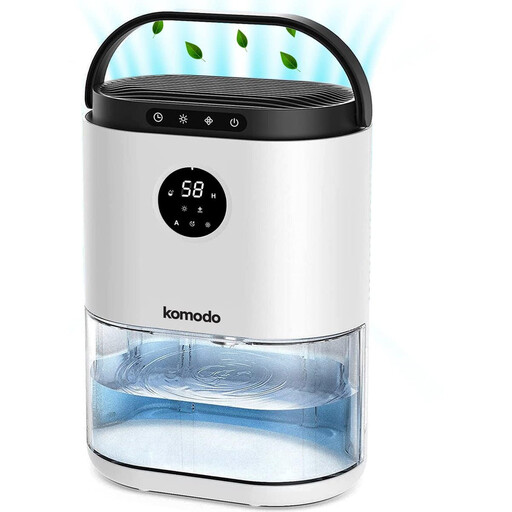
Komodo Small 800ml dehumidifier
A compact option if you want to dehumidify the room air rather than just a small wardrobe.
View at Joybuy
 No image available
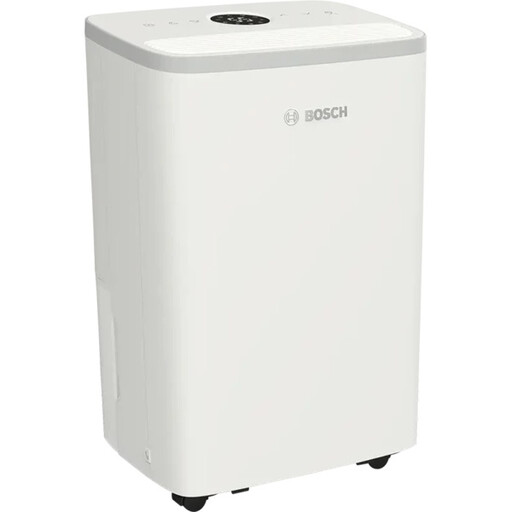
Bosch Dry 2000, 12 L/day
An option if you want to tackle recurring damp in the bedroom and use a dedicated laundry-drying mode.
Joybuy lists coverage of up to 55 m³, a 2.5-litre tank and a noise level of 38 dB. It also specifies two fan speeds, along with automatic, night and laundry-drying modes.
The tank needs emptying when full; the unit is also described as switching off automatically.
View at Joybuy
 No image available
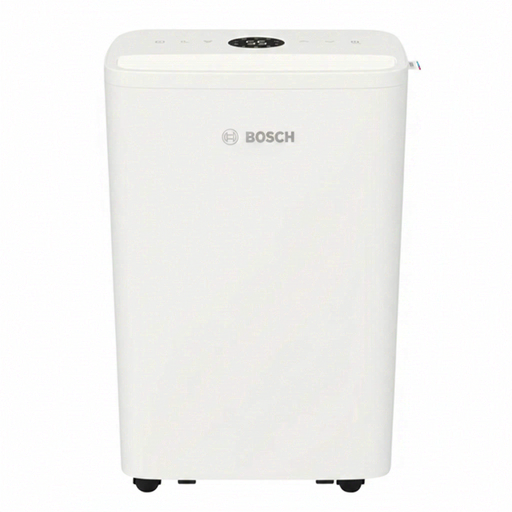
Bosch dehumidifier, 10 L/day
An option if an electric room dehumidifier with suitable coverage could work for your bedroom.
Joybuy lists coverage of up to 17 m², a 2.5-litre tank, two fan speeds and a noise level of 36 dB. It also describes night and laundry-drying modes.
If you use the tank, it needs emptying regularly; a drainage hose is also included as an alternative.
View at Joybuy
 No image available
Bosch Dry 4000, 16 L/day
An option for recurring damp if its stated room coverage suits your bedroom and a laundry-drying mode would be useful.
Joybuy lists coverage of up to 75 m³, a 2.5-litre tank, two fan speeds, and automatic, night and laundry-drying modes. The product description gives a noise level of 40 dB; Bosch states 38 dB(A) for the Dry 4000.
A hose is needed for continuous drainage and, according to the product information, isn’t included. If you use the tank, you’ll need to empty it.
View at Joybuy
Frequently asked questions
What humidity level should I measure before buying?
In its guide dated 16 September 2026, the Verbraucherzentrale gives around 40 to 60% relative humidity as a comfortable range for living spaces and recommends using a thermo-hygrometer. Take repeated readings and check cold spots behind furniture too; a single measurement isn’t enough to show that you need a dehumidifier.
Can a dehumidifier replace ventilation or investigating the cause of mould?
No. The German Environment Agency recommends airing the bedroom thoroughly before going to bed and after getting up. If there’s mould, the cause of the excess moisture needs to be identified and dealt with.
How should I position and maintain a granule moisture absorber near clothes?
Following UHU’s instructions, place the container on a firm, stable surface, empty the collected liquid as directed and replenish the granules. Spilled liquid can cause stains and damage leather or metal.
How can I compare ongoing costs and maintenance?
Compare power consumption and the planned running time, as well as the effort involved in emptying the tank, arranging drainage or replenishing granules. If a product is faulty, statutory consumer rights are separate from a voluntary manufacturer’s warranty, as the Verbraucherzentrale explains.
How should I dispose of an old electric dehumidifier?
The German Environment Agency says electrical waste must be collected separately. Check what local collection options are available before disposing of your unit.


