For a fixed desk position, choose a tilting fan that lets you direct the airflow where you need it. If you want the air to circulate between your desk and the rest of the room, an oscillating model is a better fit. Then compare noise and airflow at the setting you’ll actually use, as well as the fan’s footprint and controls. A fan moves the air; it doesn’t lower the room temperature.
Who is a desk fan suitable for?
Light sleepers who work at a desk
If you work in your bedroom during the day and use it for sleeping later, look for a comfortable breeze on a low setting and simple, unobtrusive controls. IMTEST and Meaco Deutschland describe adjustable speed settings and modes that are worth considering when choosing a fan for different uses.
People with changing airflow needs
If you don’t want the breeze constantly blowing directly into your face, a fan that swivels can spread the air across different areas. Meaco Deutschland describes the Sefte 10 Table as having horizontal and vertical oscillation.
People with limited or changing space
If you need to keep your desk space flexible or move the fan around, consider its dimensions, direction and power supply together. For the Cool CF1, Dyson Deutschland lists, among other details, a height of 550 mm and a 1,8 m cable.
What should you look for when buying one?
First decide whether you mainly want the fan to reach one fixed spot or to circulate air between your desk and the rest of the room. You can then assess noise, footprint and power supply in relation to where you’ll use it.
| What matters to you |
What to check before buying |
Who will value this most? |
| Noise when working and sleeping |
Check the noise rating and speed settings for the specific model; consider night mode and display lighting separately. |
If I use the fan while falling asleep, I want a comfortable breeze on a low setting and as few distracting lights or indicators as possible. Around 36% of consumers put quiet operation first. |
| Directed airflow or wider circulation |
Check whether oscillation can be switched off and whether the head can be tilted in the direction you need. |
If I want air to circulate between my desk and the rest of the room, the range of the oscillation matters to me. Around 29% of consumers prioritise air circulation. |
| Footprint and positioning |
Compare the base, overall height, cable routing and space needed for oscillation with your own desk. |
With limited space beside my screen and work materials, I want to be able to position a fan without restricting where it can point. Around 21% of consumers pay particular attention to footprint and positioning. |
| Power supply and upkeep |
Check whether it runs on mains power or a battery, what’s included, runtime at each setting and how easy it is to clean. |
If there isn’t a suitable socket near where I want to use it, or I move the fan often, the power supply is crucial to me. Around 14% of consumers prioritise flexible power options. |
Which misconceptions should you avoid?
-
Confusing moving air with cooling the room
A powerful airflow won’t remove heat from your bedroom. The German Environment Agency explains that fans cool your skin by moving air, but don’t lower the room temperature.
Choose a fan to create the airflow you want where you plan to use it. If the room itself is too warm, consider shading and ventilation separately.
-
Assuming the model heading matches the technical details
Rowenta’s VU2740F0 has conflicting information about automatic oscillation: the description states 120°, while the specifications table says “No”.
Before ordering, check the full model number and confirm that the feature you want is listed consistently for that exact version.
-
Comparing battery life and noise without checking the setting
Meaco states that the Sefte 10 Table Pro can run for up to 40 hours on its lowest setting. The maximum runtime on a low setting doesn’t tell you how long it will run with stronger airflow.
Check runtime and noise ratings for the setting you actually plan to use, and make sure you know what’s included.
Brands to consider
Meaco
The Sefte 10 Table range is aimed at shoppers looking for adjustable air circulation from a desk fan. According to the manufacturer, the Sefte 10 Table Pro adds a battery and an app.
- Meaco Deutschland lists 12 speeds, as well as night and Eco modes, for the Sefte 10 Table.
- According to Meaco Deutschland, the Sefte 10 Table Pro’s runtime of up to 40 hours applies only on the lowest setting.
Rowenta
The Turbo Silence desk fans are worth considering if you want adjustable airflow and a specified low-noise setting.
- For the VU2740F0, Rowenta Deutschland lists four settings, 32 dB(A) at minimum speed and a 1,5 m mains cable.
- Rowenta’s information about automatic oscillation on the VU2740F0 is contradictory. Check this feature for the exact version before buying.
Honeywell
The HT-900E is a directed, tilting alternative if you’d rather aim the airflow at a fixed workstation than have the fan oscillate automatically.
- The HT-900E product details list three speeds and the option to place it on the floor or mount it on a wall.
- Directed airflow won’t automatically reach several spots. Check the tilt and low-speed setting in the location where you plan to use it.
Dreo
The 511S is a compact oscillating desk fan for shoppers who want to compare a different approach to oscillation and controls.
- Dreo Deutschland lists an air speed of up to 6,7 m/s and 120° oscillation for the 511S.
- The phrase “up to” refers to a manufacturer’s stated maximum; it doesn’t indicate the airflow you’ll get on a low setting at your desk or bedside.
Dyson
The Cool CF1 may appeal if you value a fan without exposed blades, a Sleep mode and a wipe-clean surface enough to make room for it.
- Dyson Deutschland lists noise levels of 29 to 42 dBA, a height of 550 mm and a maximum power consumption of 30 W for the CF1.
- These noise levels are manufacturer specifications. Like any other fan, the bladeless design doesn’t lower the room temperature.
Desk fans at Joybuy
This selection includes desk fans for directed airflow at your desk, as well as oscillating models that circulate air beyond your immediate seating area.
 No image available
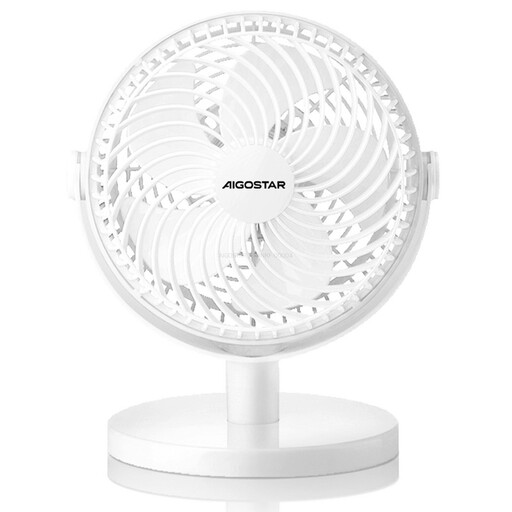
Aigostar USB desk fan
For a directed breeze at your desk, with a head you can adjust by hand.
Five blades, two speeds and a head that adjusts through 360°.
View at Joybuy
 No image available
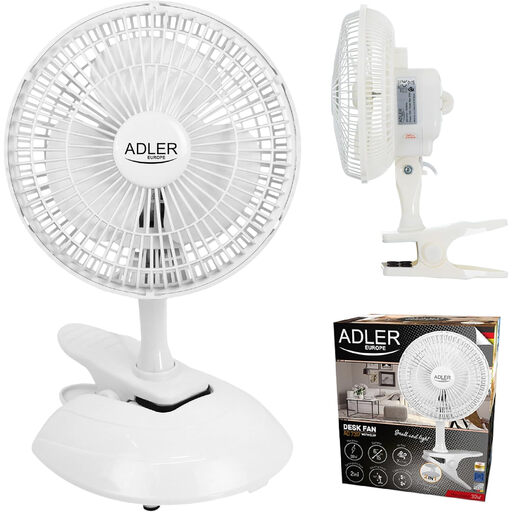
ADLER AD 7317 desk fan with clip
For directed airflow at a fixed spot; check that the clip fits your desk.
15 cm blade diameter, two speeds and 30 W.
View at Joybuy
 No image available
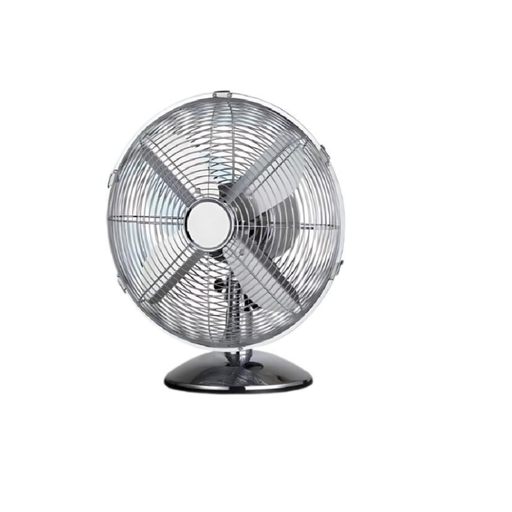
AKAI desk fan, 30 cm
For circulating air beyond your immediate seating area, if you have enough room on your desk for the fan.
35 W, three speeds, four aluminium blades, automatic left-to-right oscillation and manually adjustable tilt.
View at Joybuy
 No image available
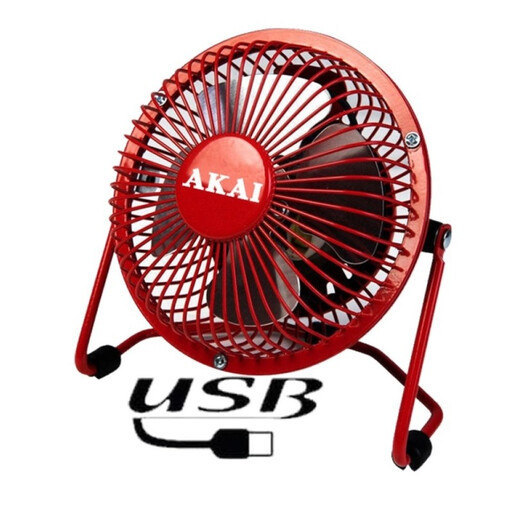
AKAI VE10-N-Grey desk fan, colour supplied at random
An option for changing airflow around your desk or bedside table; check that the features listed for this version meet your needs before buying.
According to the product details, the colour is supplied at random in grey, red or green.
View at Joybuy
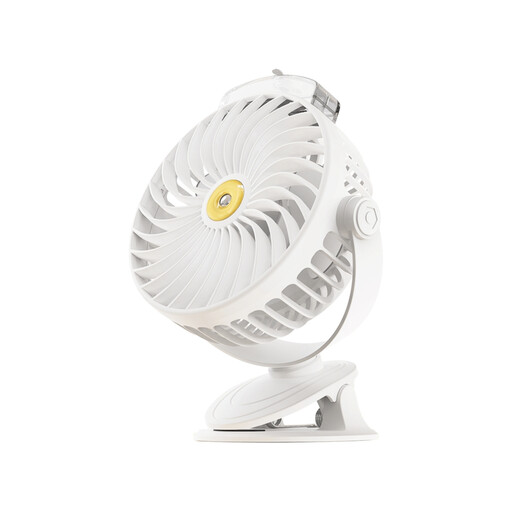 No image available
Aigostar 6F3B USB desk fan with clip
For a flexible position; check that the clip and power supply suit the way you plan to use it.
6 Inch, USB and three blades.
View at Joybuy
Frequently asked questions
Does a desk fan really cool down a bedroom?
No. A desk fan won’t lower the room temperature, although moving air can feel cooler on your skin. The German Environment Agency recommends shading and ventilating rooms once it’s cooler outside, among other measures.
How should I position and clean a desk fan?
Place the fan on a stable surface and leave enough room for the head to oscillate, if applicable. Rowenta recommends unplugging the fan before cleaning it. Whether the grille can be opened depends on the model and its instructions.
What are my rights when buying a desk fan online?
For distance purchases from a trader in the EU, you generally have a 14-day right to cancel from the date of delivery; exceptions and any return costs should be checked. Your Europe explains these rules. Your statutory rights against the seller are separate from any voluntary manufacturer’s guarantee, as the consumer advice organisation Verbraucherzentrale also explains.
Is the CE mark an independent safety test?
No. The German Federal Network Agency describes CE marking as the manufacturer’s own declaration that the relevant requirements have been met, not an independent assessment of quality. Check the product identity and instructions for the specific listing too.


