
Lieferung heute & morgen

Qualitätsgarantie

Willkommens-Angebote freischalten: KOSTENLOSE Lieferung | Bis zu 80 % RABATT | Kostenlose 30-Tage-JoyPlus-Testphase
App herunterladen
A new bedroom dresser is meant to bring order, but the purchase too often ends in frustration. The piece of furniture wobbles, the drawers jam after just a few months, or the storage space turns out to be far less practical than hoped. Before you make a decision, it's crucial to know the most common pitfalls that can turn a supposed bargain into a costly mistake.
This guide focuses on the objective criteria that define a good dresser. We will highlight three typical problems:
To avoid these problems, you should focus on three core aspects. These will help you objectively evaluate the quality and functionality of a piece of furniture.
The stability of a dresser depends directly on the material used and its construction. Inexpensive models are often made of simple Particleboard, while higher-quality versions are crafted from MDF (Medium-Density Fiberboard) or solid wood, which offers greater density and durability.
A crucial safety feature is the anti-tip kit. Reputable manufacturers include a set for wall mounting. This is not an optional accessory but a necessary measure to prevent the dresser from tipping over. Also, look for adjustable feet, which can compensate for uneven floors and ensure a stable footing.
Don't just measure the available space in your room; also check the internal dimensions of the drawers. A deep drawer offers significantly more space for folded clothes than a shallow one. A good chest of drawers is characterised by smooth-running metal slides that function flawlessly even when fully loaded.
For smaller rooms, narrow but tall solutions are often ideal. A narrow nightstand, for example, can offer more storage than a wider but lower model if it has multiple drawers or compartments. Specifically look for bedroom storage furniture that utilises vertical space.
Modern furniture should be able to adapt to your needs. An outstanding example is the changing dresser with a top unit. After the nappy-changing phase, the top can be easily removed, and the furniture continues to serve as a classic dresser in the child's room.
The same applies to other multi-functional designs. A 140x200 bed with storage integrates drawers or shelves directly into the bed frame, potentially making an additional dresser unnecessary. A modern white sideboard can work just as well in the bedroom as in the living room, offering a flexible solution if you decide to redecorate.
Based on these criteria, we have identified several products that offer a well-thought-out solution for different needs and room situations.
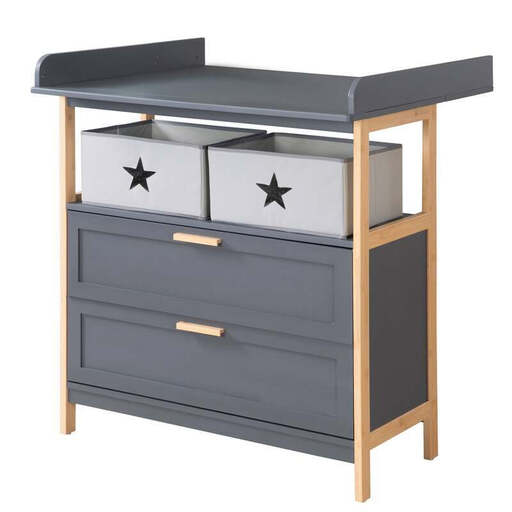
Why This Fits Their Persona: Ideal for parents looking for a long-term investment. The dresser adapts as the child grows, remaining a useful piece of furniture in the child's or teen's room for years to come.
The removable top solves the problem of poor adaptability. After the nappy-changing phase, the dresser becomes a fully-fledged storage unit without any visible marks.
Ergonomic changing height of 92 cm is easy on the back. A wall mount for added stability is included, according to the manufacturer.
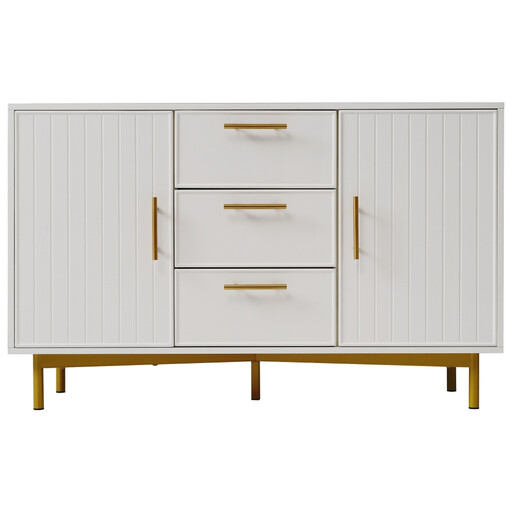
Why This Fits Their Persona: For anyone seeking a functional piece of furniture with a clear aesthetic appeal. The combination of fluted fronts and gold handles adds a modern accent to the bedroom.
An adjustable central foot provides extra stability and prevents the top panel from sagging. The height-adjustable shelves behind the doors offer flexible storage space.
Combines closed compartments and drawers for different storage needs. The 14.5 cm high base makes it easy to clean the floor underneath.
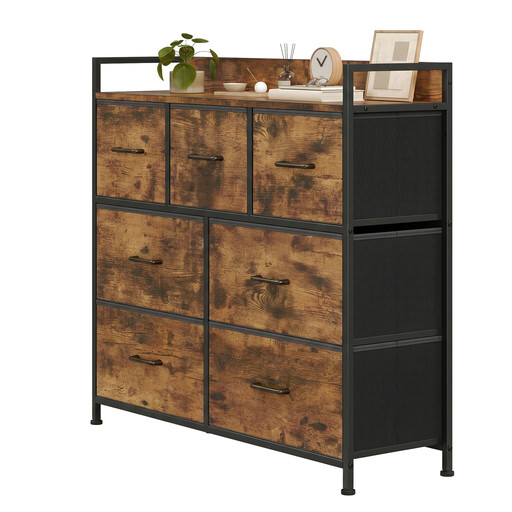
Why This Fits Their Persona: A flexible and lightweight storage solution, ideal for teen rooms, rental apartments, or as an addition to a dressing area. Offers ample storage at an accessible price.
Despite its lightweight construction, the stability issue is addressed with a metal frame, adjustable feet, and an included anti-tip kit.
Seven drawers in two different sizes allow for detailed sorting of clothes and accessories. Assembly is straightforward, according to the manufacturer.
We have compiled a complete, up-to-date list of products that fully meet these strict selection criteria and relevant safety regulations.
Most dressers come with an anti-tip kit, which consists of one or two brackets, screws, and a strap. One bracket is attached to the top or back of the dresser, and the second part is fixed to the wall. A strap connects both parts. It is important to use wall anchors and screws that are appropriate for your specific wall type (e.g., concrete, drywall).
Particleboard is made from coarsely chipped wood scraps that are pressed together with glue. It is inexpensive but less dense and stable. MDF (Medium-Density Fiberboard) is made from finely ground wood fibres, resulting in a more homogeneous and denser board. This makes MDF more stable, heavier, and allows for more precise finishing, often leading to a higher-quality surface and construction.
Yes, this is possible with many models and is an important feature for sustainable use. Look for the "removable changing top" note. On these models, the top is simply removed after the nappy-changing phase. Good designs leave no visible drill holes on the top surface of the dresser.