Who could benefit from a bedroom dehumidifier?

People who regularly dry laundry in the bedroom

If you often hang loads of washing in your bedroom, take the extra moisture into account rather than choosing a model based solely on a high extraction rate. The German Environment Agency advises taking particular care to ventilate regularly when drying wet laundry indoors.

Light sleepers

If you use the same room for drying laundry and sleeping, consider whether the appliance will be audible in the mode you actually plan to use. Laundry and night modes may work differently, so running the appliance at a different time could help when planning its use.

Homes with persistent damp

If you repeatedly notice high humidity or damp patches, consider drying, ventilation and possible structural causes separately. The German consumer advice centre recommends identifying and addressing the cause of mould rather than relying on an appliance alone.

What should you look for when buying?

Compressor or condensation dehumidifier

Suitable if: You regularly dry laundry in a sufficiently warm bedroom and the model’s stated room size and moisture capacity suit your needs.

Consider: The fan and compressor make a noise, and laundry and night modes serve different purposes.

Desiccant dehumidifier

Worth considering if: Your bedroom is genuinely cold and the operating temperature of a compressor model you’re considering isn’t suitable. Meaco lists certain DD8L models for use from 0 °C, while its listed compressor models are rated for use from 10 °C.

Consider: Differences in operating temperatures don’t in themselves mean lower running costs or make a model automatically suitable for overnight use.

Mini Peltier dehumidifier

More suitable if: You only need to treat a very small area with a low moisture load. Trotec rates the TTP 2 E for up to 5 m² and a maximum of 0.22 l/24 h.

Consider: Compare the stated capacity with the moisture from a load of washing and the size of your whole bedroom.

Ventilation without an additional dehumidifier

Worth considering if: Suitable ventilation keeps humidity under control after drying and there’s no persistent damp problem. A thermo-hygrometer can help you monitor changes.

Consider: Laundry releases moisture into the room, so fresh air remains important even when you use a dehumidifier.

Your concern What to check when buying Who it matters most to
Removing moisture from laundry Compare the room volume, temperature range, test conditions for the litres-per-day rating, laundry mode and tank shut-off for the specific model. If I regularly use a clothes airer in my bedroom, I want to assess the extra moisture throughout the room. Around 33% of consumers prioritise this concern.
A peaceful night’s sleep Check the noise levels for the operating modes you plan to use, along with the night mode, display lighting and desired run time. If I’m sensitive to noise while sleeping, I want to limit overnight operation or run the appliance earlier. Around 27% of consumers prioritise a peaceful night’s sleep.
Monitoring humidity Check for an adjustable humidistat and humidity display, and monitor changes with a thermo-hygrometer as well. If I repeatedly notice high humidity or damp patches, I want to monitor changes and investigate possible causes. Around 20% of consumers prioritise this concern.
Running costs and ease of use Check the power consumption, actual run time, tank capacity and whether a drain hose is included. If I use the appliance regularly, I want to estimate its electricity use and how often I’ll need to empty it. Around 20% of consumers prioritise predictable running costs and ease of use.

Avoid common buying mistakes

  • Assuming the litres-per-day rating tells you how long your laundry will take to dry

    Manufacturers’ figures are based on specific test conditions. For example, De’Longhi rates the DEX210SF at 10 l/24 h at 30 °C and 80% relative humidity. These conditions don’t necessarily reflect those in a bedroom.

    Check the conditions behind the rating for the specific model, and compare your bedroom’s size and temperature with them.

  • Choosing a mini dehumidifier just because it’s compact

    The Trotec TTP 2 E is rated for up to 5 m² and a maximum of 0.22 l/24 h. This operating range won’t necessarily be enough to deal with the moisture from a load of washing in an entire bedroom.

    Compare the stated operating range with the moisture from your laundry and the size of the whole room.

  • Assuming night mode and laundry mode are the same

    Bosch lists night mode and laundry-drying mode as separate settings on the Dry 4000. Stadler Form’s stated noise range for the Lukas covers several operating levels.

    Check the noise rating for the mode you actually plan to use, and consider running the dehumidifier before bedtime.

  • Relying on a dehumidifier alone to deal with persistent damp patches

    Recurring damp may have causes beyond drying laundry. The German consumer advice centre points out that if there’s mould, its cause needs to be identified and addressed.

    If damp keeps returning or you can see mould, get the cause investigated rather than simply choosing a bigger appliance.

Key brands at a glance

Bosch

The Dry 1000, 2000 and 4000 models are rated for different room sizes. The Dry 4000 combines laundry and night modes.

  • Bosch Home Comfort rates the Dry 4000 for up to 16 l/day and rooms up to 33 m². It has a 2.5-l tank and a noise level of 38 dB(A).
  • The stated extraction rate is a model specification, not a guaranteed drying time for a load of washing in your own bedroom.

Trotec

The TTK 66 E is a compressor model with a laundry-drying function. The smaller Peltier models aren’t automatically in the same performance class.

  • Trotec rates the TTK 66 E for up to 24 l/24 h and rooms up to 50 m². It has a 3-l tank.
  • Trotec rates the TTP 2 E at a maximum of 0.22 l/24 h and for rooms up to 5 m². These figures apply to this specific model.

Meaco

Arete One compressor models and DD8L desiccant models offer different options if room temperature is a factor in your choice.

  • Meaco rates the Arete One 12L at 12 l/day and 38 dB(A). Certain DD8L models are rated for use from 0 °C.
  • Different operating temperatures don’t prove that the models perform equally well on laundry or offer a general advantage in running costs.

Stadler Form

The Lukas combines a laundry-drying mode with oscillating airflow and a separate night mode.

  • Stadler Form rates the Lukas for up to 20 l/day. It has a 4.2-l tank and a power consumption of 260 W.
  • The stated noise range of 38–52 dB(A) covers different operating levels, so the mode you plan to use is what matters.

De’Longhi

Tasciugo AriaDry models with laundry functions are available in different rated performance classes.

  • De’Longhi rates the DEX210SF at 10 l/24 h and the DDSX220 at 20 l/24 h, both at 30 °C and 80% relative humidity.
  • These rated figures don’t guarantee the amount of moisture removed in a bedroom. De’Longhi gives different noise levels for these models.

Joybuy products for drying laundry in the bedroom

This selection features dehumidifiers whose product descriptions mention a laundry or Laundry mode. For bedroom use, pay particular attention to the noise level for the mode you plan to use and the stated room size.

Comfee MDDO-10DEN7 dehumidifier

Comfee MDDO-10DEN7

This model may suit bedroom laundry if its stated room size and sleep-mode noise level are right for your space.

10 l/day; 2.5-l water tank; 3 modes; 24-hour timer; sleep mode at 36 dB; rated for rooms up to around 40 m³ (16 m²).

View at Joybuy
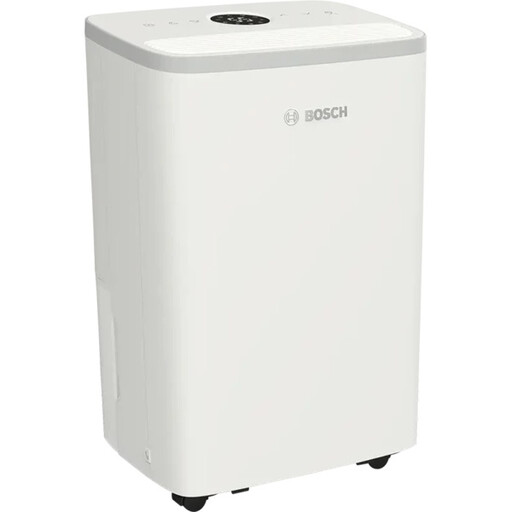
Bosch Dry 2000 dehumidifier

Bosch Dry 2000

An option for bedroom laundry if the stated room size and separate operating modes suit the way you plan to use it.

12 l/day; up to 55 m³; 2.5-l water tank; 38 dB; two fan speeds; auto, night and laundry modes. A hose for continuous drainage isn’t included.

View at Joybuy
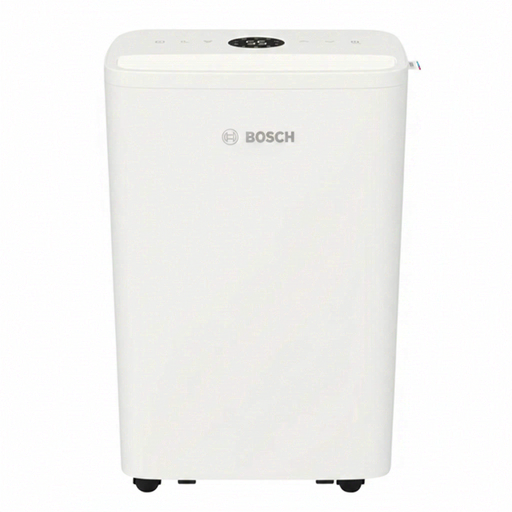
Bosch dehumidifier, 10 l/day

Bosch dehumidifier, 10 l/day

The listing mentions a night mode. Check the noise level and operating mode you actually plan to use in your bedroom.

10 l/day; 2.5-l water tank; 36 dB; two fan speeds; R290 refrigerant.

View at Joybuy
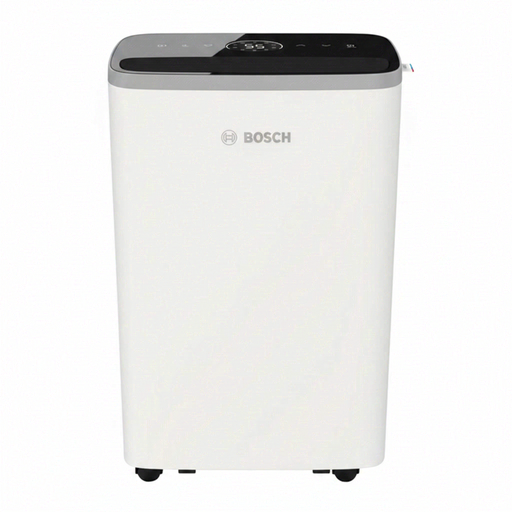
Bosch Dry 4000 dehumidifier

Bosch Dry 4000

The laundry mode is designed for drying hanging laundry. Check whether the mode you plan to use fits around your bedtime.

Up to 16 l/day; 2.5-l water tank; auto, night and laundry modes; two fan speeds. A hose for continuous drainage isn’t included.

View at Joybuy
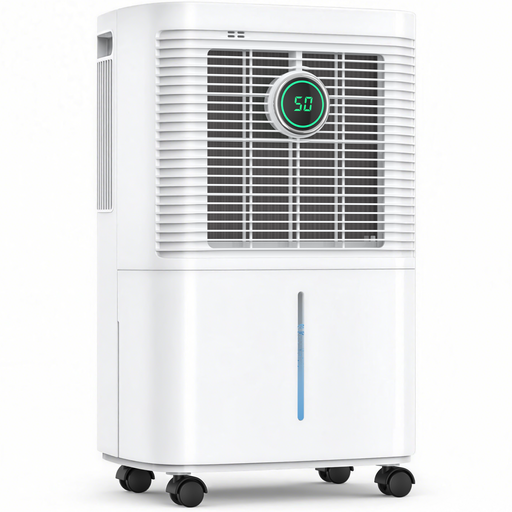
Ateroll dehumidifier with Laundry mode

Ateroll dehumidifier

The listed Laundry mode is relevant for drying clothes. Bear in mind the conditions under which the extraction rate is measured.

Up to 16 l/day at 35 °C and 90% relative humidity; automatic humidity control; automatic defrost; sleep mode at 36 dB.

View at Joybuy

Frequently asked questions

Do I still need to ventilate my bedroom if I use a dehumidifier?

Yes. A dehumidifier removes moisture from the air, but it doesn’t replace the need for fresh air. The German Environment Agency recommends airing your bedroom thoroughly before going to bed and after getting up. You should also ventilate regularly when drying wet laundry.

How can I tell if the room is still too damp after drying laundry?

Use a thermo-hygrometer to monitor the temperature and relative humidity during and after drying. The German consumer advice centre gives 40–60% relative humidity as a guide for a comfortable indoor climate. Keep an eye on repeatedly high readings or cold areas of the wall over time, rather than treating a single reading as a diagnosis.

How can I position a dehumidifier safely near a clothes airer?

Follow the instructions for the specific model. For example, the Meaco DD8L Zambezi manual requires a stable, level surface and warns against standing water and damaged cables. These model-specific instructions aren’t general spacing rules for every appliance.

How much does it cost to dry one load of laundry with the appliance?

You can only estimate the cost using the actual run time and your electricity tariff. For a simple calculation: power consumption in W × operating hours ÷ 1,000 = kWh. Then multiply the energy used by your price per kWh. Humidistat control and changing operating conditions can affect actual consumption.

Who should I contact if the appliance develops a fault after purchase in Germany?

The retailer is generally responsible for the statutory guarantee; the German consumer advice centre says it lasts for two years from delivery. Any additional manufacturer’s warranty is subject to its own terms. For purchase contracts from 31 July 2026, the consumer advice centre also describes a one-off 12-month extension to the guarantee period if you choose a repair when a fault occurs.

Which labelling and disposal rules apply to an electric dehumidifier?

For electrical and electronic equipment that must carry the CE marking, CE indicates the manufacturer’s declaration of conformity; it isn’t an independent quality mark. You can take unwanted electrical appliances to an appropriate collection point. stiftung ear lists free return options.