
Lieferung heute & morgen

Qualitätsgarantie

Willkommens-Angebote freischalten: KOSTENLOSE Lieferung | Bis zu 80 % RABATT | Kostenlose 30-Tage-JoyPlus-Testphase
App herunterladen
As a Joybuy Product Recommendation Officer, my role is to provide you with clear, objective information so you can make an informed purchasing decision. Acquiring the first set of essentials for your baby is a significant task, and choosing the right sleeping space is paramount. An all-in-one bedside crib set promises a convenient, comprehensive solution, but the market can be overwhelming. This guide will help you avoid common pitfalls and understand the crucial criteria for your selection.
Many products advertised as "complete sets" have practical shortcomings that only become apparent after purchase. Pay close attention to these three points to avoid a poor investment.
To make the right choice, focus on objective and verifiable features. The following three parameters are crucial for safety and functionality.
A safe baby crib is paramount. The most important feature is certification according to the current EN 1130:2019 standard. This ensures the crib has passed rigorous tests for stability, strength, and the absence of hazardous gaps or openings. Also, look for good air circulation. A breathable mattress and side panels made of mesh fabric can promote airflow within the crib and are key features for baby's first sleep essentials.
The sleeping surface of the bedside crib must be adjustable to the exact height of the parent's mattress. A multi-level or stepless height adjustment is ideal for this. Measure the height of your mattress top (including any topper on box spring beds) and compare it with the manufacturer's specifications for the co-sleeper. The crib must also be securely fastened to the parent's bed frame with sturdy straps, leaving no gap.
Some models offer more than just one function. For example, a roba 3-in-1 bedside crib can be converted from a co-sleeper into a freestanding white bassinet (often with castors for mobility) and later even into a small bench for the child's room. Such multifunctional products provide added value beyond the first few months and represent a more sustainable investment. A standard size like a 90x45 cm baby co-sleeper also offers a good balance between ample space for the baby and a compact footprint.
Based on the criteria above, we have identified products that are well-suited for different needs and life situations.
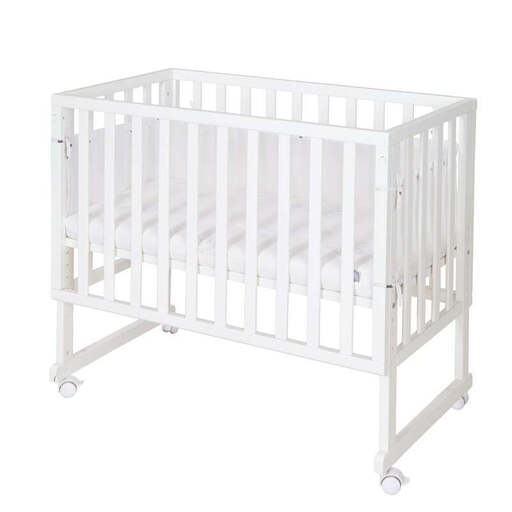
Why This Fits Their Persona: For parents who prioritise safety above all, this model offers a well-thought-out concept. The focus is on tested materials and structural safety features that go beyond standard requirements.
It directly addresses the pitfall of unclear safety standards through its compliance with the EN 1130:2019 standard and the patented 'safe asleep' system, which includes a breathable mattress and a mesh insert.
Includes a breathable mattress and a protective canvas barrier. Compliance with the safety standard is explicitly stated.
Why This Fits Their Persona: Those looking for a durable and flexible solution will benefit from this model's versatility. It adapts not only to the parent's bed but also to the child's development, ensuring long-term use.
It bypasses the trap of poor compatibility with its 7-level height adjustment (22.4 - 44.6 cm), making it suitable even for taller box spring beds. The 3-in-1 function prevents it from becoming obsolete after just a few months.
Converts to a bassinet and a bench (supports up to 65 kg). Wide height adjustment range. An optional extension kit is available for non-standard bed heights.
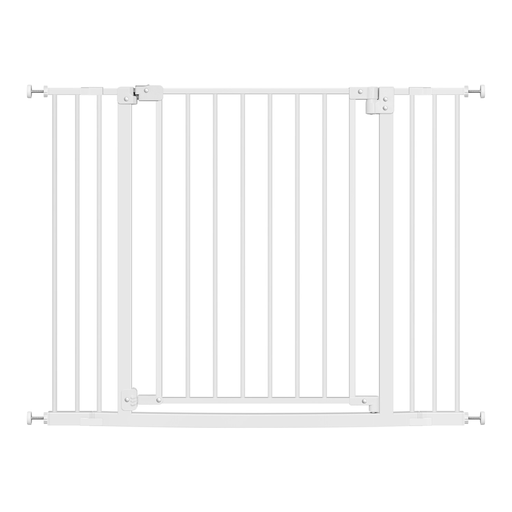
Why This Fits Their Persona: Those who plan for home safety holistically think beyond the crib. Once a child becomes mobile, stairs and certain rooms become potential hazards. This gate is a key component in creating a child-safe environment.
It avoids the reactive purchase of safety equipment after an unsafe situation has already occurred. The flexible, no-drill installation also protects the structure of rental properties.
Flexible pressure-fit or screw-fit installation for widths of 75-107 cm (incl. extensions). Features an auto-close function and opens in both directions.
Many modern baby safety products, from cribs to safety gates, use high-quality mesh fabric for breathability and security. We have compiled a list of products that meet these important criteria.
The sleeping surface of the co-sleeper should be perfectly level with the top of the parent's mattress (including any topper). Measure this height precisely. Many box spring beds have a sleeping height between 55 cm and 70 cm. Choose a co-sleeper whose maximum adjustment range covers this height. The roba model, for example, is adjustable up to 44.6 cm and can be adapted for taller beds with a separately available extension kit.
As a co-sleeper or bassinet, use is generally recommended up to the age of about 6 to 12 months, or until the child begins to pull themselves up, sit, or kneel independently. After that, for safety reasons, you must switch to a crib with higher sides. Multifunctional models can then be repurposed as a bench, significantly extending their lifespan.
The EN 1130:2019 is the European standard that specifies the safety requirements for cribs and cradles for domestic use. It ensures that the product has been tested for mechanical and structural hazards. These include, among others: