
Lieferung heute & morgen

Qualitätsgarantie

Willkommens-Angebote freischalten: KOSTENLOSE Lieferung | Bis zu 80 % RABATT | Kostenlose 30-Tage-JoyPlus-Testphase
App herunterladen
A bedside crib with a 90x45 cm sleeping surface is a practical and secure sleeping solution for newborns during their first few months. It allows for direct proximity to the parents' bed, which facilitates nighttime care while providing the baby with their own safe sleeping space. Selecting the right model should be based on objective criteria such as safety, material quality, and adaptability.
The decision to purchase a bedside crib should be based on an analysis of technical specifications and safety features. The following aspects are essential for making an informed choice.
The most fundamental requirement is compliance with the European safety standard EN 1130:2019. This standard defines specific requirements for the stability, materials, and construction of cribs and cradles to minimise risks such as entrapment or suffocation. A key feature is the secure attachment to the parents' bed. This requires robust strap systems that prevent the crib from shifting or creating a gap between the bedside crib and the parent's mattress.
A height-adjustable frame is crucial for a seamless alignment with the height of the parent's mattress. Models with multiple levels allow for precise positioning, ensuring no hazardous edge is created. For box spring beds, which often have a higher sleeping surface, an extensive height adjustment range or the option of special extension kits is an important criterion.
The materials used should be robust and tested for harmful substances. Solid wood, plywood, or MDF panels are commonly used. The surface finish, for example, a white lacquer, should be saliva- and sweat-resistant. The included mattress plays an equally important role. It should be a perfect fit to avoid gaps and have breathable properties to support air circulation and prevent heat build-up. Mesh panels on the side walls can further enhance this effect.
Many models offer additional uses beyond their function as a bedside crib. A 3-in-1 baby bed or a 4-in-1 model can be converted into a freestanding bassinet, a bench seat, or a playpen. A complete baby bed set, which already includes bedding, a cot bumper, and a canopy, offers practical added value and ensures that all textile components are perfectly fitting and coordinated.
Based on the criteria mentioned, we present two models that stand out for their technical features and functionality.
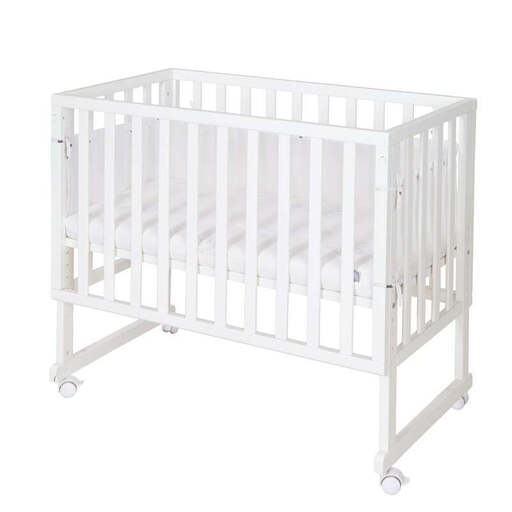
Why we're featuring this product: This roba bedside crib combines 3-in-1 functionality with the manufacturer's "safe asleep" concept. The focus is on safety and sleep comfort, which is underscored by the patented design and the breathable mattress. Being made in Germany is another relevant feature.
Advantages (Pros):
Who it's for: This model is suitable for parents looking for a safety-focused and flexible sleeping solution. Its high adaptability and certified materials appeal to users who value tested standards and long-term use as children's furniture.
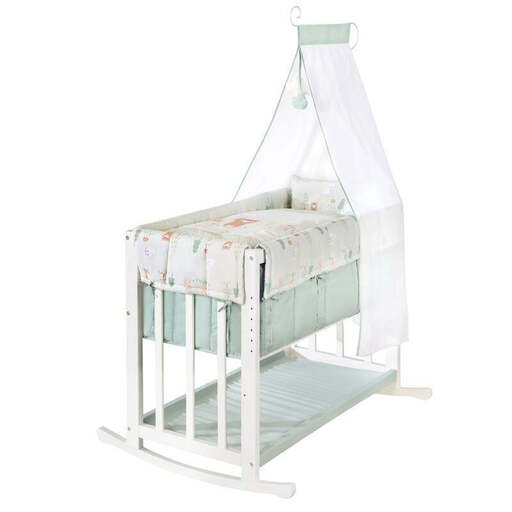
Why we're featuring this product: This model stands out with its 4-in-1 functionality and its extensive scope of delivery as a complete baby bed set. It offers an all-in-one solution from birth, combining a cradle, bedside crib, baby bed, and bench seat in one product.
Advantages (Pros):
Who it's for: This bed is an option for parents seeking a comprehensive starter set with maximum flexibility. Those who prefer a solution that grows with their child from a cradle to a bench and includes all necessary textiles will find a suitable system here.
Organising a functional nursery goes beyond selecting a bed. When furnishing with wooden furniture and accessories that are both practical and structurally well-designed, even smaller organisational aids can play a role. For instance, if you are looking for solutions for displaying books or decorative items, products like wooden display stands can provide structured and appealing storage.
1. How high does a bedside crib need to be for a box spring bed? The top edge of the bedside crib's mattress should be exactly level with the top edge of the parent's mattress. Since box spring beds often have a mattress height of 60 to 70 cm, a bedside crib with a correspondingly high adjustment range or a suitable extension kit is required. Measure the height of your mattress before purchasing.
2. Until what age can a 90x45 bedside crib be used? A bedside crib of this size is generally designed for the first 6 to 12 months. Its use should be discontinued as soon as the child is able to sit up, kneel, or pull themselves up independently, as there is a risk of falling out. Always observe the specific safety warnings from the manufacturer.
3. What does the EN 1130:2019 safety standard mean for baby beds? The EN 1130:2019 standard specifies the safety requirements for residential baby cribs and cradles. It tests, among other things, the stability of the bed, the strength of the materials, the spacing between the slats (to prevent head entrapment), and the security of the fastening systems. A product that complies with this standard has passed the relevant tests.