
Lieferung heute & morgen

Qualitätsgarantie

Willkommens-Angebote freischalten: KOSTENLOSE Lieferung | Bis zu 80 % RABATT | Kostenlose 30-Tage-JoyPlus-Testphase
App herunterladen
A bedside crib lets you keep your baby close without them having to sleep in your bed. In practice, however, it’s easy to make the wrong purchase: some models don’t match the height or design of your adult bed, while others become too small after just a few months. Features like wheels, accessories and a supposedly long lifespan don’t tell you much about how well a crib will work day to day.
This buying guide from the Joybuy Product Recommendation Officer gives you a clear, objective overview of the most important features and shows you which models suit different homes and lifestyles.
Just because a height-adjustable bedside crib is advertised doesn’t automatically mean it will fit your adult bed. What really matters is:
Before you buy, measure the height of your adult bed. If you have a divan bed or a bed with drawers, you may need special feet or an extension set.
A compact bedside bassinet saves space, but it usually offers only a limited period of use. Larger models with a 60 x 120 cm baby cot, on the other hand, can be used beyond the first few months. It’s important to stick to the mattress size specified by the manufacturer. An additional mattress that is too soft or doesn’t fit exactly can create gaps and height differences.
A bedside crib with mattress is practical because the fit between the crib and mattress is already designed. Even so, you should still check the firmness, cover, care instructions and exact dimensions.
A bedside crib with wheels is easier to move around your home. However, when stationary, the wheels must lock securely. For use right next to your adult bed, the way the crib attaches to the bed is what really counts – wheels alone are no substitute for a safety strap or a sturdy bracket.
For a classic bedside crib, the standard EN 1130:2019 is a relevant benchmark. For larger children’s cots, different standards may apply depending on the design, for example EN 716-1:2017 + AC:2019. Always refer to the information in the product description and assembly instructions.
The usage limit doesn’t just end when your baby reaches a certain weight. As soon as your baby can pull themselves up, sit or kneel, a low bedside crib may no longer be suitable. You must therefore follow the manufacturer’s guidelines on age, weight and developmental stage.
A bedside crib with safety strap should be attached to your adult bed so that no dangerous gap forms between the two sleeping surfaces. Check the straps, brackets and the gap before every use. For the larger roba models, the product description states that attachment is designed for certain bed constructions; for the 60 x 120 cm model, for example, a maximum side rail thickness of 4.5 cm is specified.
Mesh side panels improve visibility of your baby and support air circulation. However, they don’t replace a safe sleeping environment. Pillows, thick duvets, cot bumpers and soft toys should not be placed in a newborn’s sleeping area.
For everyday use, removable and washable covers are a real help. With the roba Safe Asleep model, the mattress cover can be washed at 60 °C according to the manufacturer. Other fabrics, such as bedding or cot bumpers, may have different care instructions.
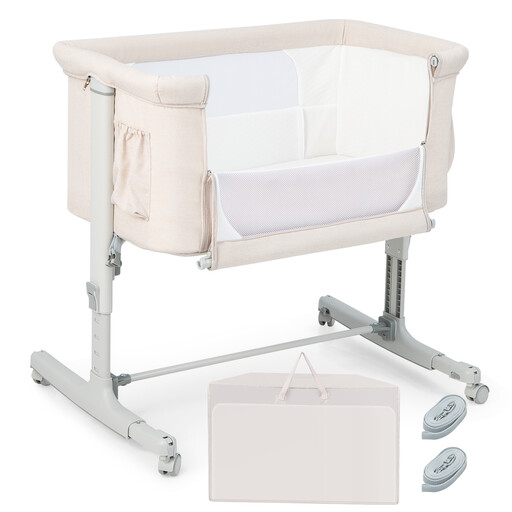
Why this product fits the profile: This model combines a bedside crib, bassinet and travel cot. Five height settings, two lockable wheels and a carry bag make it ideal for families who want a flexible solution at home or on the go.
The specific sleeping area of 76 x 43 cm and the stated weight limit of 9 kg make the limited usage period clear. Attachment is via two straps.
Five height settings, mesh side panels, lockable wheels and a carry bag included.
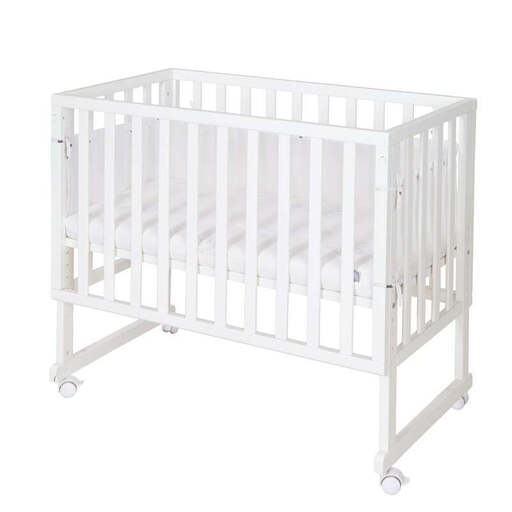
Why this product fits the profile: The roba bedside crib offers a 45 x 90 cm sleeping area, seven height settings and a mattress included. It’s designed for parents who prefer clear specifications on features and safety.
The product description states the EN 1130:2019 standard, a safety strap, a textile fall prevention feature and the recommended mattress dimensions.
Seven height settings between 22 and 42 cm, washable cover and four lockable wheels.
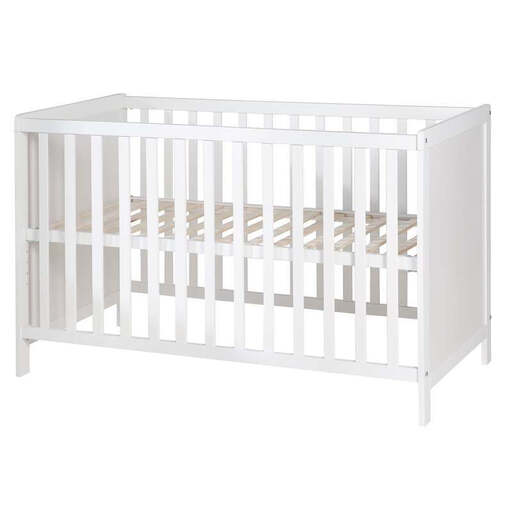
Why this product fits the profile: The larger sleeping area is ideal for families looking for a 3-in-1 baby cot with a longer usage period. According to the manufacturer, this cot can be used until your child is around five years old.
The 60 x 120 cm sleeping area is clearly stated. Five removable bars allow for later adjustment, but this doesn’t replace checking the developmental and weight limits.
Infinitely adjustable height from 22 to 42 cm, five removable bars and a stated weight capacity of 50 kg.
We’ve put together a full, regularly updated list of products that meet these strict selection criteria and comply with EU safety regulations.
That depends on the model and your baby’s development. Compact bedside bassinets are often suitable for up to around six months or until a certain weight. With some larger 3-in-1 models, use beyond the baby stage is possible. As soon as your child can sit, kneel or pull themselves up, you must check the stated usage limit.
When using it as a baby cot next to your adult bed: yes, if this is specified in the instructions. Straps or brackets must be fitted correctly. A bedside crib should not simply be pushed up against the adult bed if this could create a gap.
A complete set can make your choice easier, because the mattress is matched to the sleeping area. However, you must not change the specified size. Additional mattresses, pillows or soft padding should not be used if they are not recommended in the instructions.