
Lieferung heute & morgen

Qualitätsgarantie

Willkommens-Angebote freischalten: KOSTENLOSE Lieferung | Bis zu 80 % RABATT | Kostenlose 30-Tage-JoyPlus-Testphase
App herunterladen
A bedside table is more than just a surface for your book and glass of water. It's a central element in the bedroom that creates order and contributes to the room's atmosphere. However, the selection can quickly become overwhelming, leading to decisions you later regret. A wobbly stand, a surface that scratches easily, or an unsuitable height are common annoyances. This guide will help you navigate common pitfalls and make an informed choice.
Many bedside tables look appealing in the online shop but only reveal their weaknesses during daily use. Pay special attention to these three points to avoid a bad purchase:
To avoid the problems mentioned above, you should check three essential criteria before buying. These will help you objectively evaluate a model's quality and functionality.
The longevity of a bedside table depends directly on its material. Look for precise specifications from the manufacturer:
Functionality is determined by the right dimensions and the type of storage.
bedside table is based on the top edge of your mattress. A height that is level with or a few centimetres below it is usually the most comfortable.A modern bedside table or a white bedside table blends seamlessly into many interior styles. Additionally, there are models with integrated features that make daily life easier, such as built-in power outlets, USB charging ports, or LED lighting.
Here are some models tailored to specific needs and living situations.

Why This Fits Their Persona: Ideal for users who want to charge their smartphone, tablet, and other devices overnight without creating cable clutter. The integrated LED lighting also provides customisable ambient light.
The combination of a metal frame and engineered wood panels ensures a stable construction. Adjustable feet compensate for uneven floors and prevent wobbling.
Integrated charging station with 2 outlets and 2 USB ports per table; dust-proof fabric drawers and an open compartment for organised storage.
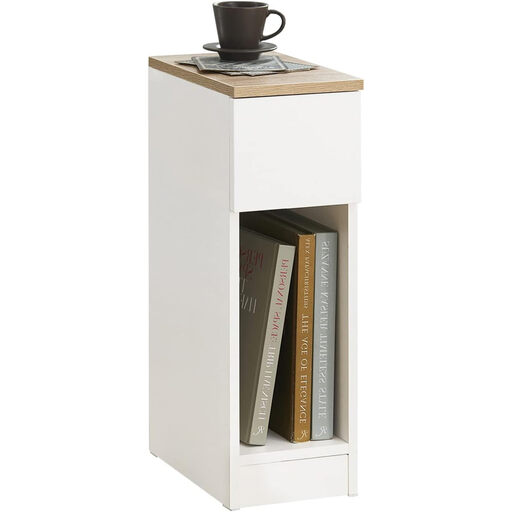
Why This Fits Their Persona: With a width of just 20 cm, this bedside table fits into even the tightest nooks next to a bed or sofa. It's the solution for small bedrooms where every centimetre counts.
Despite its narrow form, the construction from E1-grade MDF and particleboard provides good foundational stability. The 35 cm depth prevents it from tipping forward easily.
Maximum space utilisation through an extremely slim design; still offers a drawer and an open compartment for essential items.
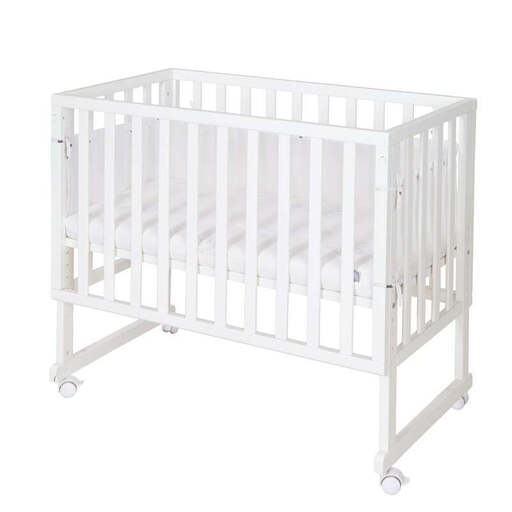
Why This Fits Their Persona: This product is more than a nightstand. It's a co-sleeper, bassinet, and later a bench, all in one. It grows with the child and offers parents the reassuring proximity to their baby in the first few months.
The 7-level height adjustment (22.4 - 44.6 cm) ensures the sleeping surface can be perfectly aligned with the height of the parents' bed, avoiding the ergonomic trap. Safety is guaranteed by the EN 1130:2019 standard and an included safety strap.
Multifunctionality (3-in-1 use) and longevity; includes a breathable mattress and safety barrier for the child's safe sleep.
We have compiled a complete, up-to-date list of products that fully meet these strict selection criteria and German safety regulations.
As a rule of thumb, the top of the bedside table should be level with the top of your mattress or up to 5 cm below it. This allows for comfortable access to items without you having to strain. Measure the height from the floor to the top of your mattress to determine the ideal height range.
The terms are often used interchangeably. Traditionally, a nightstand is often slightly larger and can be designed like a small chest of drawers with multiple drawers. A bedside table is more commonly a smaller, simpler table, sometimes with just a single surface and legs. Today, however, the lines are blurred, and the terminology depends on the manufacturer.
Securely mounting a floating bedside table is crucial. Always use the appropriate wall plugs and screws for your wall type. Solid concrete or brick walls require different fasteners than plasterboard (drywall) walls. Before drilling, use a pipe and wire detector to check if there are any electrical or water lines in the chosen spot. Follow the manufacturer's assembly instructions exactly and do not exceed the specified maximum load capacity.