
Lieferung heute & morgen

Qualitätsgarantie

Willkommens-Angebote freischalten: KOSTENLOSE Lieferung | Bis zu 80 % RABATT | Kostenlose 30-Tage-JoyPlus-Testphase
App herunterladen
A bedside table is more than just a surface for your smartphone or a glass of water. It's a central element in the bedroom that creates order and contributes to the room's ambience. However, the sheer number of options can be overwhelming, leading to decisions you might later regret. Certain design flaws or unsuitable materials often cause a seemingly attractive piece of furniture to lose its functionality after a short time. This guide will help you identify common pitfalls and make an informed choice.
To avoid a poor purchase, you should check three key parameters. These will help you objectively evaluate a model's functionality and longevity.
The material determines not only the look but also the durability. A wooden bedside table can be made of solid wood or engineered wood.
The ideal height for a bedside table should align with the height of your mattress. The top of the table should be at roughly the same level or a few centimetres below. Also, consider what type of storage you need:
Check the specifications for the maximum load capacity of the tabletop and drawers. Solid construction and high-quality fittings are crucial. For a set of 2 bedside tables, it's also important that both units are identically manufactured to ensure a cohesive look. Whether you opt for a bedside table in white, black, or another colour, stability remains a non-negotiable criterion.
Here are some models tailored to different needs and living situations.

Why it's a great fit: Ideal for small bedrooms where every inch of floor space counts. The floating design creates an airy, modern look and makes cleaning the floor underneath a breeze.
Solves the problem of improper, bulky dimensions. When correctly mounted on a suitable wall, it also bypasses the pitfall of instability.
The combination of a drawer and an open compartment offers flexible storage. The melamine-coated surface is scratch-resistant and water-repellent.
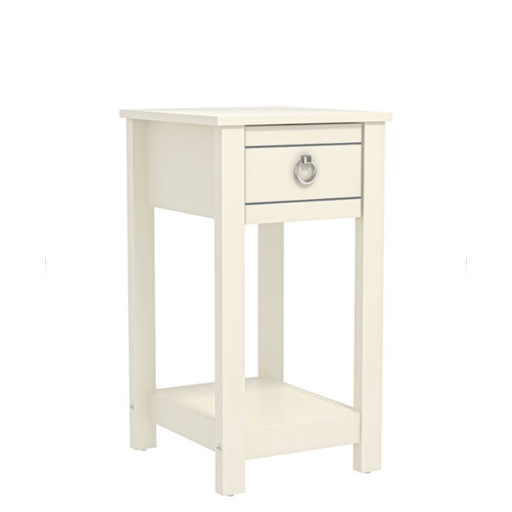
Why it's a great fit: A straightforward and functional solution for a first apartment, guest room, or anyone on a tight budget who doesn't want to sacrifice basic organisation.
With a drawer and an open shelf, it provides a clear structure, preventing the purchase of a purely decorative but impractical side table.
Its compact dimensions (32x35x59.5 cm) make it suitable for tighter spaces. The minimalist design blends well with many interior styles.

Why it's a great fit: For anyone who sees the bedside table as a design statement. The combination of navy blue, a textured pattern, and champagne-coloured metal legs creates a deliberate accent in the room.
This model goes beyond purely functional aspects, avoiding the purchase of a visually unremarkable, bland piece of furniture. The sturdy metal legs ensure a stable footing.
The rounded corners enhance safety, which is especially beneficial in households with children. The handle can be mounted on either the left or right side.
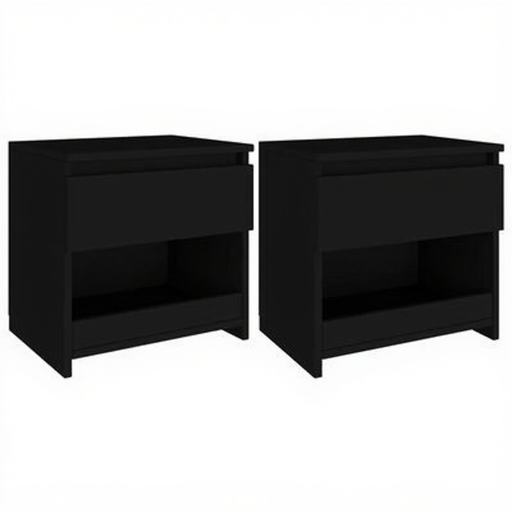
Why it's a great fit: Perfect for couples or anyone who appreciates a symmetrical and tidy look in the bedroom. The set offers a uniform and cost-effective solution.
A set of 2 ensures that both bedside tables match exactly in style, colour, and height, thus avoiding the problem of mismatched furniture next to the bed.
Each table combines a drawer with an open compartment, providing versatile storage. The low-maintenance engineered wood surface is easy to clean.
We have compiled a complete, up-to-date list of products that fully meet these strict selection criteria and comply with current safety standards.
Ideally, the top of the bedside table should be level with the top of your mattress. A deviation of up to 5 cm (about 2 inches) up or down is generally acceptable. This ensures you can comfortably reach your alarm clock, lamp, or a glass of water from bed without having to stretch or bend over.
In common parlance, these terms are often used interchangeably. Traditionally, however, there are subtle differences:
Bedside tables made of engineered wood with a melamine or foil coating are very low-maintenance. A soft, slightly damp cloth is usually sufficient for cleaning. Do not use harsh cleaning agents or abrasive sponges, as they can damage the surface. Always wipe up spills immediately to prevent the material from swelling.