
Lieferung heute & morgen

Qualitätsgarantie

Willkommens-Angebote freischalten: KOSTENLOSE Lieferung | Bis zu 80 % RABATT | Kostenlose 30-Tage-JoyPlus-Testphase
App herunterladen
As a Joybuy Product Recommendation Officer, my role is to provide you with clear, factual information so you can make informed decisions. Choosing the right beef baby food can be a challenge, given the wealth of options available. This guide will help you understand the essential criteria and avoid common pitfalls.
Introducing meat into your baby's diet is an important step. Beef is a valuable source of iron, but not all products are created equal. Many parents feel overwhelmed by marketing promises and unclear labelling. Let's focus on the facts to help you make the right choice for your child.
Before we get to the recommendations, it's important to be aware of the most common issues that can lead to an unsuitable product choice.
To make a good decision, focus on three verifiable criteria. These will help you objectively evaluate the quality of a beef baby purée.
The order of the ingredients indicates their proportion by weight. For a baby meal with beef and vegetables, vegetables should be listed first, followed by water and beef.
The texture of the food plays a crucial role in the development of oral motor skills.
An organic beef jar offers assurance that no synthetic chemical pesticides and fertilisers were used in the production of the meat and vegetables. The EU Organic seal is a reliable minimum standard. Farming associations like Demeter or Bioland sometimes set even stricter requirements for animal welfare and agriculture.
Here are three product suggestions tailored to different stages and requirements.
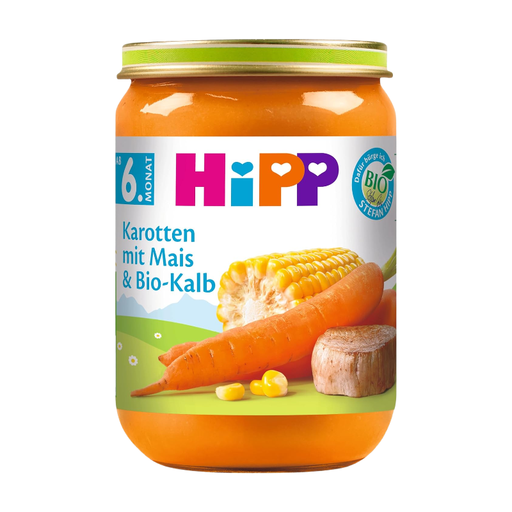
Why this product is a good fit: Ideal for the first introduction of meat. The finely puréed consistency is easy for babies just starting on solids to swallow. The combination of mild carrots, corn, and tender veal is easily digestible.
The recipe has no added salt (salt content 0.08 g/100 g), and the consistency is perfectly tailored to the needs of babies starting solids.
Contains organic rapeseed oil, a source of alpha-linolenic acid (an omega-3 fatty acid), which the manufacturer states is important for the development of brain and nerve cells.
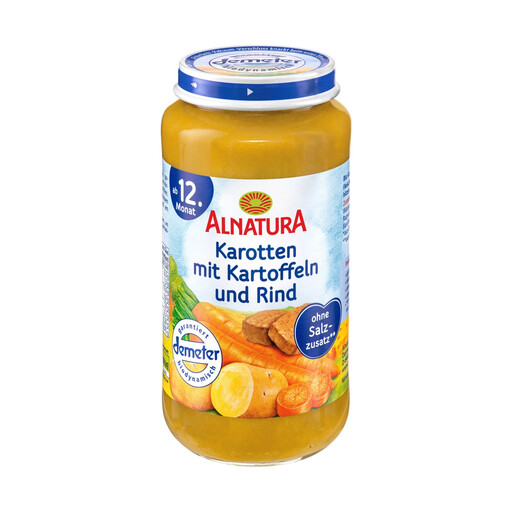
Why this product is a good fit: For parents who value the highest organic standards. The ingredients come from biodynamic agriculture (Demeter), which exceeds the requirements of the EU Organic seal.
Addresses the 'not all organic is equal' issue through its transparent Demeter certification. The chunky consistency is suitable for toddlers from one year and actively promotes chewing.
Ingredients from biodynamic farming. The recipe is kept deliberately simple and, according to the manufacturer, contains no added salt.
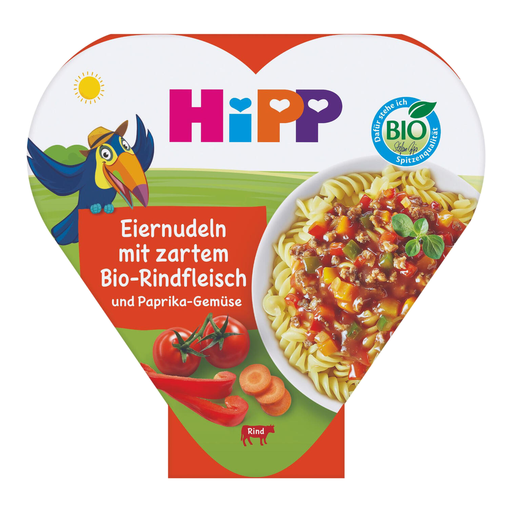
Why this product is a good fit: This HiPP meal from 12 months is designed as a complete meal in a convenient tray. It is ideal for toddlers who are learning to eat independently with a spoon. The sp?tzle and vegetable pieces are the perfect size for little hands and mouths.
Solves the problem of inappropriate texture by offering a real toddler meal instead of a purée. The structure is clearly designed for chewing and independent eating.
The heart-shaped tray is microwave-safe and makes preparation easy. It is a complete, balanced meal of organic quality.
We have compiled a complete, up-to-date list of products that fully meet these strict selection criteria and rigorous safety standards.
1. When can my baby start eating beef baby food? As a general rule, introducing meat, including beef, is recommended as part of complementary feeding from 6 months of age. Start with a small amount of a finely puréed meal. Beef is a good source of iron, which is important for your child's development.
2. How can I identify high-quality beef baby food at the supermarket? Look for an organic seal (e.g., EU Organic or Demeter), a short and understandable ingredients list, and check the nutritional information. A high-quality product has no added sugar and a very low salt content. The meat percentage should be clearly declared.
3. Can I store leftover beef lunch purée? Yes, this is possible. Before heating, take out the desired portion with a clean spoon. The unheated remainder can be stored in a sealed container in the refrigerator and used the next day. For hygiene reasons, any leftovers that have already been heated should not be reused.