What should you look for when buying?
First, decide whether you want to brown food without a hob. Then compare the recipe quantity, cooking time, space available and cleaning requirements.
| What to consider |
What to check before buying |
Who is this especially important for? |
| Browning without a hob |
Does the manual list an electric sauté function, or is the insert only suitable for use on certain types of hob? |
If I can’t use a hob during the renovation, I still want to brown meat in the appliance. Around 28% of consumers put this feature first. |
| Recipe quantity |
The total quantity of ingredients, the manual’s filling guidance and the space available all need to work together. |
If I’m making ragù for several meals, I want to cook the whole batch in one go. Around 22% of consumers prioritise having the right capacity. |
| Cooking time and serving time |
Check the cooking time range and keep-warm function separately; don’t leave raw meat unrefrigerated while waiting for a later start. |
If I want to serve the meal at a particular time, having the right cooking schedule matters to me. Around 22% of consumers prioritise coordinating the end of cooking with mealtime. |
| A safe place to use it |
Use a stable, level, non-flammable surface; keep it away from water and leave the ventilation openings clear, following the relevant manual. Also check that there’s a suitable power socket nearby. |
If there’s only a little space available on the temporary worktop, I need to find a suitable place to use the appliance. Around 17% of consumers make a safe place to use it their top buying priority. |
| Cleaning |
Check the cleaning instructions for the insert, lid and appliance base separately rather than assuming one instruction applies to the whole appliance. |
If washing up is difficult during the renovation, I want to know how to clean each part. Around 11% of consumers put ease of cleaning first. |
Suitable products at Joybuy
The models below are designed for slow cooking: a 7-l slow cooker with a listed sauté function and a smaller, manually operated 2.6-l slow cooker. If you’re making several portions of ragù, check carefully that the recipe quantity fits within the filling guidance for the appliance you choose.
 No image available
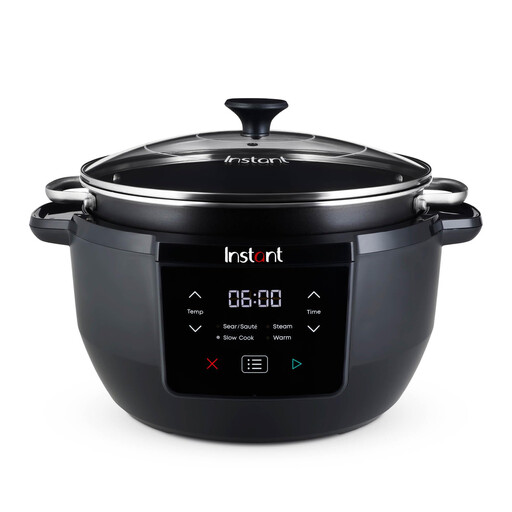
Instant Pot Superior Slow Cooker, 7 L, Grey – 140-6128-01-EU
Worth considering if you want to brown food in the appliance during your renovation; the product description lists sautéing and slow cooking.
7 L according to the product title. The product description also lists a keep-warm function.
According to the product description, the inner pot isn’t suitable for use in an oven, on a hob or on an induction hob.
View at Joybuy
 No image available
IAGREEA Slow Cooker, 2.6L, with steamer
For slow cooking with simple manual controls, if you’re not planning to brown food at a high temperature.
2.6 l according to the product name. A ragù recipe from Langsam kocht besser is designed for a 3.5-l pot and serves six, so don’t assume you can use the same quantity of ingredients in the smaller pot without checking first.
The product description advises against high-temperature frying.
View at Joybuy
Frequently asked questions
Should I defrost frozen beef before slow cooking it?
Yes. FoodSafety.gov recommends safely defrosting frozen meat before slow cooking and starting the cooking process as soon as you’ve prepared it. If you defrost the meat in cold water or in a microwave, cook it straight afterwards.
Is the keep-warm indicator enough to keep cooked ragù safely warm?
No. The indicator alone doesn’t confirm the temperature throughout the ragù. The Federal Institute for Risk Assessment recommends keeping heated food at a temperature of at least 60 °C throughout until it is eaten.
What should I bear in mind when using a temporary worktop?
Follow the instructions for your specific appliance. The Instant Superior Slow Cooker manual requires a stable, level, non-flammable surface and warns against using the appliance near water or with the ventilation openings covered. If you’re unsure about the power supply, have the electrical installation checked before use; the consumer advice centre warns that outdated wiring may be overloaded.
How should I store leftover ragù?
The Federal Institute for Risk Assessment recommends quickly cooling hot food to below 7 °C for longer-term storage, and keeping perishable food in the fridge at between 2 °C and 7 °C. When reheating, the BfR recommends heating food to at least 70 °C throughout for two minutes.
What size slow cooker do I need for several portions of ragù?
The key is whether the full recipe quantity fits within the filling guidance in the manual for your specific appliance. FoodSafety.gov offers a general guideline of filling it to between half and two-thirds full; also compare the quantity of ingredients with the pot capacity and the space available.


