Guests bringing a large bowl of stew
If you’re bringing several portions, check that the bowl fits with its cover on and can rotate freely on the turntable. If necessary, reheat the stew in batches and check the temperature.


For individual bowls, a solo microwave is generally sufficient. For a wide serving dish, what matters is the usable interior space and whether the dish can rotate freely on a turntable. A grill or convection function is worth considering mainly if you’ll use it for other dishes too. Whatever the model, the Federal Institute for Risk Assessment (BfR) recommends stirring the stew and reheating it to at least 70 °C for 2 minutes throughout.
If you’re bringing several portions, check that the bowl fits with its cover on and can rotate freely on the turntable. If necessary, reheat the stew in batches and check the temperature.
For smaller bowls, look for easy-to-adjust time and power settings, as well as enough room to stir the stew part-way through. Follow the instructions for using microwave-safe dishes, as recommended by the consumer advice centre.
It’s important to work out in advance how the stew will be kept chilled in transit and reheated at your destination, or kept hot until serving. The BfR recommends considering what refrigeration will be available where you’re eating.
First, check that the dish fits inside and that you can check the stew thoroughly; extra features are a secondary consideration.
A good fit if: You’re reheating individual portions in a bowl that can rotate freely on the turntable.
Consider: The stated capacity alone doesn’t tell you whether a wide bowl and its cover will fit on the turntable.
A good fit if: Your suitable, wide or square bowl fits inside the microwave but wouldn’t rotate freely on a turntable.
Consider: Check the usable floor area and interior height on a flatbed model too; the design doesn’t replace stirring or checking the temperature.
A good fit if: You’ve measured up and need room for a larger dish, or regularly want to cook other foods too.
Consider: A grill or convection function doesn’t offer a particular advantage for simply reheating stew. Choose one if you’ll use it for other dishes as well.
| What matters | What to check when buying | Who should pay particular attention |
|---|---|---|
| Thorough reheating | You should be able to adjust the time and power; check the temperature in several places after stirring. The BfR recommends at least 70 °C for 2 minutes throughout. | When I bring stew for other people, I want to be able to check that it’s heated through, including between the pieces of meat. Around 36% of consumers put thorough reheating first. |
| Bowl and portion size | Compare the dimensions of the dish and its cover with the interior, door opening and, where applicable, turntable diameter. | For a large or square serving bowl, I want to know whether it will fit safely. Around 29% of consumers prioritise the fit of their dish. |
| Controls and cleaning | Look for clear time and power settings and easy-to-reach interior surfaces; a suitable cover can help prevent splashes. | When I’m reheating several portions one after another, I want to set the time and power easily and clean up any splashes. Around 21% of consumers put ease of use and cleaning first. |
| Space and extra features | Check the external dimensions against the space available, and choose a grill or convection function only if you’ll use it for other dishes. | If I have limited worktop space or want to use the microwave for other foods too, its footprint or extra features matter. Around 14% of consumers prioritise these points. |
A 20 l capacity doesn’t tell you whether your wide bowl and its cover will fit inside or rotate freely on the turntable.
Compare the dimensions of the bowl and cover with the interior, door opening and turntable. For a flatbed model, check the usable floor area and height.
If the dish doesn’t fit, you’ll need another suitable dish or to reheat the stew in several batches.
A power rating or a manufacturer’s claim about heat distribution doesn’t prove that the stew and pieces of meat have reached the recommended temperature throughout.
Stir the stew part-way through and check the temperature in several places. The BfR recommends reheating to at least 70 °C for 2 minutes throughout.
These extra functions are for other cooking methods; they don’t tell you whether your bowl will fit or whether the stew will be heated through properly.
Check the dish fits and that the controls are easy to use first. Choose a grill or convection function if you’d like to use it for other dishes too.
A microwave won’t keep food safely chilled during transport or maintain a controlled temperature until serving. The BfR recommends planning for the refrigeration available where you’ll be eating.
Decide in advance where the stew can be chilled and reheated, and how it will be kept cold or hot until you eat. For longer storage, the BfR recommends cooling hot food quickly to below 7 °C.
Bosch describes the FFL023MW0 solo microwave as a 20 l model with a turntable and manual controls.
The M 20 Cube Ceramic is a solo microwave with a flatbed, which may suit buyers with wider or square dishes.
According to SEVERIN, the MW 7761 solo microwave combines a flatbed with two rotary controls.
The NN-SD36QSEPG solo microwave is a larger model for buyers who need room for a dish after measuring it.
The MS23NECBW solo microwave is another model with a turntable and inverter technology.
This selection includes microwaves for reheating individual portions, as well as models with a glass base or turntable. With every model, you’ll still need to check that your dish actually fits inside. The BfR recommends stirring the stew and reheating it to at least 70 °C for 2 minutes throughout.
 Image unavailable
The glass base may appeal if you’re looking for a microwave with a usable surface for wider dishes; check the interior dimensions against your bowl.
The product name also lists a grill and convection function, stainless steel and matt black finish.
 Image unavailable
As a solo microwave with defrost and reheating functions, it could work for individual portions; compare the turntable with the diameter of your bowl.
The product name lists a capacity of 19 l, 700 W, six power levels and a turntable.
 Image unavailable
This compact solo model may suit smaller portions; check whether your bowl fits on the turntable.
The product name lists a capacity of 20 l, 700 W, six power levels, a 30-minute timer, defrost function and a 360° turntable.
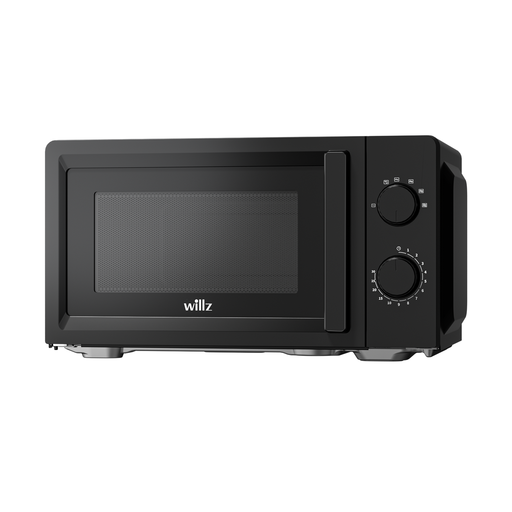 Image unavailable
This compact appliance may suit buyers with limited space; also check the interior dimensions against your bowl.
The product name lists a capacity of 20 l and a compact, square design.
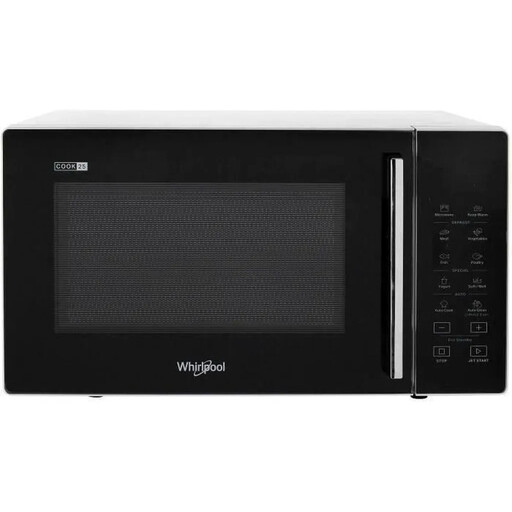 Image unavailable
This model may suit you if you’re looking for a larger interior and a reheating function for moist foods; check its external dimensions against the space available.
The product name lists Jet Start, keep-warm and auto-clean functions, as well as programmes for yoghurt and dough.
Stir the stew while it’s reheating and check the temperature between the pieces of meat too. The BfR recommends at least 70 °C for 2 minutes throughout; a wattage or time setting alone can’t confirm this.
For longer storage, cool hot food quickly to below 7 °C and store perishable food at 2 °C to a maximum of 7 °C, as recommended by the BfR. Keep the stew chilled while travelling. If it needs to stay hot after reheating, the BfR recommends keeping it at least 60 °C throughout; a microwave alone can’t keep food chilled or maintain a controlled temperature.
Only if the container and, where applicable, its lid are suitable for microwave use and the intended temperature. The consumer advice centre recommends following the instructions for your dishes. Remove the stew carefully, as the container and its contents may be hot.
When you buy from a business seller, faulty goods are generally covered by a statutory guarantee for at least two years. Online distance purchases generally come with a 14-day right to cancel from the date of delivery; whether you may have to pay return postage depends on the circumstances. An additional manufacturer’s warranty doesn’t replace your statutory rights.
The Federal Network Agency lists the CE marking, an identifiable product, correct manufacturer details and German instructions with the necessary warnings among the points checked during market surveillance. For products sold from outside the EU, it also recommends checking where the item will be shipped from and whether there’s a contact in the EU. This guidance doesn’t confirm that any particular appliance is compliant.