If the window is already bringing out the shape and texture of your beer stein, a white card may be all you need to brighten the shadow side. A dimmable LED panel could be useful for repeat shots or adjustable fill light. Check for reflections in the glaze, set your white balance and confirm what’s included rather than choosing on wattage or CRI alone.
Which set-up is right for you?
Potters photographing one-off glazed pieces
When the glaze is glossy, choose the light size and shooting angle carefully so reflections don’t obscure the shape. Elinchrom explains how shape and reflections matter in glass photography; for a particular beer stein, though, testing it with your own subject is what counts.
Sellers taking product photos regularly
When photographing several steins for a series, it’s important to set up the light position and look in a way you can replicate. Adobe Lightroom Academy explains how to shape window light to bring out texture and colour, although daylight can change.
Photographers working at a small table by the window
If space is limited, a white card can be a simple way to bounce window light back onto the shadow side. Canon Europe recommends this approach when product images are too dark; first check whether it’s enough for your set-up.
What should you look for when buying?
Start by asking whether you need a panel at all: a white card may be enough to add a little light to the shadow side. If you do add a panel, how well you can control reflections and the effect it has on your own stein matter more than any single power or colour-rendering figure.
Window light with a white card
A good choice if: The shadow side needs a little lift and you’re happy to work with changing daylight.
Bear in mind: The card uses the light already available, but it won’t make its changing effect consistent.
Compact battery-powered panel
A good choice if: You have limited space or want to move your fill light around frequently.
Bear in mind: A smaller light source may create a more noticeable reflection in the glaze. Test the distance, angle and diffusion with your stein.
Larger bi-colour panel with diffusion
A good choice if: You’re photographing several steins and want to recreate your settings for a series.
Bear in mind: A larger set-up needs space, and you’ll need to check the accessories. Adjustable colour temperature doesn’t replace white balance or checking for reflections.
| Consideration |
What to check before buying |
Who is this important to? |
| Glaze reflections and shape |
Test the diffuser and light size with the stein from different angles. Check whether you can position the light to avoid unwanted reflections. |
If I want to show the glaze without a bright reflection obscuring details of the shape, I pay particular attention to the light size and angle. Around 36% of consumers put reflection control first. |
| Consistent colour |
Check the colour temperature range and the manufacturer’s colour-rendering information. Photograph the stein in the window light you plan to use and check the white balance. |
If I want the glaze colour to look similar across several shots, I want to assess the window light and fill light together. Around 29% of consumers prioritise consistent colour. |
| Repeatable shots |
Check the dimming options, controls and secure mounting. Confirm whether the diffuser and power supply are actually included. |
When photographing a series of steins, I want to be able to set the position and brightness again. Around 21% of consumers put repeatability first. |
| Compact, portable set-up |
Check the dimensions, power supply and mounting for the specific version. First, test whether a white card is enough as a reflector. |
If space is limited at my window-side table, an extra light that’s easy to move matters more than a comprehensive kit. Around 14% of consumers prioritise a compact, portable set-up. |
LED panel buying pitfalls
-
Assuming a high CRI guarantees accurate glaze colours
The CRI figures in the product information reviewed come from the manufacturers. Changing window light and white balance also affect the final image.
Check how the colour looks with your stein in the intended set-up and adjust the white balance accordingly, rather than relying on the CRI figure alone.
-
Buying a bright panel without considering its reflection
With a glossy glaze, the visible shape of the light source can make all the difference. Elinchrom describes principles for managing reflections in glass photography; these can be a useful guide, but they’re not a test with beer steins.
Check the size, diffusion and position of the light with your subject. More brightness alone doesn’t guarantee a better effect.
Depending on your set-up, you may need a suitable light modifier. Check in advance that it fits the light and is included.
-
Assuming a panel comes as a complete portable kit
The contents listed by the manufacturer for the Neewer NL660 vary by version; NP-F batteries aren’t included, according to the manufacturer.
Before buying, check the exact version, mount, diffuser and power supply individually.
For portable use, you may also need compatible batteries or a stand.
Key brands at a glance
Godox
The LDX50Bi bi-colour panel is worth considering for repeatable set-ups where you want to shape the light and recall your settings.
- Godox lists a removable diffuser, presets and a colour temperature range of 2800–6500 K for the LDX50Bi.
- The effect on a beer stein’s glaze depends on the position of the light and the subject. Also check what you’ll need to power it with batteries.
Neewer
The NL660 Bi-Color is an option if a classic panel with a diffuser suits your set-up.
- Neewer gives the NL660 a colour temperature range of 3200–5600 K and a CRI of 96+.
- The manufacturer lists versions with and without a stand; NP-F batteries aren’t included, according to the manufacturer. Check what comes with the specific version.
Nanlite
The PavoSlim 60B is designed for set-ups with enough room for a softbox, diffusion layers and a grid.
- Nanlite lists a softbox, several diffusion layers and a grid as light modifiers for this model.
- Before buying, check the model and contents of the specific version on offer.
amaran
The P60x is a bi-colour panel for carefully positioned and shaped fill light.
- amaran lists a colour temperature range of 3200–6500 K for the P60x, along with 5070 Lux at 1 m and 5600 K with a 45° beam angle.
- The Lux figure is supplied by the manufacturer and isn’t a comparison test against panels with different beam angles. Check that the light modifiers are compatible and confirm which version is on offer.
Ulanzi
The compact VL120 RGB could be a good fit if you often move your light around or have limited space.
- Ulanzi lists an integrated 3100-mAh battery; the product page for the VL120 RGB includes a silicone diffuser.
- If you want a broad, unobtrusive reflection on the glaze, check the effect with your particular stein.
Joybuy products for product photography
This selection includes compact fill lights for product photography, as well as an LED photo box. The photo box is a different design from a freely positionable panel.
 No image available
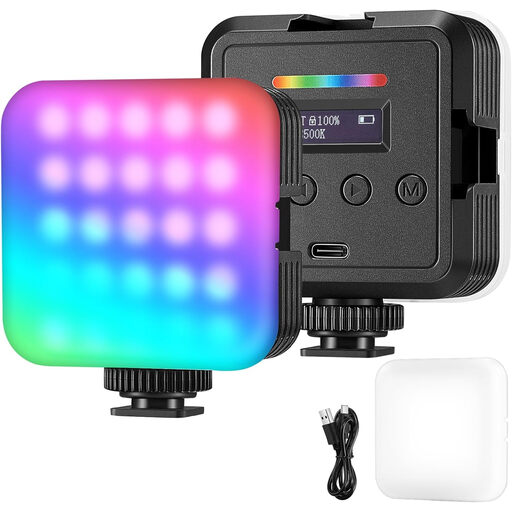
RGB LED camera light
Described as a portable fill light for product photography; according to the product information, it offers RGB, white and warm light modes, adjustable brightness and colour temperature, plus battery and USB power.
View at Joybuy
 No image available
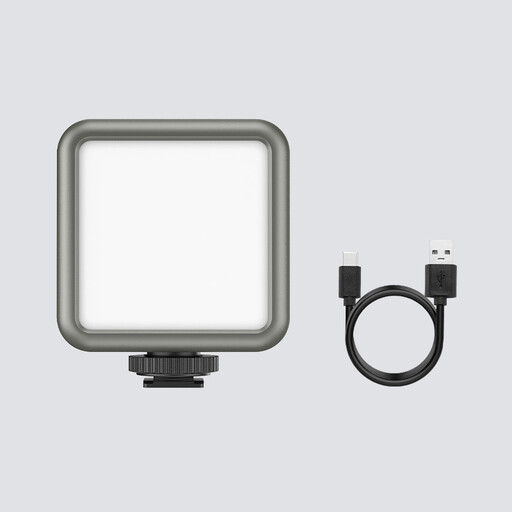
Ulanzi VL49 RGB LED video light
Described as suitable for compact product and macro photography; the product information lists a 2000-mAh battery, a colour temperature range of 2500–9500 K, dimming and a magnet on the back.
View at Joybuy
 No image available
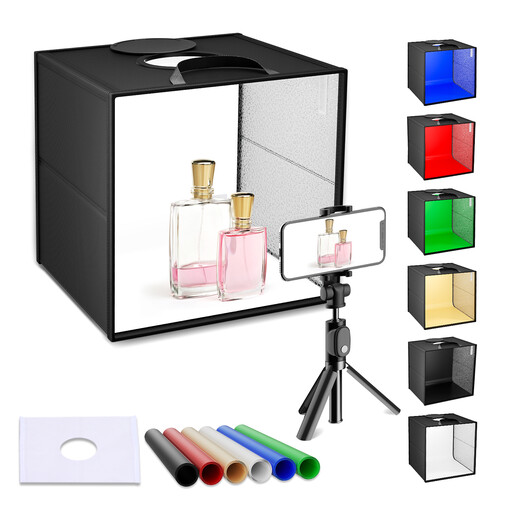
Foldable LED photo box with coloured backgrounds
Described as suitable for product photos using an enclosed box; the product information lists 120 integrated LEDs, nine brightness levels per mode, a diffuser cloth and adjustable colour temperature from 3000–5600 K.
View at Joybuy
Frequently asked questions
Can a white card replace an LED panel?
Yes, if the side facing away from the window is the main problem: a white card can bounce window light back onto it. Take a test shot to see whether that’s enough for your stein; it won’t make changing daylight consistent.
Where should I position a panel by the window?
Start by using the window as your main light source, then use the panel sparingly on the shadow side. Watch for reflections in the glaze, adjust the angle or diffusion, and check the white balance with the actual subject.
Do batteries, a stand and a softbox always come in the box?
No, it depends on the model and version. The manufacturer lists the Neewer NL660 in versions with and without a stand; NP-F batteries aren’t included, according to the manufacturer. Check what comes with the version on offer, along with any mounts and power supplies you’ll need.
What should I check for LED light product safety?
Check the markings and safety information for the specific light. Your Europe, the European Union’s information service, notes that CE marking may be required for certain product categories, and that its absence may be a problem where it is required. A CE marking isn’t a photography test.
How can I assess the glaze colour under window and panel light?
Photograph the stein in the set-up you plan to use and check the white balance, rather than relying on the manufacturer’s colour-rendering information alone. Canon Europe notes that natural light can appear warmer or cooler depending on the conditions.


