Detail photographers
You want to capture the fine textures of a stationary beetle shell and are happy to tailor your lens and shooting technique to the task.


For spontaneous close-ups on damp or uneven woodland paths, a rugged compact camera with a close-up mode is a straightforward starting point. If you want to magnify fine textures deliberately and expand your setup, a system camera with a suitable macro lens could be a better fit – but it means carrying more kit and spending more time setting up each shot. A short minimum focusing distance alone doesn’t tell you the magnification ratio; lighting and the achievable shooting distance matter too.
You want to capture the fine textures of a stationary beetle shell and are happy to tailor your lens and shooting technique to the task.
You want to take a camera that’s ready to go, without changing lenses – even when the path is damp.
You often take photos beneath trees and need to balance close-up capability, even lighting and the reproduction of fine details.
A good fit if: You want to take spontaneous photos on woodland paths without changing lenses. OM SYSTEM and Ricoh state that the TG-7 and WG-8, respectively, can focus from as close as 1 cm.
The trade-off: A short focusing distance doesn’t guarantee a particular magnification ratio. An independent test of the TG-7 also found its detail reproduction at higher ISO settings to be disappointing.
A good fit if: You want to magnify the shell’s texture deliberately and choose a macro lens to suit your camera body. OM SYSTEM gives the separately sold M.Zuiko 60mm F2.8 Macro a 1:1 magnification ratio; Canon states that the RF 100mm F2.8L Macro IS USM offers 1.4x magnification.
The trade-off: The body and lens are separate components, and a longer macro lens means more to carry. Focus stacking or careful lighting may also take extra time.
| Buying priority | What to check before buying | Who it matters most to |
|---|---|---|
| Magnify fine textures | Compare the lens’s maximum magnification ratio with the practical focusing distance you can achieve. | If the surface texture of a stationary shell matters more to you than a quick snapshot, deliberate magnification is key. Around 33% of consumers prioritise capturing fine details. |
| Take spontaneous photos | Check the close-up mode, handling and protection ratings of the specific camera model. | If you want to start shooting on a woodland path without changing lenses, having a camera ready to hand is essential. Around 27% of consumers prioritise being able to take a camera with them spontaneously. |
| Control lighting and focus | Check close-up lighting, possible shadows cast by the camera and whether the specific model offers focus stacking. | If you want to capture fine details beneath trees, pay particular attention to lighting and getting the right plane of focus. Around 20% of consumers prioritise controllable lighting. |
| Choose a compatible complete system | Check the body, mount, macro lens and actual contents of the package together. | If you’re choosing the lens and body separately, you’ll want to make sure they’re compatible and that you can take the setup along on a woodland walk. Around 20% of consumers prioritise system cost and compatibility. |
The minimum focusing distance tells you how close a camera can focus. On its own, it doesn’t tell you how large the subject will appear in the image. At very close distances, the camera may also cast a shadow over the subject.
If fine textures are your main priority, check the stated magnification ratio. With a compact camera, also consider whether you can maintain the necessary shooting distance where you find the subject.
For the system camera combinations described here, macro capability depends on the lens you choose. The body alone isn’t a complete macro setup.
Compare clearly specified, compatible kits and check which lens and accessories are actually included.
Protection for the camera body won’t automatically give you sharp, evenly lit close-ups. An independent test of the TG-7 found its detail reproduction at higher ISO settings disappointing; you can’t assume the same finding applies to other models.
Plan your lighting and shooting position, and check the protection offered by the complete camera-and-lens combination.
The TG-7 has a built-in lens for spontaneous close-ups, while the OM-5 Mark II can be expanded into a system with a separate macro lens.
The WG-8 is a compact camera with a close-up function and built-in ring light.
The EOS R50 can be paired with a compatible RF macro lens for detailed close-ups.
The α6700 is an E-mount system camera that can be paired with a separately selected macro lens.
The NIKKOR Z MC 105mm 1:2,8 VR S is a macro option for a compatible Nikon Z system.
The models below are described as cameras for photography or outdoor use. If you’re considering one for photographing beetle shells, check its macro capability, achievable shooting distance and lighting.
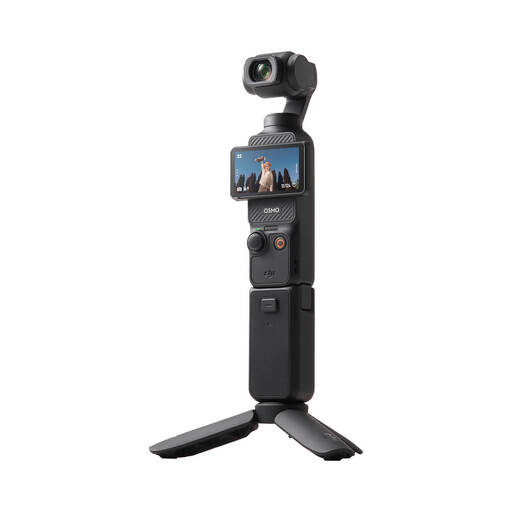 No image available
If you’re considering this model for close-ups on woodland paths, check specifically that its shooting distance and macro capability are suitable for small subjects.
The product title describes a gimbal camera with a 1-inch sensor and 4K/120fps.
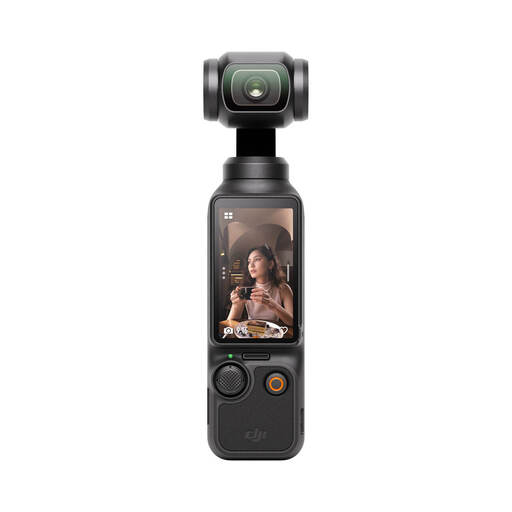 No image available
If you want to use it to photograph beetle shells, check the close-focus capability, shooting distance and lighting for small subjects before buying.
The product title lists a 1-inch CMOS sensor, 4K/120fps, 3-axis stabilisation and a rotating 2-inch touchscreen.
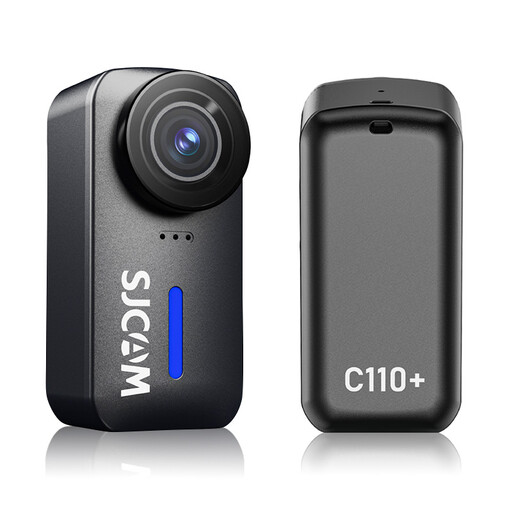 No image available
If you’re considering an action camera for close-ups on woodland paths, check that its shooting distance and lighting are suitable for small shells.
The product title lists 4K, 20 MP photos, a 170° field of view and a waterproof housing. The housing specification doesn’t indicate macro capability.
No. The 1 cm specification simply describes how close the compact cameras mentioned can focus. For deliberate magnification, also compare the stated maximum magnification ratio. For example, OM SYSTEM lists 1:1 for the separately sold M.Zuiko 60mm F2.8 Macro.
Start by looking for even lighting and making sure the camera or lens doesn’t cast a shadow over the subject. According to Ricoh, the WG-8 has a built-in ring light; a version of the TG-7 with an LG-1 light guide is also documented. Focus bracketing can help capture several planes of focus, provided the subject and camera stay still while you take the shots.
For the small details discussed here, you’ll need a suitable, compatible macro lens unless it’s explicitly included in the offer. Check the mount and kit contents: the EOS R50 uses RF lenses, while the Sony α6700 uses E-mount lenses.
Deliberately disturbing wild animals is prohibited under Section 39 of the German Federal Nature Conservation Act (BNatSchG); further restrictions apply to specially protected species under Section 44 of the BNatSchG. Whether you may leave a particular woodland path also depends on the rules of the specific protected area. Follow signs and local conservation rules, and leave living animals and their habitats undisturbed.