For cooks short on space
If you’re making a small portion during your renovation and want to put the appliance away afterwards, a hand blender could be a space-saving option.


For a small portion of beetroot hummus and limited space during a kitchen renovation, a hand blender with a suitably tall container and detachable blending shaft is a sensible place to start. A jug blender could work if you regularly blend in the jug and have room to store and clean it. A compact food processor is a better choice if you also want to chop or grate. Wattage alone won’t tell you what texture a blender will give your hummus.
If you’re making a small portion during your renovation and want to put the appliance away afterwards, a hand blender could be a space-saving option.
For thick hummus, the right container and the ability to work in the ingredients gradually both matter. Accessories such as a tamper vary by model.
If you want to chop or grate vegetables as well as puréeing, consider a compact food processor with the attachments you need.
A good fit if: You want to make a small portion in a suitably tall container and put the appliance away afterwards.
Things to consider: The shape of the container, splashing and ease of use all play a part. A large set of accessories may also need extra storage space.
A good fit if: You have room for a blending jug and want to use the blender for other dishes too. Braun uses a jug blender with a tamper in one of its hummus recipes.
Things to consider: The jug and lid need cleaning. Ingredients can stick to the sides, so you may need to pause and use a tamper designed for that model.
A good fit if: You also want to chop or grate and have room for the bowl and accessories.
Things to consider: The stated capacity and usable working capacity may differ. Kenwood lists a 1.3 l bowl capacity and a 0.75 l liquid working capacity for the FDP23.380GR.
| What matters to you | What to check before buying | Who is this important to? |
|---|---|---|
| Space and ease of use | Appliance dimensions and accessories; a suitable container and an accessible power socket. | If there’s hardly any worktop space during the renovation, I want an appliance that I can put away with its accessories. Around 36% of consumers put space requirements and ease of use first when choosing a blender for this purpose. |
| Thick hummus texture | A suitable container and permitted filling quantity; for a jug blender, check whether the model is designed to be used with a tamper. | If the mixture is thick, I want to be able to work in the ingredients gradually without losing sight of the texture I’m after. Around 29% of consumers prioritise blending thick mixtures when choosing a blender. |
| Cleaning | Check the instructions for individual parts and the blending shaft; look for detachable parts and find out how they should be cleaned. | If I’m cooking in a temporary kitchen, I want to be able to clean the parts that come into contact with food properly. Around 21% of consumers put cleaning first when choosing a blender. |
| Portion size and extra tasks | Check the usable working capacity, not just the stated capacity; make sure it has the chopping or grating attachments you need. | If I want to chop or grate vegetables as well as make hummus, I’m looking for an appliance with the right functions that I can still put away easily. Around 14% of consumers prioritise these additional food-preparation tasks. |
A motor’s wattage alone doesn’t guarantee a particular result when making hummus. The container, quantity and intended use matter too.
Start by comparing the blender type, container and permitted filling quantity for your portion.
For the Kenwood FDP23.380GR, Kenwood gives a bowl capacity of 1.3 l and a liquid working capacity of 0.75 l. This doesn’t automatically tell you how much hummus you can make in it.
Check the working and recipe limits in the instructions for the specific model.
Extra attachments can help you tackle more tasks, but they need space and must be cleaned after use.
Only buy a set if you’re likely to use the extra functions, and check the cleaning instructions for each part you need.
More accessories can take up extra storage space and add to cleaning time.
The CleverMixx MSM14200 is a documented hand blender model designed for blending in a container.
The range includes hand blenders and jug blenders; the features mentioned here relate to different models.
The HR2522/00 hand blender is designed for puréeing in a container.
The MultiPro Go FDP23.380GR is a compact food processor for puréeing and other food-preparation tasks.
The Thermomix could be a more versatile alternative if you already use one or have other kitchen tasks to tackle.
The Joybuy products below are hand blenders designed for puréeing. When choosing, check which features suit your portion size and the space you have available.
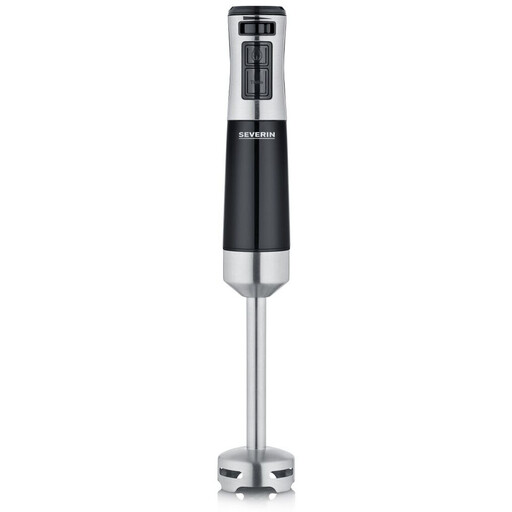 No image available
Could suit a small portion if you’re looking for a hand blender with a detachable blending shaft.
600 W; variable speed control; detachable blending shaft; black and brushed stainless steel.
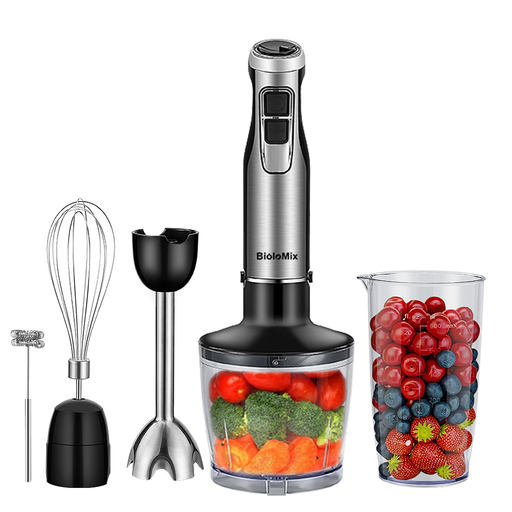 No image available
An option if you’re looking for a hand blender with several speed settings and a detachable design.
Six speed settings; 1200 W; stainless steel blade; anti-splash system; detachable design.
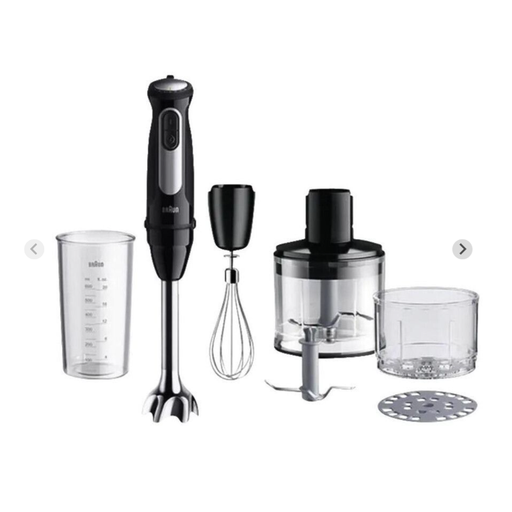 No image available
Could suit you if you’re looking for a hand blender with several speed settings for puréeing and blending.
25 speed settings; Turbo Boost; accessories listed as dishwasher-safe in the product information.
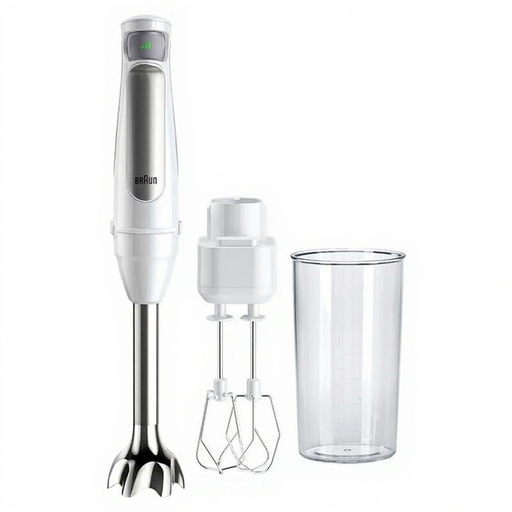 No image available
An option if you’re looking for a hand blender and want to make use of the interchangeable accessories mentioned.
Turbo Boost; EasyClick system; ice-crusher attachment.
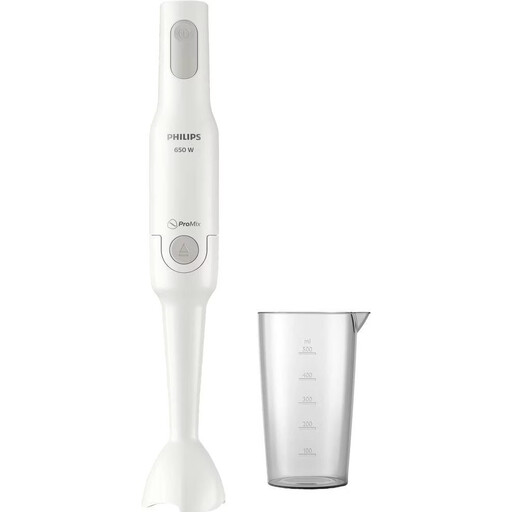 No image available
Could suit a single portion if you’re looking for a hand blender with a beaker.
650 W; beaker; one-button release; white finish.
No. Choose an appliance to suit the ingredients you’ll actually use. If your beetroot is already cooked, you don’t need to assume it must be suitable for hard, raw pieces. The German Federal Institute for Risk Assessment notes that beetroot contains nitrate and highlights the importance of proper storage and hygiene. It also recommends eating a varied selection of vegetables.
For each model, check which parts that come into contact with food can be detached and are listed as dishwasher-safe in the instructions. The Verbraucherzentrale recommends hygienically cleaning used kitchen utensils. Approval for individual parts doesn’t automatically mean you can put the whole appliance in the dishwasher.
No. In Germany, statutory rights for faulty goods are a legal entitlement against the seller, while a guarantee is a voluntary offer with its own terms and conditions. If a product is faulty, the first step is to seek a remedy from the seller, as the Verbraucherzentrale explains.
A CE marking is required if the EU rules that apply to the specific product say it must have one. It’s a declaration by the manufacturer, not an independent quality mark. The EU explains the conditions for CE marking, while the Bundesnetzagentur lists points to check, including product identification and the required information in German. This alone doesn’t confirm that a particular model being sold is compliant.