Families with busy mornings
If you need several glasses ready before breakfast, preparation speed and suitable jug and pulp container capacities matter.


For making several glasses on a busy family morning, a centrifugal juicer is probably the better choice. According to ETM TESTMAGAZIN, this type of juicer processes larger quantities of ingredients more quickly than a slow juicer, but it is louder. If you prefer the pressing method or a quieter process, a slow juicer could suit you better. Allow more time, and check the instructions for both types to see whether they can handle hard beetroot, as well as checking the container capacities and cleaning requirements for the specific model.
If you need several glasses ready before breakfast, preparation speed and suitable jug and pulp container capacities matter.
If you use your juicer regularly, consider how easy it is to reach and clean the filter and other parts after juicing beetroot.
If you're thinking about a slow juicer, weigh up the pressing method and ease of adding ingredients against the slower processing time.
| What matters to you | What to check when buying | Who is this important to? |
|---|---|---|
| Several portions | Compare the jug and pulp container capacities separately. The total amount the juicer can process in one go is not necessarily the same as the jug capacity. | If I need several glasses ready in time for breakfast, I look at speed and container capacities; around 31% of consumers say making several portions is their main priority. |
| Cleaning | Check which parts can be removed, whether a cleaning brush is included and which parts the instructions say are dishwasher-safe. | For daily use, I want to be able to reach and clean the filter and pressing area easily; around 31% of consumers put cleaning first. |
| Hard beetroot | Check the instructions to see whether the specific model is suitable for hard root vegetables and what size pieces it can handle and how they should be fed in. | When juicing beetroot, I want to know whether the instructions say the juicer can handle this hard ingredient and how much preparation is needed; around 25% of consumers prioritise processing the root vegetable. |
| Pressing method and noise | Compare the type of juicer and its noise specifications. RPM or marketing claims alone don't prove a particular noise level or juice yield. | If the pressing method and a quieter process matter to me, I weigh them against the slower processing time; around 13% of consumers put the pressing method or noise first. |
For the Braun SJ7000GY, the manufacturer lists an 800-ml jug and a larger possible total quantity before the pulp container needs emptying. These are two different figures.
Compare the jug capacity and pulp container capacity separately with the number of glasses you need for breakfast.
Making several glasses may mean you need an extra container to collect the juice or have to stop to pour it out.
The size of the feed chute alone doesn't tell you what size beetroot the specific model can process.
Check the instructions for hard ingredients and cut the beetroot to size if needed.
Depending on the size of the beetroot, you'll need to allow time for chopping it.
The pressing method alone doesn't prove that a particular juice is healthier. Juiced produce also contains less fibre than the original vegetable.
Choose based on the process, cleaning and consistency you want, and treat juice as an addition to your diet rather than a replacement for vegetables.
The MultiJuice 7 SJ7000GY is a centrifugal option for households looking to prepare several portions quickly.
The Avance HR1921/20 is a centrifugal option with FiberBoost and information about dishwasher-safe parts.
The H320N is a slow juicer option with a large feed hopper and a mesh filter.
The REVO830 is a slow juicer option for households considering two feed chutes and automatic cutting.
This selection includes centrifugal juicers for quick preparation and slow juicers for slow pressing. Feed chutes, features and containers vary by model.
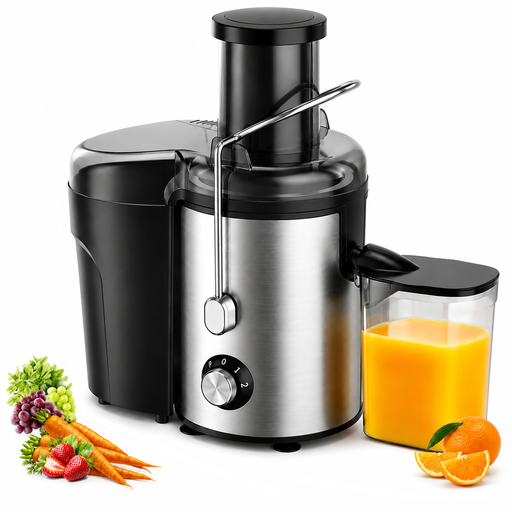 No image available
The product description lists beetroot as suitable for the high-speed setting. Follow the instructions for preparing and feeding it in.
600 W; 75-mm feed chute; two speed settings.
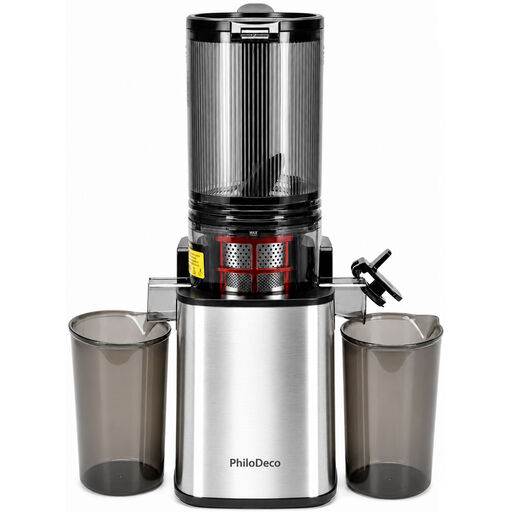 No image available
If you're considering a slow juicer, check the instructions to see how to prepare and feed in hard beetroot.
110-mm feed opening; 40 Nm; dual filter; reverse function.
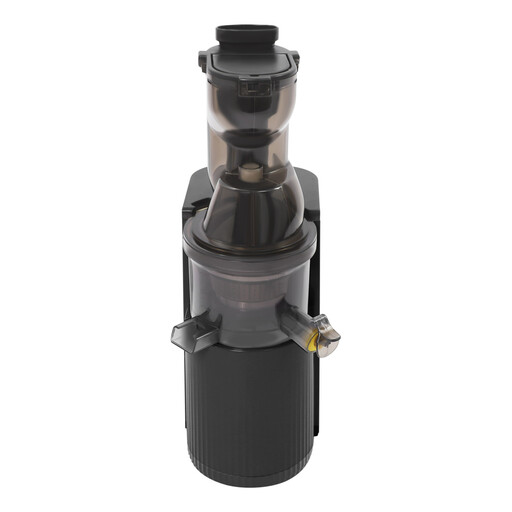 No image available
Before buying, check the instructions to see whether the specific model is suitable for hard beetroot.
800 W; 48 U/min; 8-cm feed opening; reverse function.
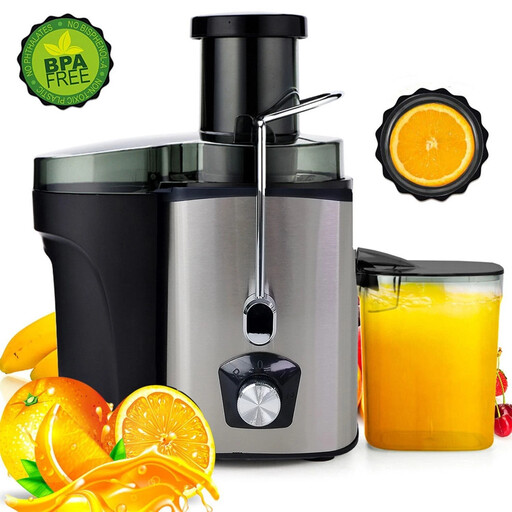 No image available
If you're juicing different ingredients in the morning, the three speed settings may be useful. Check the instructions for hard beetroot.
600 W; 75-mm feed chute; three speed settings; cleaning brush.
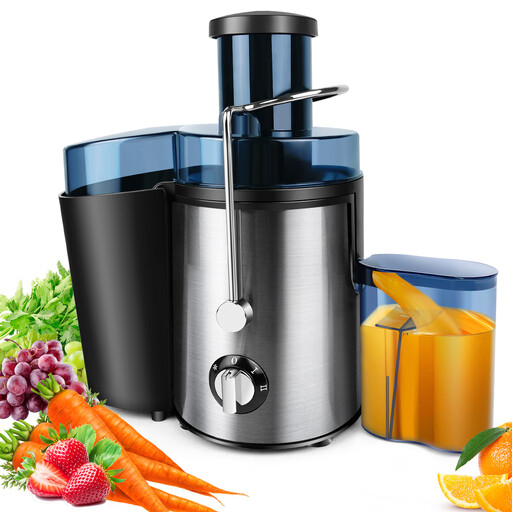 No image available
The product description lists beetroot as a suitable ingredient. If you're making several portions, plan for the container capacity and how many times you'll need to fill it.
1,000 W; 65-mm feed opening; two speed settings; 500-ml juice container.
No, beetroot can be eaten raw. The German Federal Centre for Nutrition notes that it can stain badly. Wash the beetroot thoroughly and follow your juicer's instructions for the size of the pieces and how to feed them in. Pre-cooked, vacuum-packed beetroot is a different starting ingredient.
The German Federal Institute for Risk Assessment lists beetroot among the vegetables that can contain high levels of nitrate, and recommends eating a varied selection of vegetables. Good kitchen hygiene is important when handling raw foods. This information doesn't establish a general recommended portion size for every child.
Beetroot stains badly. Clean all food-contact parts hygienically, following the instructions for your specific model, and only put parts in the dishwasher if they are explicitly listed as dishwasher-safe.
Yes, if the specific appliance falls under harmonised EU rules that require CE marking. The European Union describes the marking as the manufacturer's declaration of conformity, not as an independent quality mark. Check the information for the specific appliance on offer.