
Lieferung heute & morgen

Qualitätsgarantie
App herunterladen
Kategorien
Selecting your first drone requires balancing technical parameters like weight, control systems, and safety features. Entry-level models are designed to simplify the learning process while providing a stable flight experience. This guide analyses the crucial criteria and presents a selection of models suited for different user profiles based on their specific features.
The decision for a specific model should be based on an analysis of its technical specifications and intended use. The following criteria are particularly relevant for beginners.
Since 2021, the EU Drone Regulation governs the operation of unmanned aircraft. For beginners, the C0 class is of particular interest. Drones in this class weigh less than 250 grams. The advantage: No "large" EU drone license (A1/A3 Certificate of Competency) is required for operation. However, operator registration with the national aviation authority is mandatory in most cases if the drone has a sensor for collecting personal data (e.g., a camera).
Modern beginner drones feature integrated systems that make control easier.
Physical robustness is a critical factor.
A drone with a camera opens up the world of aerial photography. The quality varies significantly. While basic models are often only suitable for snapshots, drones with 4K UHD cameras and image stabilisation allow for the creation of high-quality video recordings. Live image transmission to a smartphone (FPV - First Person View) is standard on many models and simplifies image composition.
The following models have been selected based on their technical specifications and practical value for beginners.
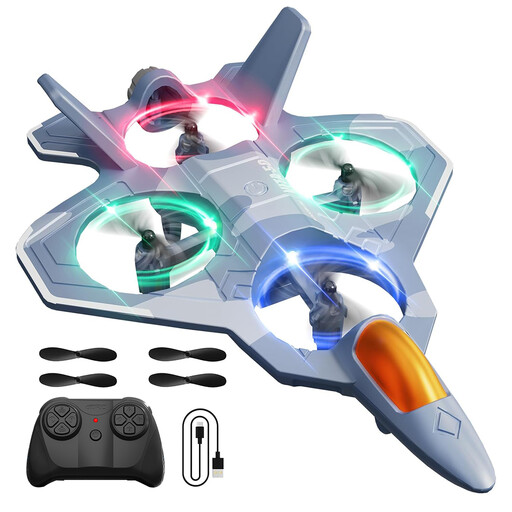
Why We Recommend This Product This beginner quadcopter is designed for maximum durability and straightforward flying fun. According to the manufacturer, the EPP foam body can withstand over 80 crashes and collisions. The fully enclosed propellers offer a high degree of safety, making the device particularly suitable for indoor use or for younger users.
Advantages
Who It's For This model is a great choice for children aged 8 and up (under supervision) and absolute beginners looking for a very forgiving and safe small drone to practice basic controls.
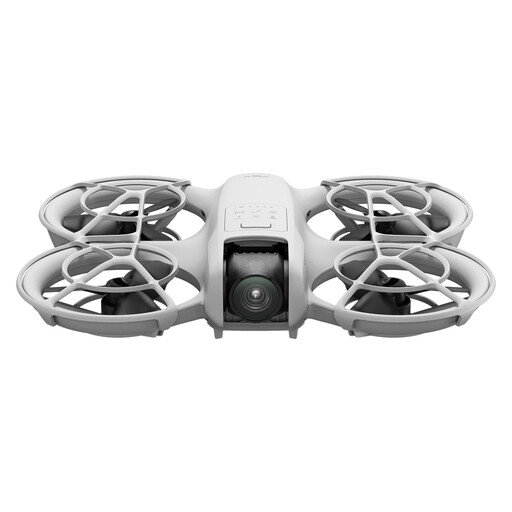
Why We Recommend This Product The DJI Neo combines an extremely low weight of 135g with a powerful 4K UHD camera. It falls into the C0 class while offering professional features like intelligent flight modes (QuickShot, Smart Follow) and advanced image stabilisation. It can be controlled flexibly without a controller via an app, hand gestures, or voice commands.
Advantages
Who It's For This mini drone is aimed at tech-savvy beginners and aspiring content creators who demand high image quality from the start and are looking for a compact, travel-friendly device.
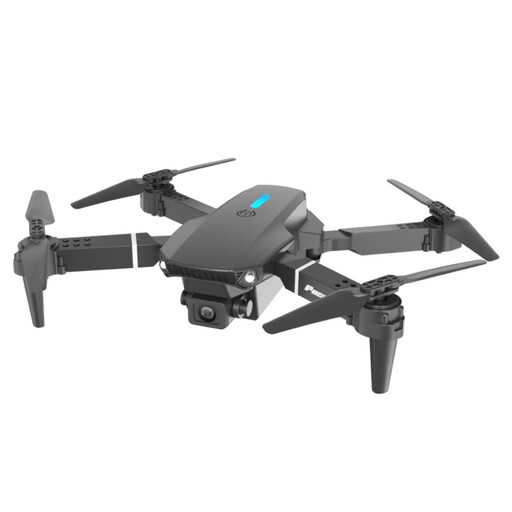
Why We Recommend This Product The FACEGLE E88 Pro offers a balanced package of features for budget-conscious beginners. Its foldable design makes it easily portable. Features like optical flow stabilisation and barometric altitude hold contribute to a more stable hover, which makes taking photos and videos easier.
Advantages
Who It's For This model is suitable for beginners looking for an affordable drone with a camera to gain their first experience in aerial photography. The stabilising flight characteristics provide a good foundation for learning to fly.
The drone market is constantly evolving, offering a wide variety of models with different technical features. If the products presented here do not exactly meet your requirements, you can find a broader selection of devices in our main category.
Discover more models in our Quad category.
1. Do you need a license for a beginner drone? For drones in the C0 class (under 250g take-off mass), which includes many entry-level models, an EU Certificate of Competency (A1/A3) is not required. However, the operator must register with the national aviation authority (e.g., the LBA in Germany) if the drone has a camera. The resulting operator ID (e-ID) must be affixed to the drone.
2. Which drone is suitable for children? A drone for kids should be, above all, robust and safe. Models with full propeller guards, a durable body (e.g., made of EPP foam), and simple controls with a Headless Mode are preferable. The manufacturer's age recommendations should always be observed.
3. What is Headless Mode on a drone? Headless Mode is a control assist for beginners. Regardless of which way the front of the drone is pointing, it always flies from the pilot's perspective. If the control stick is pushed forward, the drone moves away from the pilot. If it's pushed to the left, it flies to the left. This significantly simplifies orientation.