
Lieferung heute & morgen

Qualitätsgarantie

Willkommens-Angebote freischalten: KOSTENLOSE Lieferung | Bis zu 80 % RABATT | Kostenlose 30-Tage-JoyPlus-Testphase
App herunterladen
Choosing a child's first bicycle often presents a challenge for parents and grandparents. A wide variety of models, sizes, and safety features can make the decision complex. The goal of this article is to offer you clear and objective guidance. As a Joybuy Product Recommendation Officer, I have summarised the essential criteria to help you find a suitable and safe beginner's bike that meets your child's needs.
Before you make a decision, several fundamental aspects should be considered. These factors are crucial for the child's safety and enjoyment.
The size of a kids' bike is indicated in inches and refers to the diameter of the wheels. The right size depends less on age and more on the child's height, and particularly their inseam length.
A correctly sized bike allows the child to safely touch the ground with both feet, which is crucial for balance and confidence.
For a first bike, certain safety features are of high importance.
Based on the criteria mentioned, we have compiled a selection of models that stand out for their beginner-friendly design and features. The HILAND Kids' Bike from the Starry series provides a well-thought-out foundation for this.
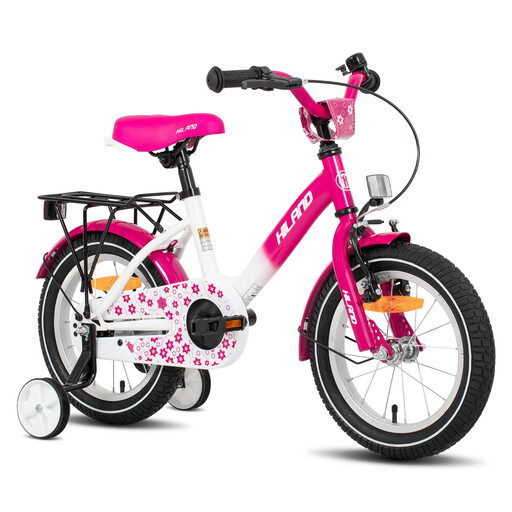
Why it stands out: This model combines an appealing design with essential safety features. The low step-through frame makes getting on and off easy, while the combination of a V-brake and a coaster brake ensures reliable control.
Pros:
Who is it for? Ideal for children aged 2 to 4 with a height between 80 and 105 cm who are taking their first steps in cycling. It's a well-designed kids' bike for girls and boys who appreciate a colourful design.
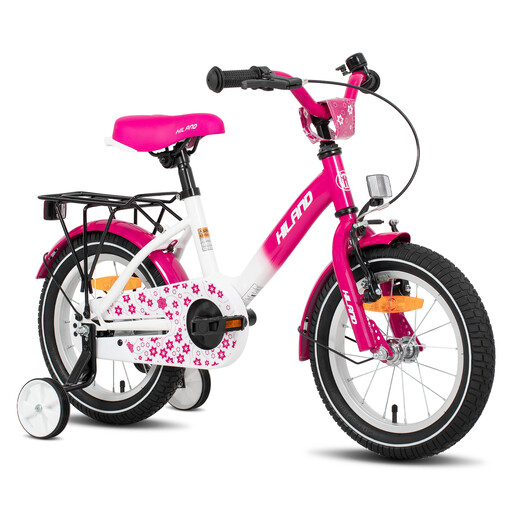
Why it stands out: As the next size up, this model retains all the safety-relevant features of the 12-inch model, adapting them to the needs of slightly taller children. The wide 1.95-inch tyres provide extra stability on various surfaces.
Pros:
Who is it for? Recommended for children from 3 to 6 years old with a height of 90 to 125 cm. It's a great choice for kids who have already gained some experience on a balance bike or want to start directly with a bike with training wheels.
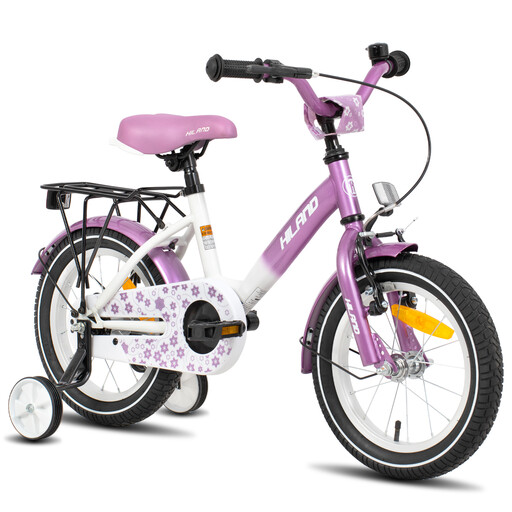
Why it stands out: This 16-inch kids' bike is designed for advanced beginners who are ready to ride without training wheels. Instead of training wheels, a practical kickstand is included. The dual braking system is retained, continuing to offer familiar safety.
Pros:
Who is it for? Suitable for children aged 4 to 7 with a height of 105 to 135 cm. It is the ideal next bike for children who have outgrown the 14-inch kids' bike and are now confident enough to ride without additional stabilisation.
Once the new bike is ready to go, the question of secure storage arises. A dedicated spot protects the bike from weather and damage. Discover our selection of practical solutions like outdoor bike racks.
At what age is a beginner's bike for kids appropriate? Age is a guideline; the child's motor skills and inseam length are more critical. Many children start with a balance bike around age 2.5 to 3 to develop their sense of balance. The transition to a beginner's bike for kids with pedals, such as a 12 or 14-inch model, often occurs between the ages of 3 and 4.
Are training wheels always necessary for a first bike? Training wheels can provide initial security for children who still find balancing difficult. However, it is often recommended to let children ride a balance bike first and then transition directly to a bicycle without training wheels. The models presented here offer the flexibility to choose the right path for your child with the included training wheels (for 12/14-inch models).
What should I look for in the brakes on a beginner's bike? A dual braking system is a great solution for beginners. A kids' bike with a coaster brake is intuitive, as the braking force is activated by pedalling backwards—a motion many children learn quickly. An additional hand brake for the front wheel prepares the child for future bike models and provides another way to stop.